
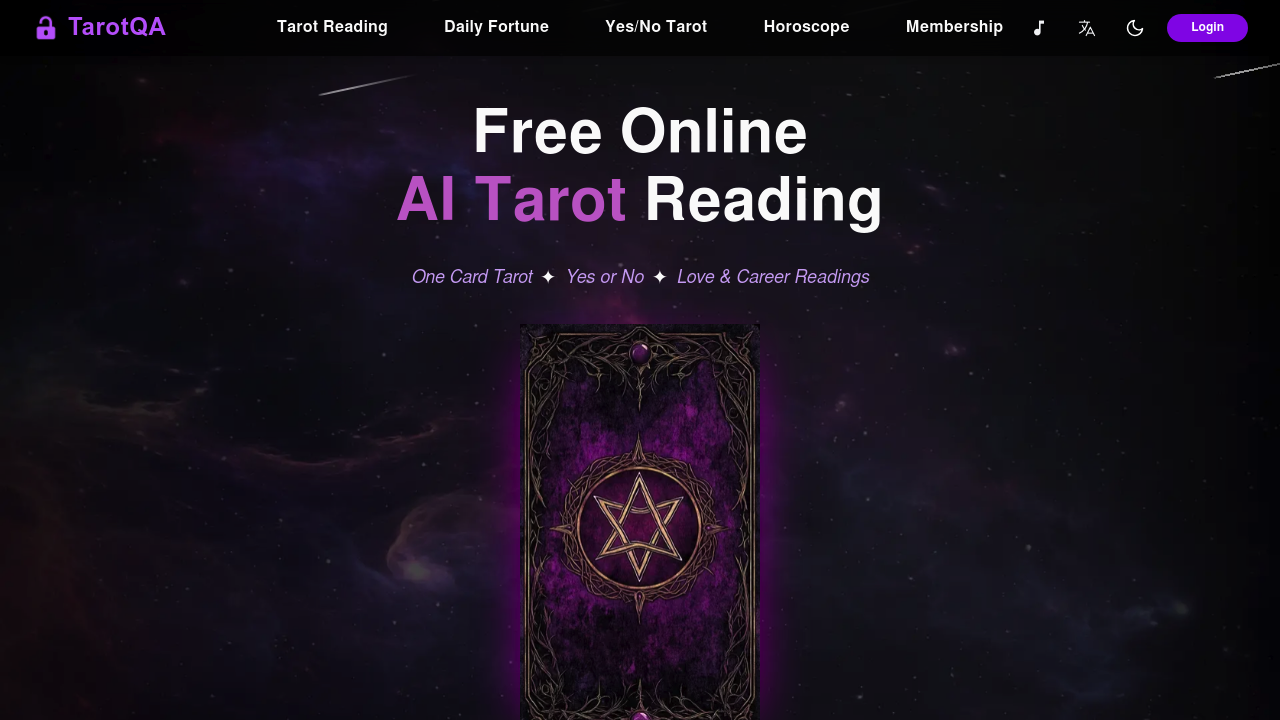
Opening TarotQA lands you straight into choosing your reading type. The interface presents options like one card tarot, yes or no readings for quick answers, daily fortune updates, and love horoscopes. You can also access daily horoscopes that refresh every 24 hours for all zodiac signs, plus yearly forecasts for 2025 if you're planning ahead.
When you're ready to pull cards, you've got choices in how you do it. Random draw works like traditional shuffling. Lucky number selection lets you pick based on your favorite digits. Custom manual pick gives you full control over which cards you want. The flexibility's nice, though switching between methods isn't always intuitive if you're new to this service.
After selecting your spread, the AI interprets your cards. The system claims accuracy rates above 90 percent, though that's obviously hard to verify with something as subjective as tarot. The readings cover love situations, career decisions, relationship dynamics, and daily guidance. You'll get text-based interpretations that attempt to connect card meanings to your specific question.
The Memory Center's where things get interesting. It saves your consultation history so TarotQA can reference past readings when giving new ones. Over time, it's supposed to deliver increasingly personalized guidance because it remembers what you've asked before and what cards you've drawn. This works well if you use the service regularly, but feels a bit empty during your first few sessions when there's nothing to build on.
Zodiac compatibility analysis pulls in birth chart readings if you want to explore astrological angles beyond pure tarot. The love horoscope section specifically targets relationship questions, while the broader daily horoscope gives general guidance for whatever sign you follow.
Everything mentioned runs free. The AI tarot readings, yes or no answers, daily fortune updates, horoscopes across all zodiac signs, and the various card drawing methods don't require payment. There's mention of a membership tier in the structure, but what it includes isn't spelled out anywhere visible.
The experience can feel repetitive if you're asking similar questions frequently. The AI sometimes gives generalized interpretations that could apply to almost anyone's situation. That's a common problem with digital divination tools. The readings lack the conversational depth you'd get from a human reader who can ask follow-up questions and read your reactions.