
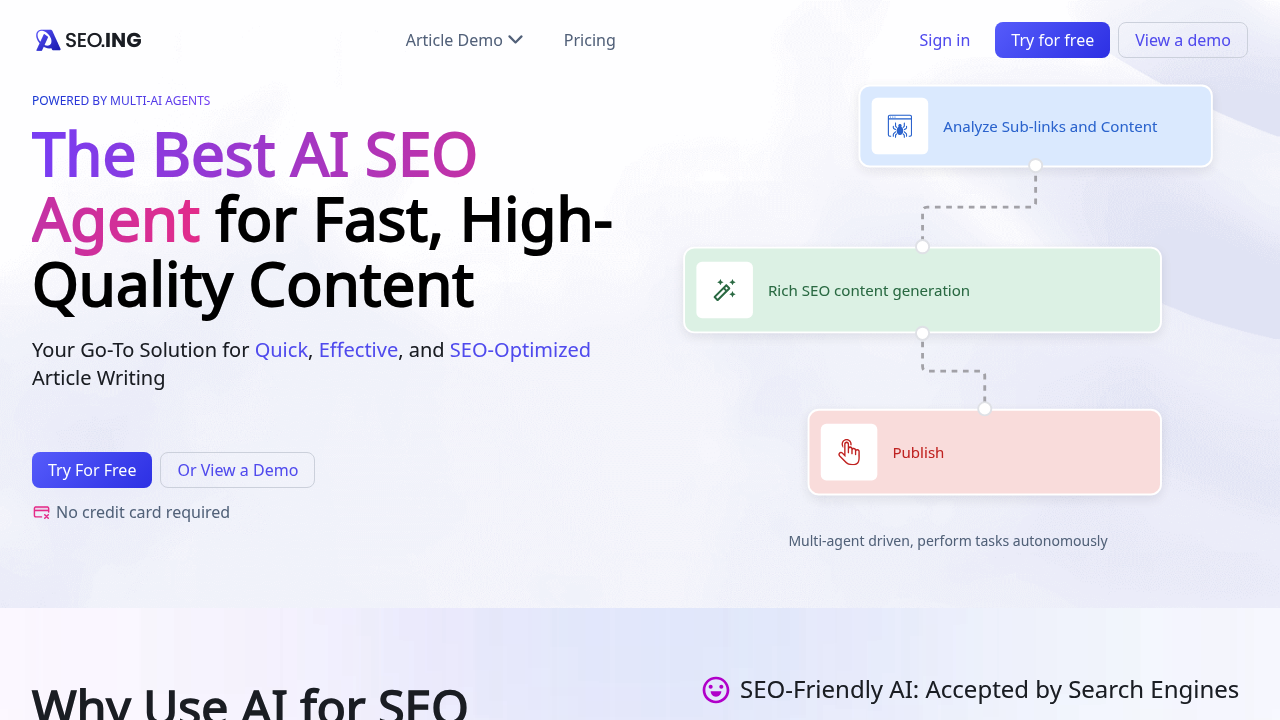
You land on SEO.ING and paste a URL into the generator. This system immediately starts crawling that website, pulling information from multiple pages and sub-links automatically. This happens through what it calls its Content Crawler Agent, which digs through the site's structure to gather material for the article.
After the crawl finishes, you're shown several AI-generated title options. Pick one or tweak it yourself. The system then produces multiple outline variations, each with different structures and angles for approaching the topic. You can select an outline as-is or adjust sections before moving forward.
The generation process splits into distinct phases handled by different specialized agents. An Outline Agent structures the content. A Writing Agent fills in the sections. An Image Agent adds visuals. They work independently but contribute to the same final piece. This multi-agent approach means each part of the article gets focused attention from a system trained for that specific task.
You can customize parameters before generation starts. Set how long you want the introduction hook, adjust overall article length, choose whether to include tables or comparison charts. There's an option to feature specific products with anchor links and custom text, which makes sense for affiliate content or sponsored mentions.
SEO.ING offers templates for different content types. Website Review mode converts any URL into a full review article. Top 10 mode takes a list of websites and creates a comparison piece ranking them. It handles multilingual content too, generating SEO-optimized articles in various languages.
Articles appear in seconds, not hours. Complete with images, headings, and formatting ready to publish. The speed's impressive but you will want to review the output carefully. Sometimes the crawler pulls irrelevant information from sub-pages, and the writing can feel generic in spots where more specific expertise would help. This system excels at structure and keyword optimization but occasionally misses nuance that separates good content from great.
The cost comparison's stark. Freelancers charge around a hundred bucks for one article. Here you get ten articles for fifteen dollars. that is the paid tier after you exhaust the free plan, which lets you test the system without entering payment info. The free version has limitations but gives you enough access to see if the multi-agent approach fits your workflow.
Best for churning out high volumes of SEO content quickly. Less ideal when you need deep subject matter expertise or brand-specific voice.