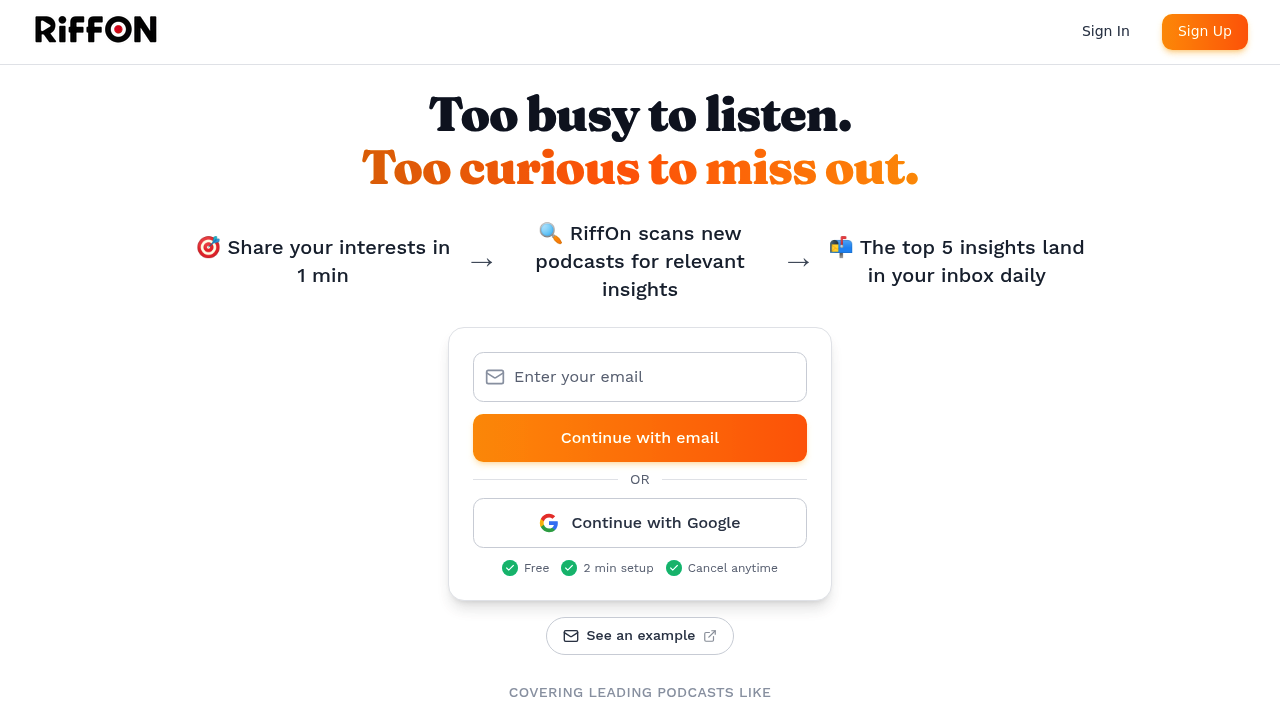
RiffOn runs a daily scanning operation across more than 100 podcasts, processing each new episode through a content extraction pipeline that identifies insights matching user-defined interests. Users spend one minute during setup describing what they care about, and the system uses this input to filter podcast content. This platform doesn't summarize entire episodes. Instead, it pulls specific segments that align with stated professional interests.
The data pipeline works on a daily cycle. Each morning, RiffOn's system processes newly published podcast episodes, running them through its extraction layer. This layer identifies relevant segments based on the interest profile each user created during onboarding. The system then packages the top five insights and delivers them via email. Each insight comes with a listen feature, letting users hear the original podcast segment rather than just reading about it.
The role-based approach is what makes this different from generic podcast summarization tools. Preview examples show how the same podcast content gets filtered differently for a Product Manager versus a Growth VC or AI Engineer. A PM might get insights about product development tactics, while the VC sees fundraising patterns. This happens because the extraction logic applies different filters based on the professional context users provide.
Output quality depends entirely on how well users articulate their interests during setup. The system can't infer what you care about. It needs explicit input. The two-minute setup process guides users through defining these interests, but the quality of insights you'll receive correlates directly with how specific you're.
Integration is minimal by design. Users sign in through Google and receive insights via email. There's no mobile app, no browser extension, no API access. The product lives entirely in your inbox. This simplicity means there's nothing to install, but it also means you can't integrate RiffOn data into other workflows or applications.
The service runs on a free plan. Setup takes two minutes. You can cancel whenever you want. There's no trial period because there's no paid tier to trial.
Technical limitations aren't explicitly documented, but the architecture reveals some constraints. The daily scanning cycle means you won't get insights in real-time. If a relevant podcast drops at noon, you'll see insights the next morning. The top-five limit means you might miss relevant content if more than five insights match your interests on a given day. The system also can't handle custom podcast additions. You're limited to the 100-plus podcasts already in the scanning pool.