
Rationale logo
AI Consulting PAID from $10/mo

Rationale

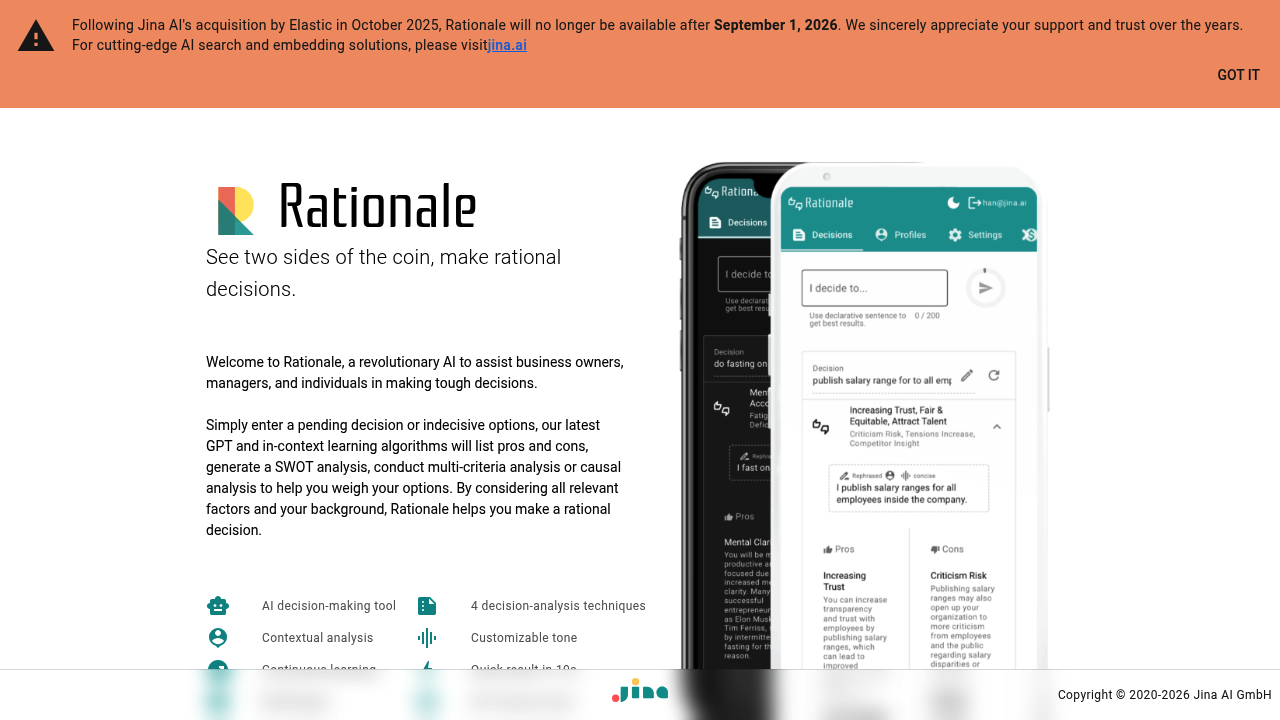
When business leaders face complex choices, Rationale steps in as an analytical partner that structures decision-making through four distinct frameworks

This system applies GPT-powered algorithms to generate pros and cons lists, SWOT analyses, multi-criteria evaluations, and causal chain breakdowns that map potential outcomes up to three levels deep in a tree-like…

Rationale screenshot

When business leaders face complex choices, Rationale steps in as an analytical partner that structures decision-making through four distinct frameworks. This system applies GPT-powered algorithms to generate pros and cons lists, SWOT analyses, multi-criteria evaluations, and causal chain breakdowns that map potential outcomes up to three levels deep in a tree-like structure. Users input their decision context along with relevant background information, and the system delivers structured analysis in roughly ten seconds. This service adapts its output tone to match user preferences and supports multiple languages, making the analysis accessible across different communication styles and geographic contexts. API access allows teams to integrate decision frameworks directly into existing workflows. However, following Jina AI's acquisition by Elastic in October 2025, the service will shut down permanently on September 1, 2026.

This system targets business owners and managers who regularly face high-stakes choices without the luxury of extended deliberation time. Heads of Engineering managing technical teams represent a specific use case, particularly when weighing resource allocation, architectural decisions, or personnel matters that carry significant downstream consequences. This service helps individuals across organizational hierarchies who need to move beyond gut instinct and document their reasoning process. Teams working in dynamic environments where decision quality matters more than speed alone will find the structured frameworks particularly valuable, especially when multiple stakeholders need to understand the rationale behind a chosen direction.

Rationale fits into daily workflows where decisions require documentation or justification to others. A product manager choosing between feature priorities can generate a multi-criteria analysis weighing user impact against development cost and strategic alignment. Engineering leaders evaluating whether to refactor legacy code or build new systems can map out causal chains showing how each choice ripples through team velocity, technical debt, and maintenance burden. The SWOT framework helps founders assess market entry timing or partnership opportunities by organizing internal capabilities against external threats. Because this system considers user-provided context, the analysis reflects specific organizational constraints rather than generic business advice, making the output directly applicable to immediate decisions rather than theoretical exercises.


Rationale alternatives

See all →

Frequently asked

6 questions
How does Rationale help with decision-making?
Rationale generates structured analysis using four frameworks: pros and cons lists, SWOT analysis, multi-criteria evaluation, and causal chain mapping that shows potential outcomes up to three levels deep. Users provide their decision context and relevant background, then receive organized analysis in approximately ten seconds. The system adapts its tone to user preferences and supports multiple languages for different communication needs.
Who should use Rationale for business decisions?
Business owners, managers, and individuals facing high-stakes choices without extended deliberation time benefit most from this tool. Heads of Engineering managing technical teams use it for resource allocation, architectural decisions, and personnel matters with significant downstream consequences. Teams needing to document reasoning processes or justify decisions to multiple stakeholders find the structured frameworks particularly valuable.
Can Rationale help engineering leaders evaluate technical debt decisions?
Engineering leaders can map causal chains showing how refactoring legacy code versus building new systems affects team velocity, technical debt accumulation, and long-term maintenance burden. The multi-criteria analysis weighs development cost against strategic alignment and user impact. Because the system incorporates user-provided context, the output reflects specific organizational constraints rather than generic recommendations.
Does Rationale offer a free plan?
Rationale operates as a paid service without a free tier or trial period. API access is available for teams wanting to integrate decision frameworks into existing workflows. Pricing details vary based on usage requirements.
Will Rationale continue operating long-term?
Following Jina AI's acquisition by Elastic in October 2025, Rationale will permanently shut down on September 1, 2026. Users should plan migration strategies for decision-analysis workflows that currently depend on this service. The discontinuation affects all features including API access.
What platforms or tools does Rationale integrate with?
Rationale provides API access allowing teams to embed decision frameworks directly into existing workflows and systems. The service supports multilingual analysis and customizable output tones to match different organizational communication styles. Results generate in approximately ten seconds regardless of the analysis framework selected.

Reviews (0)

Write review

No reviews yet. Be the first to share your experience.