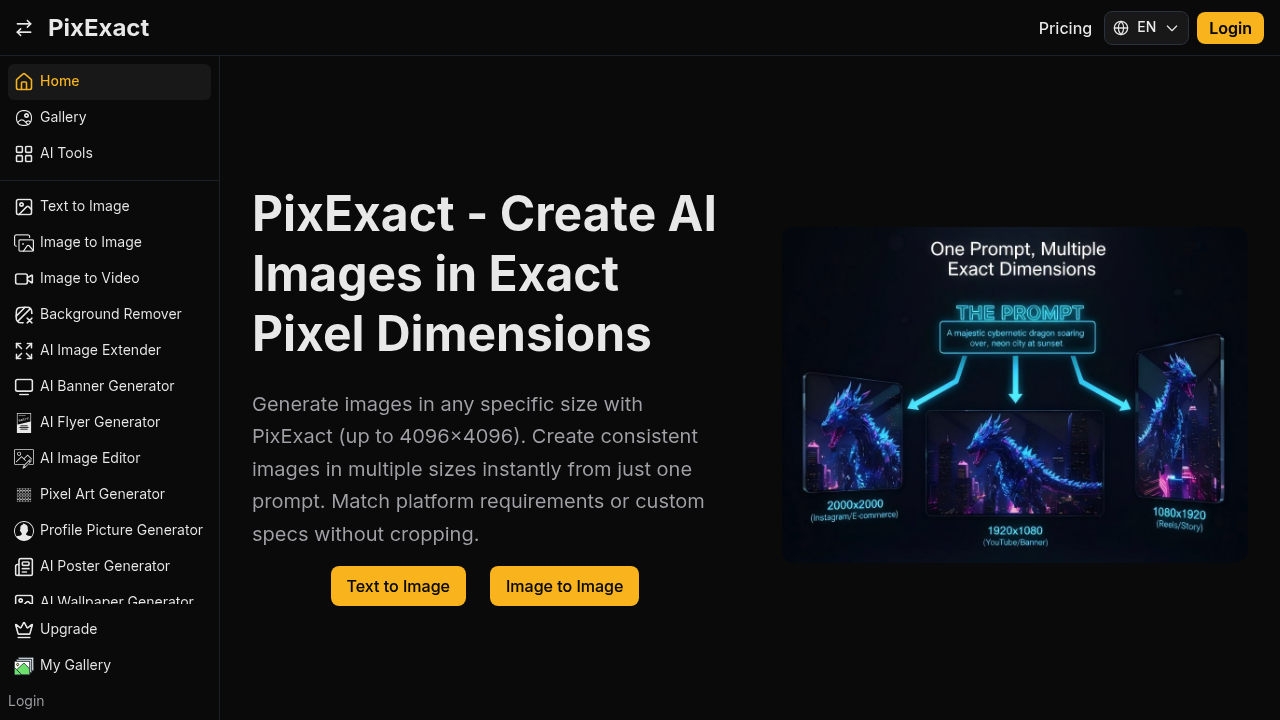
Opening PixExact drops you into a familiar image generator interface with one crucial difference: two input boxes sit above the prompt field asking for exact width and height in pixels. Type 1080 and 1920, write a prompt about a neon cityscape at dusk, and the software generates an image in precisely those dimensions. No aspect ratio selection followed by cropping. No resizing afterwards. The output matches your specs exactly.
The multi-size generation feature shows where this gets truly useful. Enter your prompt once, then select multiple dimensions from presets like 1080x1080, 1200x628, and 1920x1080. Hit generate and you'll get the same subject rendered consistently across all three sizes, maintaining the same style and composition. For social media managers juggling Instagram squares, Facebook link previews, and YouTube thumbnails, this saves the tedious work of regenerating or manually adapting images for each platform.
The interface supports dimensions up to 4096x4096 pixels. Custom sizes work fine. You can also pick from common presets covering everything from standard HD to 4K displays to specific social media requirements. Each generation costs 5 credits from your balance, and you can request between one and four variations per prompt.
Beyond basic generation, the software bundles in background removal, image extension, and various specialized generators for banners, flyers, posters, and pixel art. The image to image feature permits you upload a reference and generate variations. Image to prompt attempts to reverse engineer prompts from existing images. Seed control appears if you want to reproduce specific results.
The friction shows up in the credit system. No obvious way to earn credits through free use. Features occasionally hit upgrade walls without clear explanation of what's locked. The interface does not explain how many credits you start with or how quickly you'll burn through them with multi-size generations.
Web designers building mockups at exact breakpoint dimensions benefit most. E-commerce sellers needing product images in marketplace-specific sizes avoid the crop-and-pray approach. App developers creating assets at precise pixel counts for different screen densities skip the manual resizing step. Anyone tired of generating a beautiful image only to realize it's 1024x1024 when you needed 1200x628 benefits from typing the exact numbers upfront. This platform solves a specific problem that most generators ignore by assuming everyone's fine with standard ratios and post-generation adjustments.