
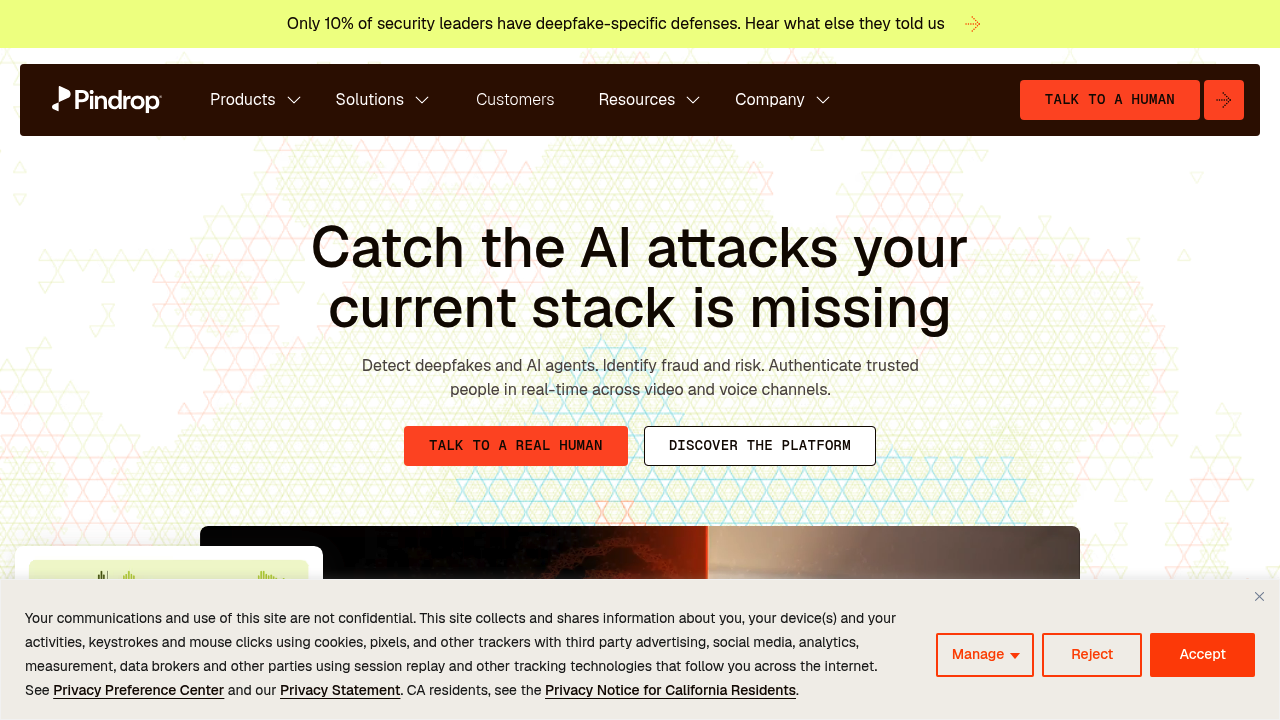
Pindrop is an enterprise deepfake detection and identity verification system that watches live phone calls, video meetings and contact center traffic for synthetic voices, fake faces and fraudulent callers. Its Identity Trust Platform is organized around three questions: is this identity synthetic, is it risky, and is it known. Pulse detects deepfakes and AI agents in real time, Protect scores fraud and risky behavior using more than 2,300 signals, and Passport authenticates returning people against their earlier enrollment without forcing them through security questions.
The buyers are fraud prevention leaders, security teams, contact center operations managers and HR or talent acquisition groups at large organizations. Banks, life insurers and big retailers make up much of the customer base, with 14 of the top 20 banks listed. Pindrop suits teams that already run a CCaaS stack or hold interviews on Zoom, Microsoft Teams or Webex and need a defense layer that fits into it. It is sold through a sales conversation and aimed at enterprise governance, reporting and investigation needs rather than individual users.
Typical scenarios include stopping fraudsters who pass knowledge-based checks on a support line, screening job candidates during video interviews for proxy applicants and identity swaps, and detecting AI bots that probe call center workflows before they reach sensitive data. BotStopper separates human from machine in roughly two seconds and compares audio against more than 5,000 known AI voices. Passport can cut average authentication time for members by up to 50 percent, which shortens calls and improves satisfaction scores while keeping account takeover attempts out.