
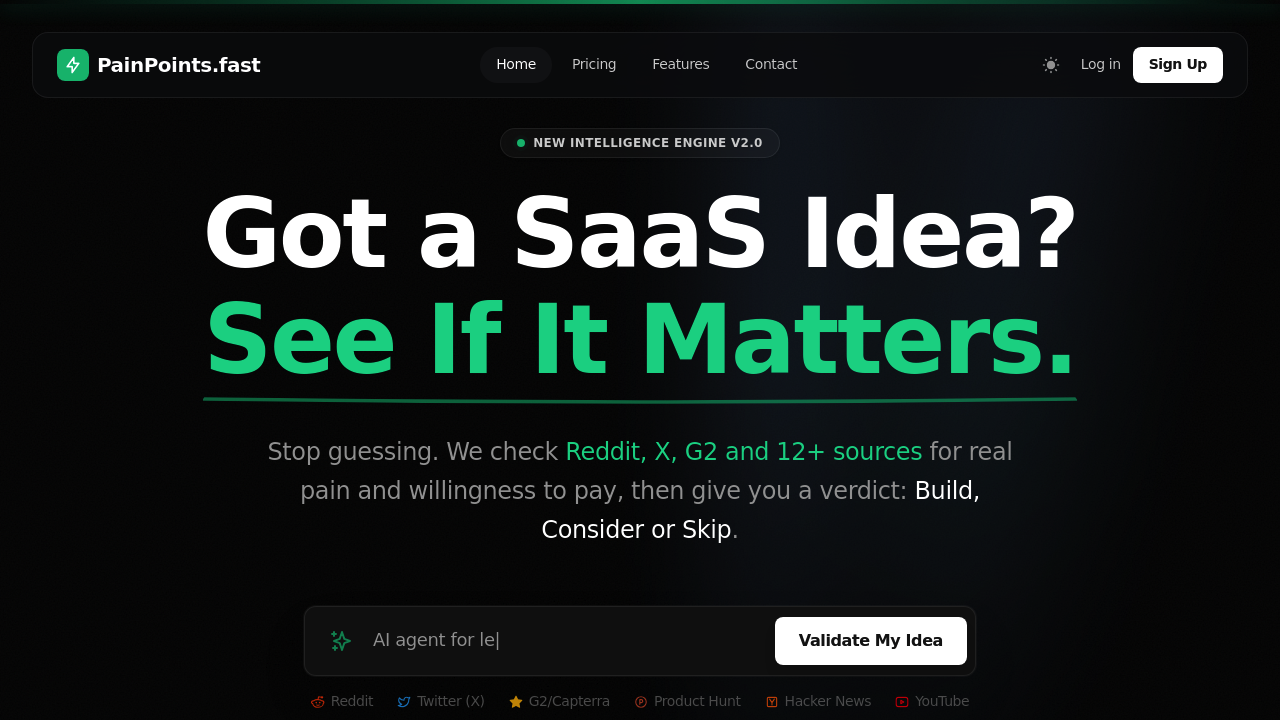
PainPoints.fast validates SaaS ideas by scanning real user complaints across 12 platforms before you write a single line of code. The Intelligence Engine V2.0 continuously monitors Reddit, Twitter, G2, Capterra, Product Hunt, Hacker News, YouTube, and other sources to surface actual pain points people are actively discussing.
The data pipeline works through multi-stage filtering. First, the system scrapes 2.5M+ comments from industry hubs. Smart filtering removes spam and bot-generated content before analysis begins. Natural language understanding groups semantically similar complaints, so mentions of "slow performance" and "laggy interface" get clustered together rather than counted separately. This matters because raw keyword matching would miss the actual pain frequency.
The 5-Vector Intelligence Depth analysis examines pain frequency, market gap size, demand signals, willingness to pay indicators, and competitive environment. Each vector contributes to a final 0-100 Validation Score that determines the Build, Consider, or Skip verdict. The system doesn't just count mentions. It evaluates context to distinguish between casual complaints and genuine purchase intent.
Output includes real user quotes with direct links to original posts across all source platforms. Signal strength indicators mark each finding as Strong, Medium, or Weak based on comment volume and user engagement patterns. You can verify every claim by clicking through to the actual Reddit thread or G2 review. The export-ready PDF reports package this data for sharing with cofounders or investors.
An AI chat assistant queries the report data after generation. You can ask contextual questions close to specific pain points or request deeper analysis on particular user segments. The assistant works only with data already collected in your report, so it won't hallucinate features or user needs that weren't actually mentioned in the source comments.
Auto-monitoring tracks your validated ideas over time. Weekly email updates flag new pain points, competitor complaints, and market shifts as they emerge. Validation scores update continuously, so you'll know if an opportunity is growing stronger or fading. This continuous scanning matters for timing decisions since market conditions change faster than most manual research cycles.
The Starter plan at $9 monthly analyzes 4,000+ comments across 6 core platforms including Reddit, G2, and Hacker News. You get 3 reports monthly with 3 pain points per report and 40 sources analyzed. Pro at $19 monthly expands to 12 platforms including Twitter, YouTube, and LinkedIn, processing 24,000+ comments with 10 reports allowed. Growth at $49 monthly covers 18+ platforms including GitHub, Stack Overflow, and Medium, analyzing 96,000+ comments with 30 monthly reports and priority support. One-time credit packs are available: 3 reports for $9 or 8 reports for $19.
Platform coverage varies considerably by tier. Starter users can't access Twitter, YouTube, or niche developer communities. Pro users miss GitHub and Stack Overflow. Only Growth tier gets the full 18+ platform scan. Competitor analysis is also gated: 3 competitors on Starter, 5 on Pro, 8 on Growth.
The system can't analyze private communities or paywalled content. It depends entirely on publicly accessible discussions. If your target market primarily communicates in closed Slack groups or private forums, you'll miss that signal. The natural language clustering works well for English but may struggle with technical jargon or industry-specific terminology that varies wildly in phrasing.