
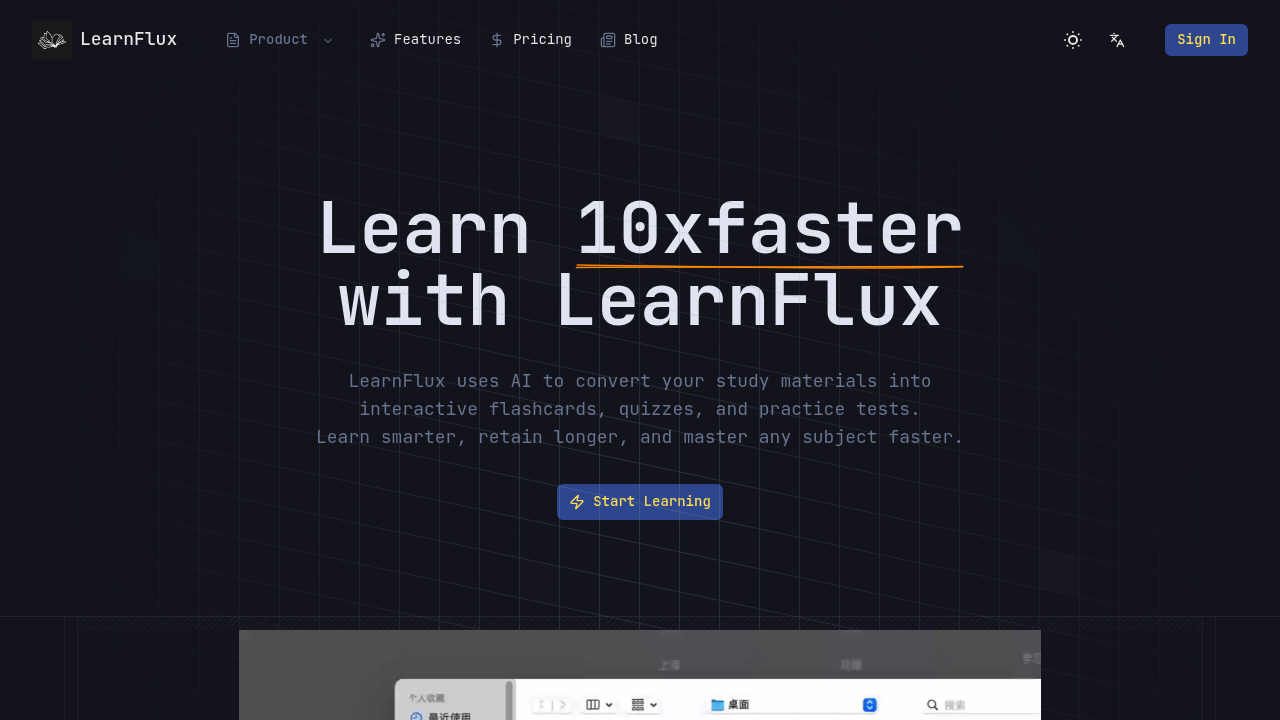
Students dump PDFs, videos, and lecture recordings into LearnFlux. The system converts everything into flashcards, quizzes, and structured notes. It handles YouTube videos, audio files, and web articles through direct upload or link pasting.
The AI reads through materials and pulls out what it thinks matters most. It highlights concepts, drops comments into notes, and builds quizzes automatically. Students edit the output before studying. The system generates practice tests from the notes it creates. It'll also turn study materials into podcast format for audio learners.
Live lecture recording works as advertised. Students capture class audio, get transcripts, and watch the AI organize content into study-ready formats. Progress tracking shows which topics need work and where performance drops off. Teams can share notes and edit together in real-time with commenting features built in.
The marketing says "learn 10x faster" but that number comes from nowhere specific. No study backs it up. No methodology explains it. Just a claim.
What actually works: the multi-format input system saves time versus copying notes by hand. Converting a 50-page PDF into flashcards beats manual creation. The transcription handles messy lecture audio reasonably well. Collaboration features let study groups work on the same materials without version control headaches.
Where it falls short: AI-generated content needs heavy review. The system misses context sometimes. It'll mark minor details as key concepts while glossing over actual important material. Students who trust the output blindly end up with gaps. The smart comments sometimes state obvious facts or repeat what's already visible in the text.
No information exists about whether the service runs on a free tier or requires payment upfront. That's a problem for students testing tools before committing. The features list suggests extensive functionality but without trial access details, potential users can't verify claims before deciding.
The real value sits in batch processing. Upload 10 PDFs from a semester and get a study guide framework in minutes instead of hours. That's measurable time savings. But the framework still needs human judgment to work properly. Think of it as a first draft generator, not a finished product.
Best for students juggling multiple courses with heavy reading loads. Less useful for subjects requiring deep conceptual understanding over fact memorization. The AI doesn't explain why concepts connect or matter. It just extracts and formats. Students still do the actual learning work.
