
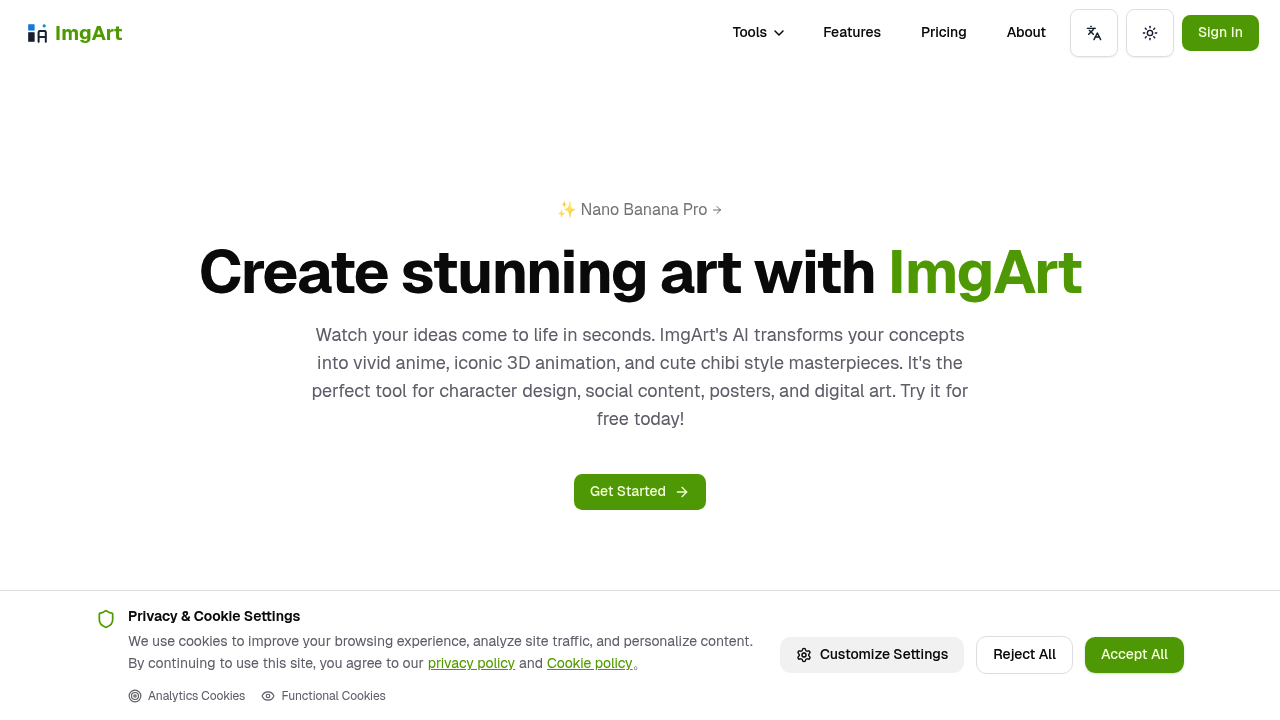
This tool turns text prompts and existing images into art across styles like anime, Ghibli, Pixar, 3D animation, and chibi. You can transform a basic concept into character designs, social media graphics, or digital illustrations without traditional drawing skills. Over 16 million images have been processed through the service, suggesting people actually use it regularly.
The multi-image fusion feature proves particularly useful. Called Nano Banana, it lets you blend elements from different images into something new. Character consistency helps maintain the same face or design across multiple generations, which matters when you're building a visual identity or story. Natural language editing gives you control without learning complex tools—you describe what needs to change and the AI adjusts.
Three different AI models power the generation. Each handles styles and prompts differently, so you can experiment until one clicks with your vision. Some users report a 70% drop in time from idea to finished product. Others mention doubled approval rates from teams. Those numbers come from testimonials, not controlled studies.
Does it actually work? The 3.8 million user count suggests decent traction. Real-world feedback mentions tangible results like 40% higher click-through rates for marketing content and doubled follower growth for social accounts. But these are cherry-picked success stories. Your mileage will vary based on how well you write prompts and whether the available styles match what you need.
Weak spots are hard to pin down from available information. No details on resolution limits, generation speed, or how many images you can create in the free tier. The service supports multiple AI models but doesn't explain when to use which one. You'll learn through trial and error.
Free AI image generation exists across multiple models. That's useful for testing whether this software fits your workflow before committing. Beyond that, no pricing structure is publicly documented here.
Who benefits most? Social media managers needing quick visual variety. Game designers sketching character concepts. Small brands building visual identities without hiring illustrators. Independent creators producing content at volume. The anime and Ghibli styles particularly suit creators targeting audiences who connect with those aesthetics.
If you need photorealism or corporate stock imagery vibes, this probably isn't your first choice. But for stylized art across popular animation aesthetics, it compresses what used to take hours into minutes.