
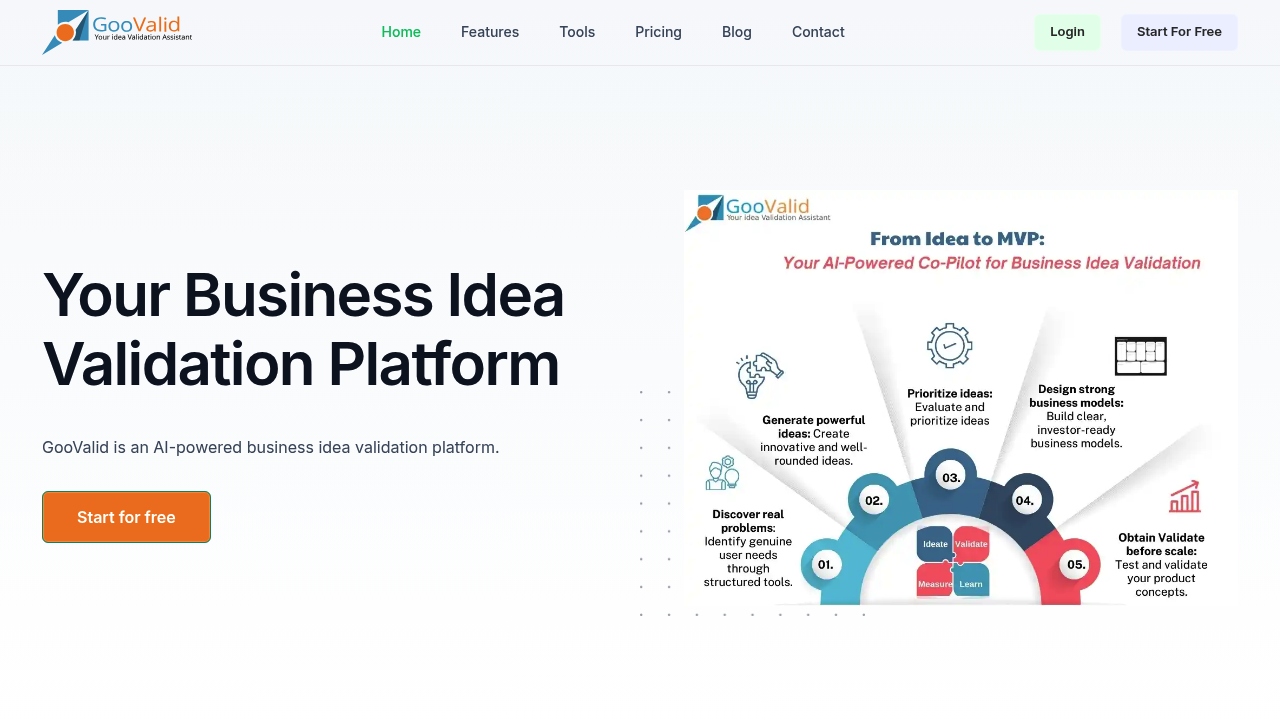
Business idea validation typically involves scattered spreadsheets, disconnected frameworks, and guesswork about whether a product solves real problems. Goovalid consolidates the validation process into a single system where project teams can test assumptions against structured innovation frameworks before committing resources to development.
This system centers on achieving two critical milestones: problem-solution fit and product-market fit. Instead of relying on intuition, users work through established validation methodologies that examine ideas from multiple angles. Market Analysis dissects target segments and competitive environments. Persona Analysis builds detailed profiles of potential customers. The Jobs To Be Done Canvas identifies what tasks customers actually hire products to accomplish, moving beyond surface-level feature requests to underlying motivations.
Empathy Maps dig into customer psychology by mapping what users say, think, feel, and do throughout their journey. This creates a fuller picture than demographic data alone provides. Stakeholder Mapping identifies everyone affected by a product launch, from end users to internal champions to potential blockers. Each framework connects to the others, producing what Goovalid describes as correlated outputs rather than isolated analyses.
AI support runs through every feature. The system generates insights based on framework inputs, though the token-based system means each analysis consumes credits. One feature use equals one token, so running a complete Empathy Map costs one token while generating a full Stakeholder Map costs another. This creates a direct relationship between how many frameworks you apply and how quickly you deplete your token allocation.
Guides accompany each feature, explaining not just how to use each feature but when in the validation process it makes sense. Goovalid walks users from initial problem discovery through to MVP validation, providing structure for teams that might otherwise skip crucial validation steps.
Pricing operates on a renewal model rather than recurring subscriptions. The free Starter Plan provides access to five features with AI support enabled, letting teams test this approach before committing funds. This isn't a trial period that expires but a permanent tier with feature limitations.
The Startup tier costs $28.90 and removes feature restrictions while adding 50 AI tokens. All frameworks become available. Projects and workspaces scale without limits. When tokens run out, users renew at their own pace rather than facing monthly charges. For teams validating one or two ideas, 50 tokens might last months. For consultancies running multiple validation sprints, depletion happens faster.
Corporate pricing jumps to $269 but multiplies the token allocation to 1,250. The math works for larger organizations running continuous validation across multiple product lines or innovation initiatives. Custom plans eliminate token caps entirely while maintaining unlimited workspace and project access, though pricing requires direct contact.
The token system creates planning requirements. Teams need to map which frameworks they'll use before starting, since each activation consumes credits. A thorough validation might use six to eight frameworks, meaning Startup plan users get roughly six to eight complete validation cycles before needing renewal.
Goovalid positions itself as the AI-powered version of innoToolkits, taking existing structured frameworks and adding automated analysis. Project teams, startups, and corporate innovation groups represent the core audience. Anyone testing business concepts before building can apply these frameworks, though the structured approach assumes some familiarity with validation methodology. Goovalid doesn't teach validation from scratch but provides resources for those who understand why problem-solution fit matters before product development begins.