
Flutch logo
AI Sales FREEMIUM

Flutch

Flutch operates as an observability and analytics layer that sits on top of AI agents handling customer conversations

This system ingests conversation data from chatbots and agents, then processes it through analytics pipelines that connect dialogue outcomes to business metrics. When an agent qualifies a lead or books a meeting, Flutch…

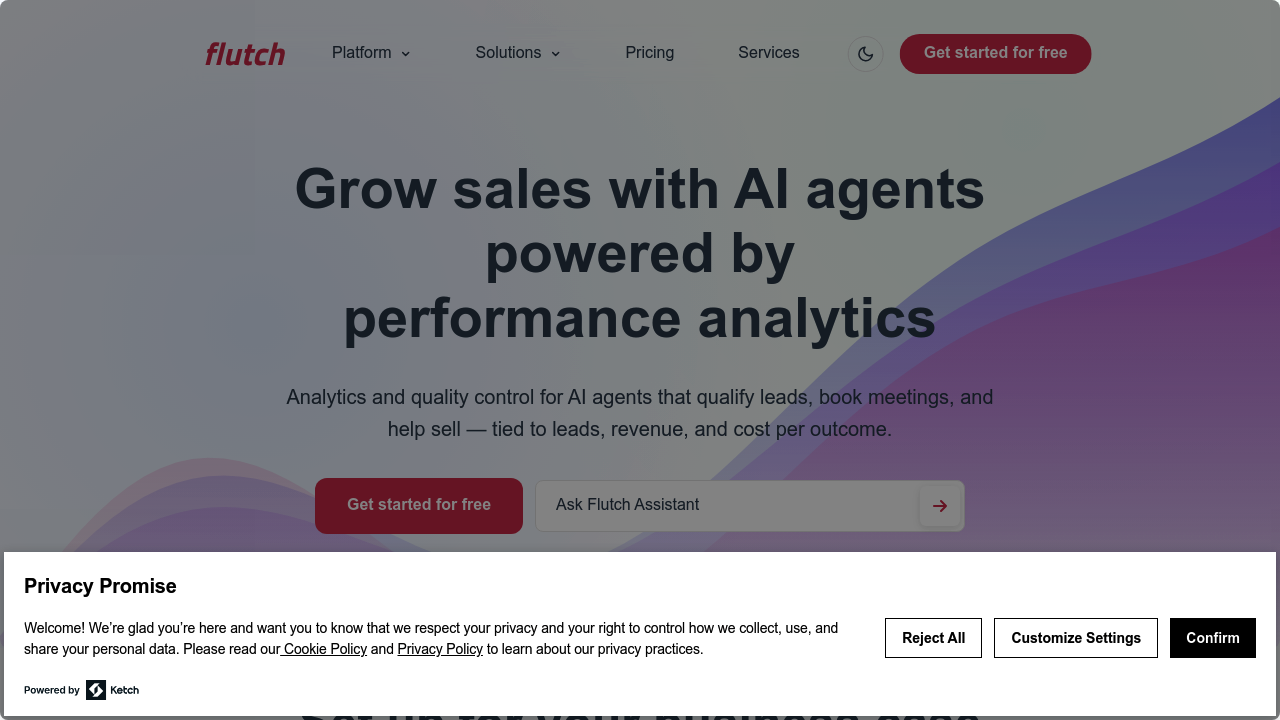
Flutch screenshot

Flutch operates as an observability and analytics layer that sits on top of AI agents handling customer conversations. This system ingests conversation data from chatbots and agents, then processes it through analytics pipelines that connect dialogue outcomes to business metrics. When an agent qualifies a lead or books a meeting, Flutch tracks the path from initial message to conversion, calculating real-time conversion rates and cost per goal achieved.

The data flow works through conversation auditing that runs continuously in the background. Each interaction gets scanned for quality issues and policy violations while the system looks for patterns that might indicate fraud or off-script behavior. This isn't post-hoc analysis. The monitoring happens as conversations unfold, flagging problems before they compound.

A/B testing infrastructure lets teams run experiments across different agent versions. You can test variations in prompts, tools, or entire conversation flows, then measure which configuration drives better business outcomes. The system tracks spending at granular levels, allowing caps at both agent and individual user tiers to prevent runaway costs.

This service includes visual workflow builders for constructing conversation logic without writing code. Built-in tools handle common tasks like scheduling and data retrieval. Agents can run on Flutch's infrastructure or deploy to your own servers depending on data residency requirements.

Integration architecture connects to CRMs, calendars, e-commerce platforms, and messaging channels. Salesforce and HubSpot integrations push lead data and conversation outcomes into existing sales pipelines. Calendar connections with Google, Outlook, and Calendly enable meeting booking automation. E-commerce integrations with Shopify and WooCommerce let agents handle product searches and order tracking. Messaging channels include WhatsApp, Telegram, Instagram, Messenger, plus standard email and web chat.

Flutch's distinctive approach centers on revenue attribution. Rather than just tracking message counts or response times, it ties agent performance directly to bookings, qualified leads, and closed deals. This shifts the analytics focus from conversation metrics to business impact.

A free plan exists with no credit card requirement and no time limit. This gives access to the core features without upfront commitment.

The technical limitation here is dependency on downstream system reliability. When Flutch connects agent conversations to CRMs or calendars, any latency or downtime in those integrations can block the agent from completing its task. This service's value proposition relies on these connections working consistently. Another consideration is that meaningful revenue attribution requires sufficient conversation volume. With low traffic, statistical significance for A/B tests takes longer to establish.

Flutch alternatives

See all →

Frequently asked

7 questions
Does Flutch have a free plan?
Flutch offers a free plan with no credit card required and no time limit. This gives access to the core platform for building AI agents, connecting them to business systems, and tracking conversation outcomes. There's no forced upgrade or trial expiration, so you can use the free tier indefinitely for testing or production workloads.
What integrations does Flutch support?
Flutch connects to CRMs like Salesforce and HubSpot, calendar systems including Google Calendar, Outlook, and Calendly, and e-commerce platforms like Shopify and WooCommerce. Messaging channel integrations cover WhatsApp, Telegram, Instagram, Messenger, email, and web chat. It also hooks into Notion for documentation workflows, creating a bridge between agent conversations and the business tools where deals actually close.
How does Flutch track AI agent performance?
Flutch processes conversation data through analytics pipelines that map dialogue paths to business outcomes like qualified leads, booked meetings, or closed sales. The system calculates real-time conversion rates and cost per goal achieved by tracking each interaction from initial message through completion. This differs from basic chatbot analytics because it ties agent behavior directly to revenue attribution rather than just measuring response times or message volume.
Can Flutch AI agents book meetings automatically?
Agents built on Flutch can handle meeting scheduling by connecting to Google Calendar, Outlook Calendar, or Calendly through direct integrations. When a prospect requests a meeting, the agent checks availability, proposes time slots, and confirms bookings without human intervention. This works for sales calls, property viewings in real estate, healthcare appointments, or service consultations across different industries.
What are the limitations of Flutch?
Flutch's effectiveness depends heavily on downstream system reliability. When CRM or calendar integrations experience latency or downtime, agents can't complete tasks like booking meetings or logging leads. Revenue attribution and A/B testing also require sufficient conversation volume to reach statistical significance, which means low-traffic scenarios take longer to generate actionable insights. The platform's value proposition fundamentally relies on these external connections working consistently.
How does Flutch handle quality control for AI conversations?
Flutch runs continuous auditing that scans conversations in real-time for policy violations, fraud patterns, and off-script behavior. This monitoring happens as interactions unfold rather than as post-hoc analysis, flagging issues before they compound across multiple customer touchpoints. The system looks for deviations from expected conversation flows and can detect patterns that indicate security risks or compliance problems.
Can you A/B test different AI agent versions in Flutch?
Flutch includes testing infrastructure that lets teams run experiments across different agent configurations, including prompt variations, tool selections, or entire conversation flows. The system measures which version drives better business outcomes by tracking conversion rates and goal completions for each variant. This experimentation framework operates at the conversation level, routing different users to different agent versions while maintaining statistical validity in the results.

Traffic

Estimated monthly website visits · last 0 months

Global rank
#2,708,137

Not enough historical data for a chart yet.

Reviews (0)

Write review

No reviews yet. Be the first to share your experience.