
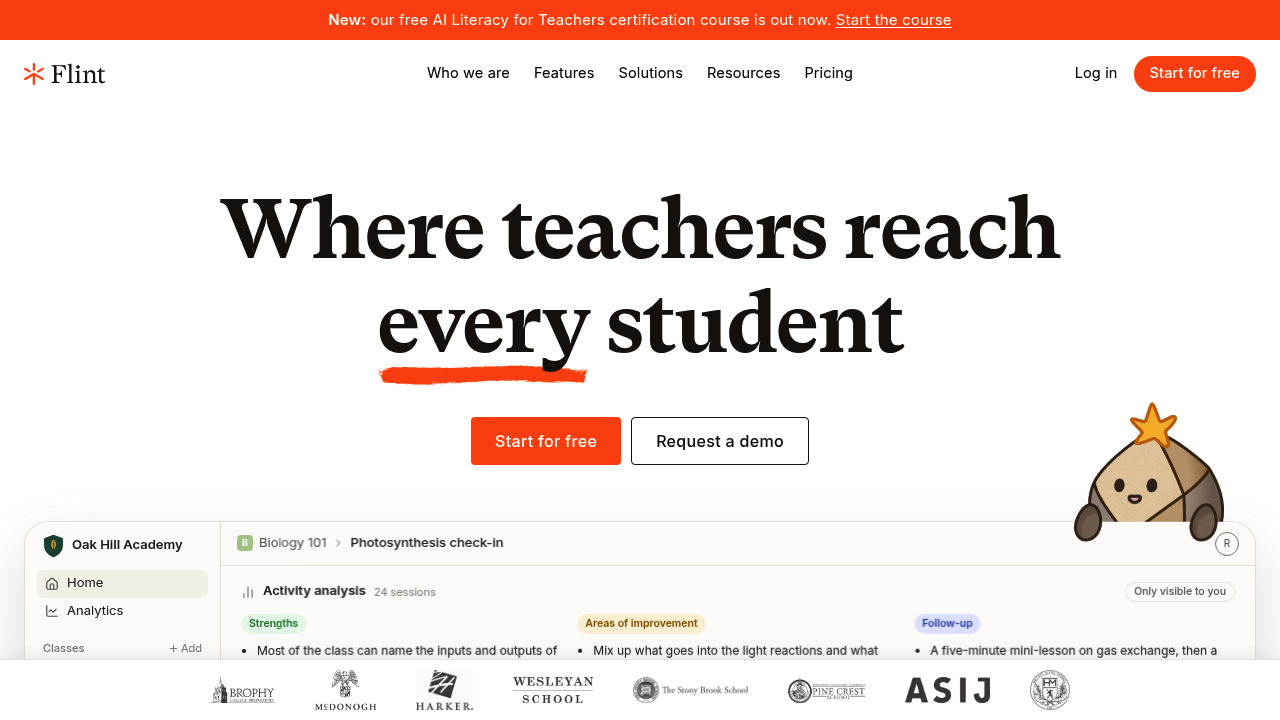
Flint is an AI platform that lets teachers build personalized learning activities for their students. Each student gets one-on-one attention from an AI tutor, while the teacher sees live session data on who has started, who has submitted and where the class is struggling. The AI is built to prevent cognitive offloading, so students are pushed to think instead of receiving answers. Flint is free for up to 80 users, and school licenses start at $3,000 per year for up to 150 users.
Flint is for K-12 teachers across subjects, from math and science to languages and humanities, along with school leaders and technology coordinators who set AI policy. Over 200,000 teachers use it, and the company says students of any age can use it, though schools typically roll it out from grade 3. Small pilots fit the free tier, while schools needing SIS or LMS integration, school-wide analytics and a dedicated customer success manager choose a paid tier of $3,000, $4,000 or $6,500 per year depending on size. Larger districts receive custom pricing.
Teachers create activities such as a photosynthesis check-in, then watch the live roster for progress and review strengths and areas of improvement across the class. The AI suggests follow-ups, like a five-minute mini-lesson for students who mixed up gases in the light reactions. Students use it for unit test study guides, to compare homework steps with AI solutions, to practice spoken Spanish and French conversation, and to ask personal questions they hesitate to raise aloud. Teachers also reclaim grading time, take a free AI Literacy certification course, join Campfire sessions and borrow from an AI policy library.