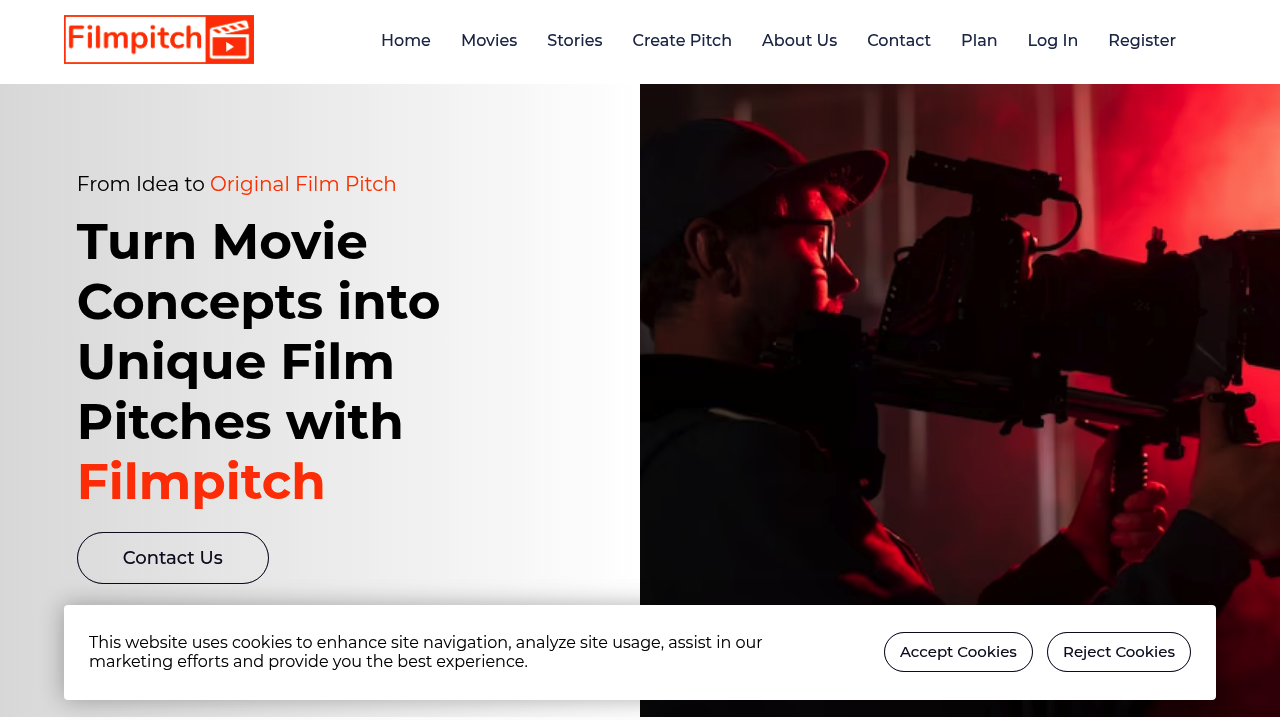
You can't test the pitch before committing your idea to Filmpitch. It doesn't offer a demo mode or preview function, so there's no way to gauge output quality without diving in with your actual synopsis. That's a gamble for screenwriters protective of their concepts.
What it does deliver is speed. Feed it a short synopsis and it generates a complete film pitch in minutes, pulling from what it describes as an extensive knowledge base of cinematic styles, genres, and narrative structures. Filmpitch doesn't just pad your logline with filler. It builds out character arcs, thematic elements, and tonal direction into something you could present to a producer or use as a development roadmap.
The expansion happens fast. Instead of spending days researching comp titles or refining your genre positioning, Filmpitch draws connections between your core idea and established cinematic frameworks. You get a structured pitch that stands on its own, not a collection of bullet points you still need to flesh out.
It's built for filmmakers and creative professionals who need to move quickly from idea to presentation. Independent producers pitching to studios. Development executives testing concepts before greenlighting script commissions. Writers who want to see how their premise holds up when forced into a formal structure.
The interface stays out of your way. No steep learning curve. No multi-step workflows. You input your synopsis, and the AI handles the heavy lifting of translating that kernel into a fully realized concept.
Where it falls short is transparency around the knowledge base itself. You don't know which films, genres, or narrative theories the AI prioritizes, so there's no way to predict whether your niche subgenre will get the same treatment as mainstream action or drama.