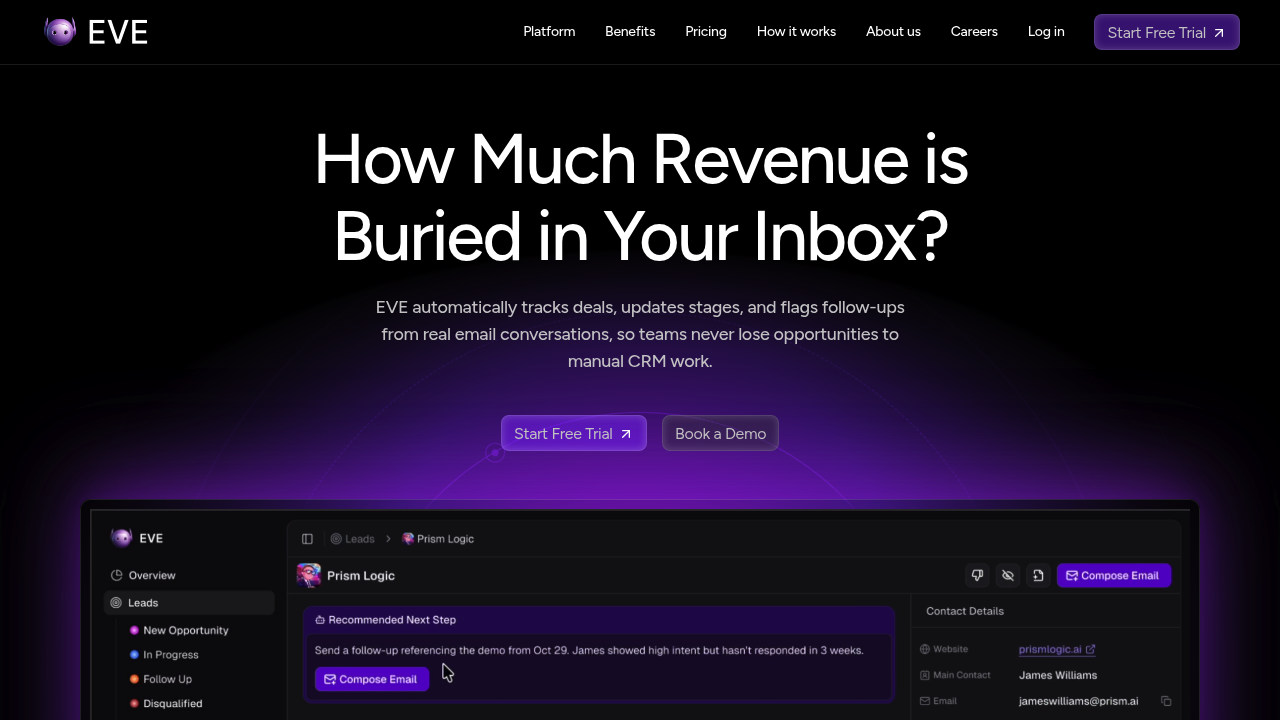
A real estate agent handles 40 email threads with potential buyers at different stages. Three deals went quiet last week, but she didn't notice because her inbox moves too fast. EVE scans her Gmail automatically and flags those three stalled conversations, then generates follow-up emails that reference the specific properties and previous discussion points. She approves with one click.
EVE watches email conversations for revenue signals rather than forcing deals into a traditional CRM. When a prospect mentions budget numbers or asks about implementation timelines, EVE catches it. The system learns what actual deals look like for that specific business instead of applying generic rules. A digital agency founder sees all active projects and proposals in one dashboard, with leads automatically scored based on how closely they match the agency's ideal client profile.
EVE creates pipeline stages from email activity. When a prospect replies asking for a proposal, the deal moves forward automatically. When someone goes silent for two weeks, the system sends an alert. The dashboard shows revenue overview across all tracked conversations without manual data entry. For teams, everyone sees the same pipeline view. A three-person consulting firm can track deals across all their inboxes in one shared space.
The AI generates context-aware follow-ups that pull details from previous email exchanges. It references the specific pain points discussed, the solution proposed, and the last action item mentioned. But it never sends anything without approval. Users review and edit before hitting send.
Setup takes under a minute because there's no field mapping or workflow building. Connect Gmail or Outlook, and EVE starts analyzing the last three months of email history on the Solo plan. Team plans get custom inbox history depth and can connect up to three inboxes. Additional inboxes cost $49 each.
HubSpot users get read-only integration. EVE pulls data from HubSpot without changing anything in the CRM. It acts as an AI layer on top rather than a replacement. The system watches both the inbox and HubSpot to understand deal status.
EVE doesn't work for high-volume transactional sales where deals close in days. It's built for medium to long sales cycles where relationships develop through email threads. A SaaS startup with a 60-day sales cycle fits. An e-commerce store with thousands of one-off purchases doesn't. EVE targets companies with 10-50 people who don't have dedicated Sales Ops teams.
Solo plan costs $99 monthly for one inbox with three-month history. Team plan runs $249 monthly for up to three inboxes with shared dashboards and HubSpot integration. Enterprise pricing is custom. All plans include unlimited usage and AI-generated follow-ups.
The system never stores actual emails. Data gets encrypted and de-identified before processing. User data doesn't train the AI models. It's EU-US Data Privacy Framework compliant.
Limitations matter here. Solo users get only one inbox and can't see beyond three months of history. Team plan caps at three inboxes unless you pay for extras. This doesn't replace full CRM systems with complex automation needs or reporting requirements. It fills the gap for email-heavy businesses where deals live in threads, not structured databases.
Professional services firms, event managers, legal practices, and small agencies benefit most. They run on email. Their sales cycles stretch weeks or months. They can't justify enterprise CRM costs or dedicated ops staff. EVE watches the inbox they already use.