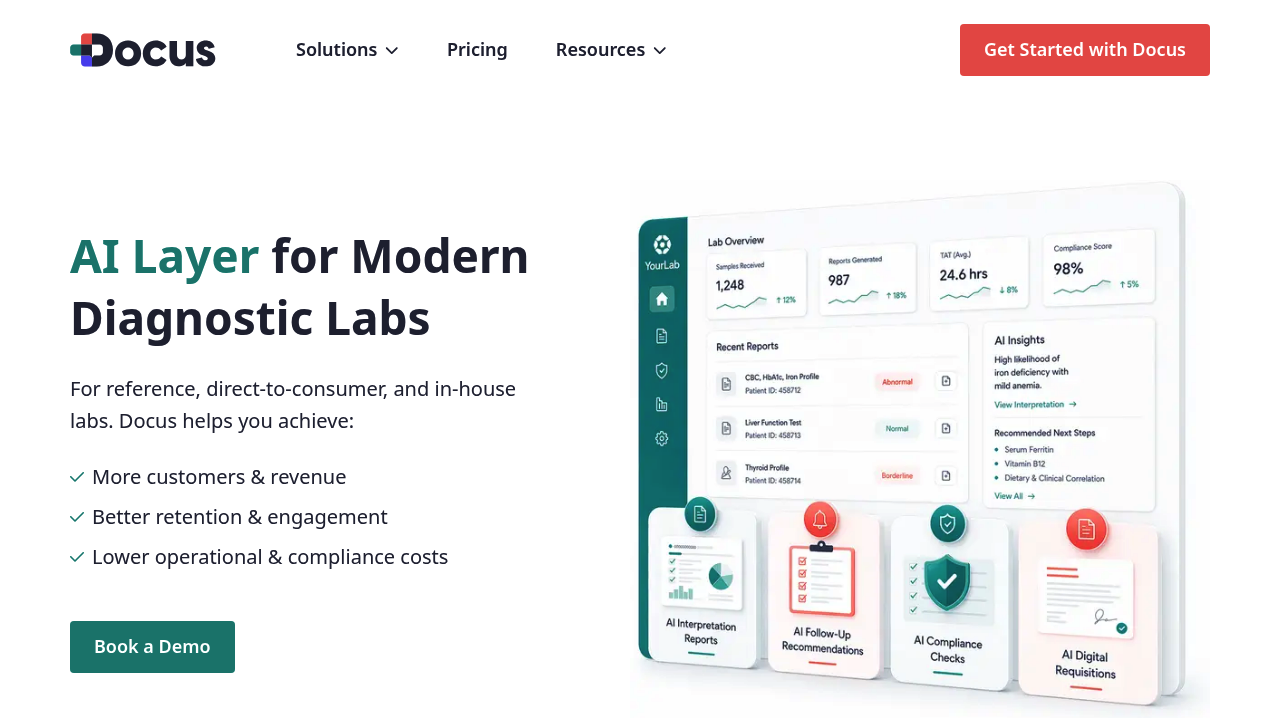
Docus is an AI health platform that interprets lab results, and its lab-facing product adds an AI layer on top of a diagnostic lab's workflow. It produces clinical reports for doctors with differential diagnosis, follow-up suggestions and clinical plans, plus patient-friendly reports that explain results in plain language. Labs can also add follow-up reminders, compliance checks and digital requisitions. Doctors have their own plans: a free tier at $0 that manages one patient, then Starter at $25 a month, Pro at $50 and Ultimate at $100, each billed annually.
Direct-to-consumer labs, reference labs and in-house labs inside hospitals and clinics make up the audience for the lab software, and its pricing is custom depending on test volume, workflow complexity and regional rules. Individual doctors and small practices can sign up for the Doctor plans to get an AI medical assistant, lab interpretation and SOAP notes. Lab operations managers, medical directors and billing or compliance staff are the people who benefit from automated order checks, and patients receive the readable reports.
A lab can send results through an API or HL7 and receive structured interpretation reports in its LIS, CRM or EHR, or use Docus interfaces with no integration work. Follow-up test suggestions and timely patient notifications help bring patients back, while the compliance agent checks ordered tests against diagnosis codes and repeat testing frequency rules to reduce denials. Supported tests span microbiology, pathology, toxicology and pharmacogenomics. A doctor might upload a patient's blood panel, get an interpretation with context from earlier results, and share a simple summary with the patient.