
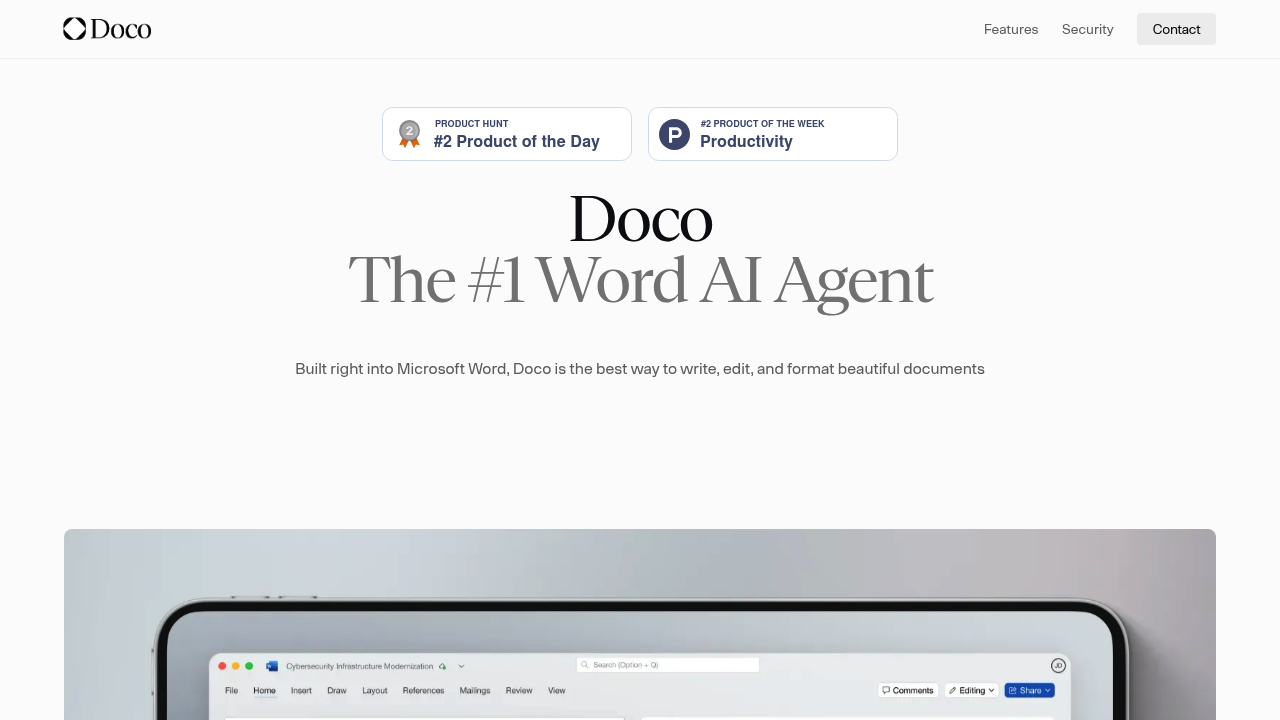
Professional writers who need AI assistance without leaving Microsoft Word can draft and edit documents using their company's existing knowledge base through this specialized Word agent. Doco works directly inside Word with tracked changes, pulling from organizational files rather than generic training data.
The drafting system references specific source documents when generating text. Every piece of AI-written content traces back to particular files and sections in the company library, letting writers verify claims and maintain accuracy standards. This system converts existing document collections into AI-ready knowledge bases that inform all generated content. Writers can point to internal reports, past proposals, research papers, or style guides, and the system will draft new content consistent with that material.
Editing happens entirely within the familiar Word interface. Tracked changes show every modification, maintaining standard review workflows that legal teams and compliance officers expect. Writers can request edits, summaries, or table generation without switching applications or copying text between platforms. The system handles long documents that typically overwhelm general-purpose AI tools, maintaining context across dozens or hundreds of pages.
The workflow learning feature adapts to individual writing patterns. As users work, Doco observes their editing preferences, formatting choices, and content organization methods, then tailors future suggestions to match those habits. This personalization means the system becomes more useful over time rather than delivering generic outputs that require heavy revision.
Real-time refinement lets writers iterate quickly. Formatting automation handles tedious layout tasks. Error detection catches inconsistencies that human eyes might miss during tight deadlines. The system has processed over 1 million words and serves more than 2,000 writers, including over 100 professional writing specialists. Users report draft-to-final turnaround times that are 10 times faster than traditional methods.
The user base spans graduate students managing thesis research, government contract managers assembling compliance-heavy proposals, lawyers drafting briefs, and businesses from small firms to Fortune 500 companies. Each group uses the same core functionality but applies it to their specific document types and knowledge bases.
Security infrastructure meets enterprise requirements. SOC 2 Type II certification demonstrates audited controls. FedRAMP compliant infrastructure supports government clients. The system never trains models on customer data, addressing confidentiality concerns that prevent many organizations from using general AI tools. On-shore single-tenant segregated infrastructure with zero-trust architecture keeps each organization's documents isolated from other users' data.
The Microsoft Word integration is the sole supported platform. Writers working in Google Docs or other word processors cannot access the functionality.