
You're a UX researcher staring at weeks of user interviews, design mockups scattered across Figma, and a nagging feeling you're missing something important in all that data. Discova AI wants to be the pattern-finding engine that catches what you cannot see.
This software follows a four-step workflow. You connect your existing design assets first. The AI then analyzes everything you've fed it, looking for hidden insights in both visual designs and raw research data. Once analysis finishes, you explore the AI-generated insights through its interface. Finally, you're supposed to integrate those findings back into your existing workflow.
The visual analysis feature scans designs and surfaces insights you might've missed. If you've got research transcripts or survey responses, the research synthesis tool transforms that raw data into something actionable instead of just sitting in a spreadsheet. The design variations feature generates alternative layouts and iterations, which could save hours of manual mockup work.
Where it gets interesting is the usability analytics. This software creates visualizations showing user behavior patterns, helping you spot friction points. It'll suggest improvements for visual hierarchy, recommend filter controls for content-heavy interfaces, and point out navigation clarity issues. there is also an A/B testing ideas generator that proposes testing strategies based on what the AI found in your designs.
The persona creation feature builds user personas with AI assistance, though it's unclear how much manual input you'll still need versus how much the AI truly handles.
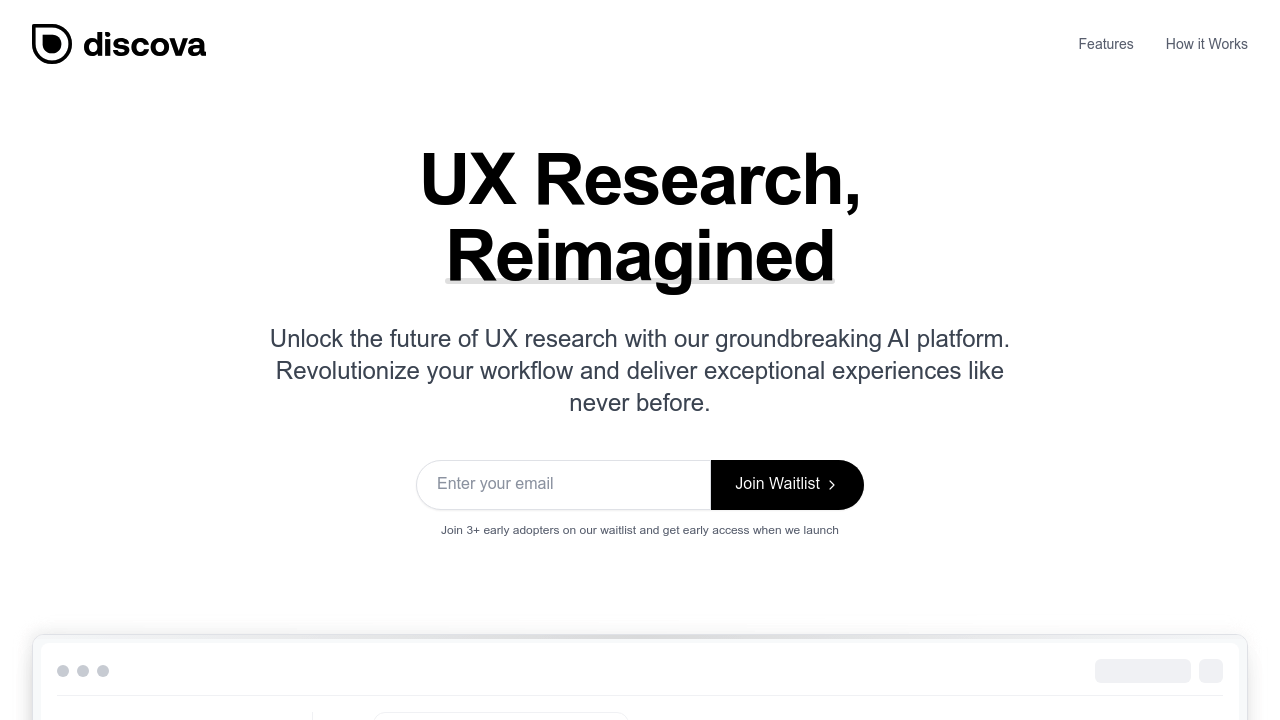
Here's the catch. You can't actually use it. Discova AI is stuck in waitlist mode with over 2,000 early adopters waiting for access. There's no working demo, no way to test a single feature, no timeline for when it'll open up. You're committing to an idea, not a product.
The whole thing hinges on whether the AI can actually catch meaningful UX issues versus generating generic suggestions any designer already knows. Does it understand context? Can it distinguish between intentional design choices and actual problems? The marketing promises simplified workflows and exceptional user experiences, but without hands-on access, that's just promises.
For UX researchers drowning in data or designers iterating endlessly on layouts, the concept sounds useful. But right now it's vaporware. You join the waitlist and wait. That's the entire experience.