
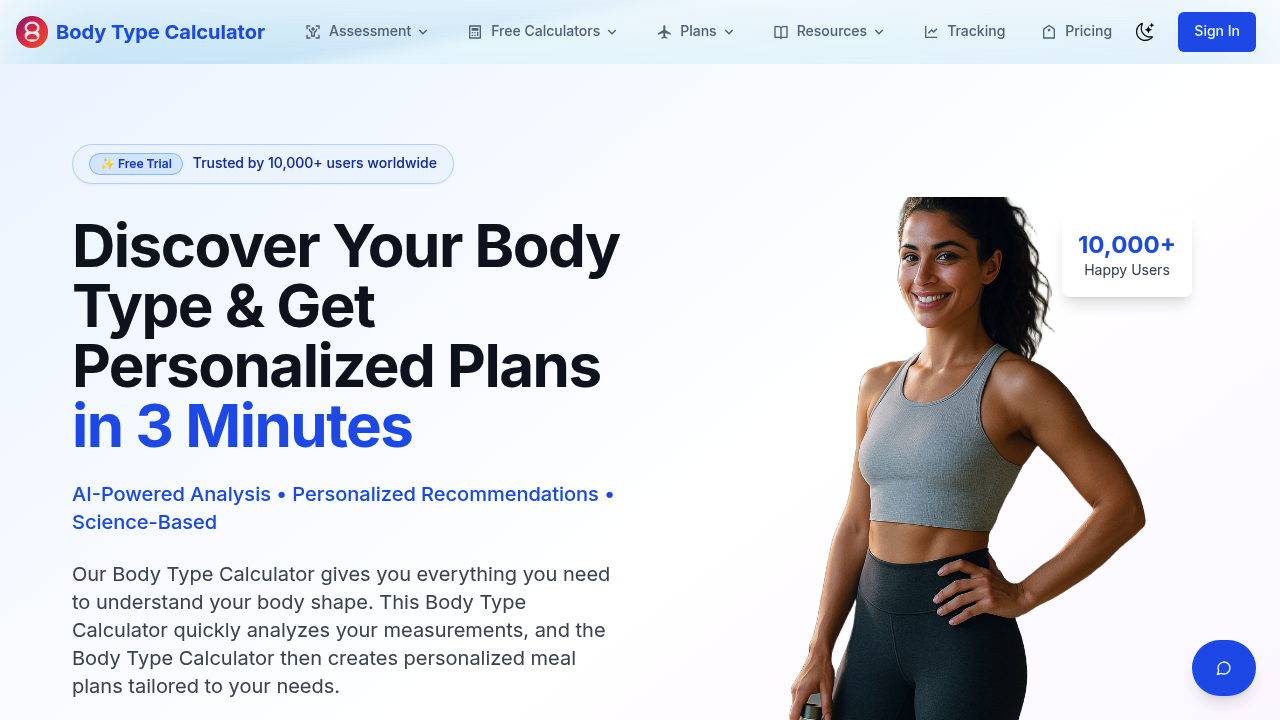
This application takes four body measurements and runs them through research-based algorithms to classify users into one of seven distinct body shape categories. Those categories include Hourglass, Bottom Hourglass, Top Hourglass, Spoon, Triangle, Inverted Triangle, and Rectangle. The classification happens in about three minutes and claims 98% accuracy based on over 10,000 users worldwide.
After determining body type, the system generates AI-powered meal plans tailored to the specific classification, activity level, and nutrition goals entered by the user. These aren't generic diet templates. The meal planning adapts to the physiological characteristics associated with each body shape category. Workout routine recommendations follow the same personalized approach, matching exercise suggestions to body type analysis results.
Style and clothing recommendations get delivered as part of the output package. The system tells users which cuts, silhouettes, and garment types work best for their classified shape. This connects body analysis with practical wardrobe decisions.
The measurement process requires bust, waist, high hip, and hip dimensions. A detailed measurement guide walks users through proper technique for capturing these four data points. Get the measurements wrong and the classification shifts. The guide matters.
Progress tracking tools let users log changes over time. This becomes relevant for people using the meal plans and workout routines who want to monitor how their measurements shift with lifestyle changes. The tracking connects the initial assessment to ongoing body composition management.
Everything runs free. No paid tiers exist. The complete body analysis, personalized recommendations, meal plans, workout routines, and style guidance come at zero cost. Privacy protection gets emphasized in the free offering. No payment barrier blocks any feature.
Discord integration provides the only external platform connection. This likely serves as a community space or support channel for users comparing results and discussing recommendations.
The system targets anyone wanting structured guidance based on body shape classification. People struggling with generic fitness advice find value here. So do users seeking style recommendations that account for their proportions. The nutrition angle attracts people who believe body type affects metabolic response or macronutrient needs.
The assessment takes three minutes. that is fast enough to avoid abandonment but long enough to feel substantive. The measurement requirement adds a barrier compared to purely visual assessments, but it probably improves accuracy. Users need measuring tape and a few minutes of privacy. The research-based algorithm claim suggests scientific backing, though the specific studies or methodologies aren't detailed in available information.