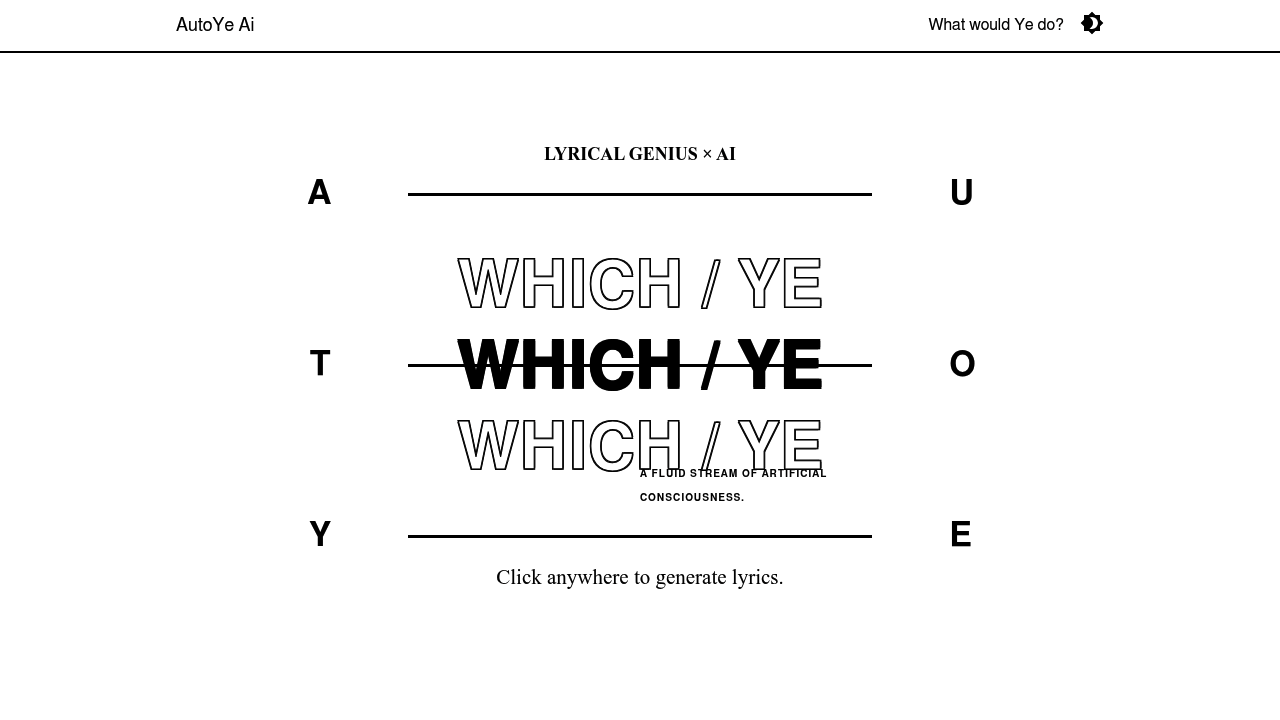
This web-based application generates original lyrics that mimic Kanye West's distinctive rap style through artificial intelligence. Users click a simple interface to produce AI-written verses that capture the flow, themes, and linguistic patterns associated with the artist's catalog. The generator includes a "Calm Ye Mode" toggle and a Which/Ye selector that offers multiple style variations, letting users explore different eras or moods of Kanye-inspired content. Created by Frank Flitton as fan art with source code available on Github, this application is completely free to use with unlimited generation access and no subscription required.
The primary audience consists of Kanye West enthusiasts who enjoy experimenting with AI interpretations of his artistic voice, along with hip-hop fans curious about computational creativity in music. Aspiring songwriters and lyricists might use it as a creative prompt generator or to study structural patterns in rap composition. Content creators on social media platforms often turn to applications like this for entertainment value or to generate shareable material that plays on cultural references. The accessibility and zero-cost model make it particularly appealing to casual users who want to experiment without financial commitment or technical setup.
This application fits naturally into creative brainstorming sessions where writers need inspiration or want to break through blocks by seeing unexpected phrase combinations. Music students analyzing contemporary rap styles can generate multiple examples quickly to identify recurring themes, rhyme schemes, or vocabulary choices characteristic of the artist's work. Social media managers and meme creators use it to produce culturally relevant content that connects with hip-hop communities. Because it operates entirely through a web interface with no installation needed, users can access it during quick breaks or integrate it into longer creative workflows without disrupting their existing setup. The artificial consciousness stream output provides an ongoing flow of generated material rather than single-line results, making it useful for gathering larger bodies of text to mine for usable fragments.