
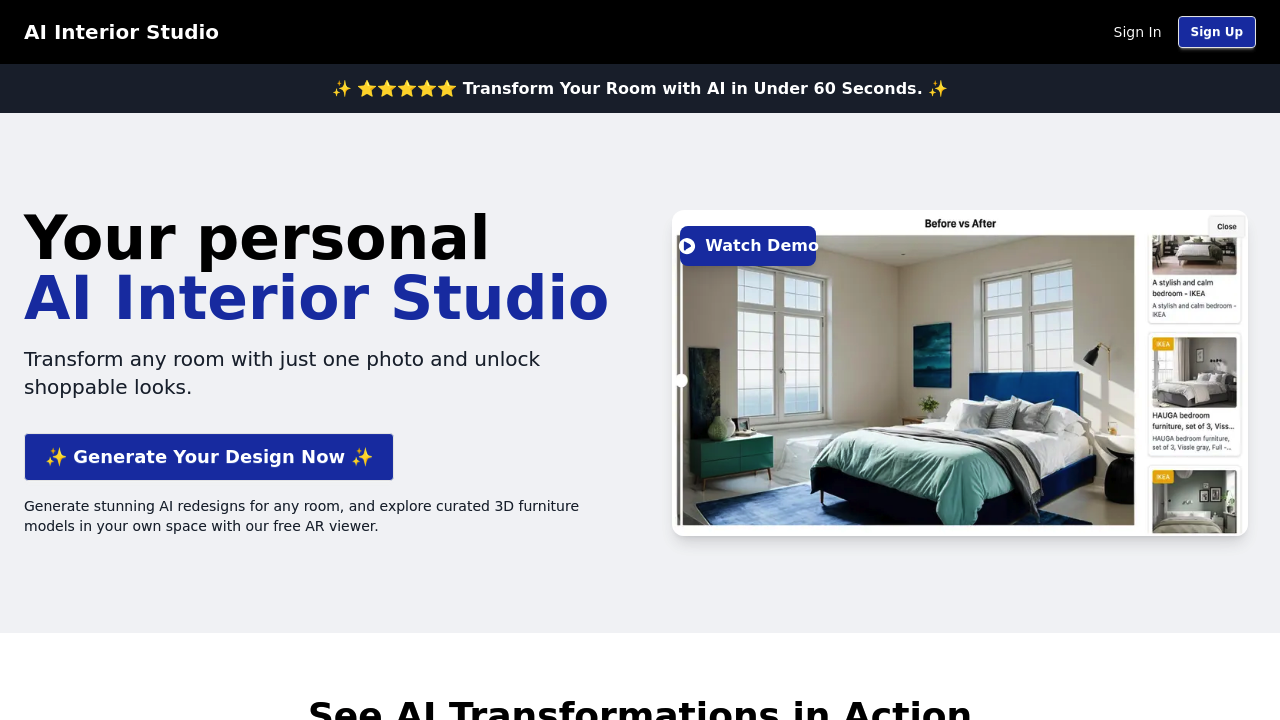
AI Interior Studio processes a single room photo through diffusion models to generate redesigned interior concepts in under 60 seconds. The system analyzes spatial layout, existing furniture placement, and architectural features to create alternative design proposals. Users upload an image, and the AI outputs transformed versions with different aesthetic directions.
The technical pipeline combines computer vision for room understanding with generative diffusion models for design synthesis. This system identifies walls, floors, windows, and existing furniture as anchor points. It then generates cohesive redesigns that maintain spatial proportions while introducing new color schemes, furniture arrangements, and decor elements. Output quality depends on photo clarity and lighting conditions.
What separates this from pure visualization tools is the shopping layer. The service includes product recognition that identifies furniture pieces in any photo, whether from the AI-generated designs or external images. When users find a piece they like, the system searches inventory from IKEA, Amazon, and Walmart to locate matching or similar items. The search prioritizes retailers based on the user's country, routing to regional catalogs. This connects inspiration and purchase without manual searching across multiple sites.
The AR component uses device cameras to overlay 3D furniture models into physical spaces. Users can preview how specific pieces will look in their actual rooms before buying. The service maintains a library of curated 3D models that match real products available through the retail integrations.
Real estate professionals can use this system to stage empty properties virtually. The AI generates furnished versions of vacant rooms to help potential buyers visualize spaces. The same technology applies to personal home redesign projects.
Data flow runs from photo upload through the diffusion model pipeline to design output, then optionally through product matching algorithms if users engage the shopping feature. The AR viewer operates locally on device hardware using the 3D model library.
The free tier includes full AR access and the ability to explore the 3D furniture model collection. Users can experiment with virtual furniture placement without cost.
Technical constraints stem from the diffusion model's training data. Generated designs reflect patterns learned from existing interior photos, which may limit truly unconventional aesthetic directions. Photo quality directly impacts output accuracy. Poor lighting, extreme angles, or cluttered rooms can confuse the spatial analysis. The product matching system works best with clear furniture photos and may struggle with unique or custom pieces not carried by the three retail partners.