
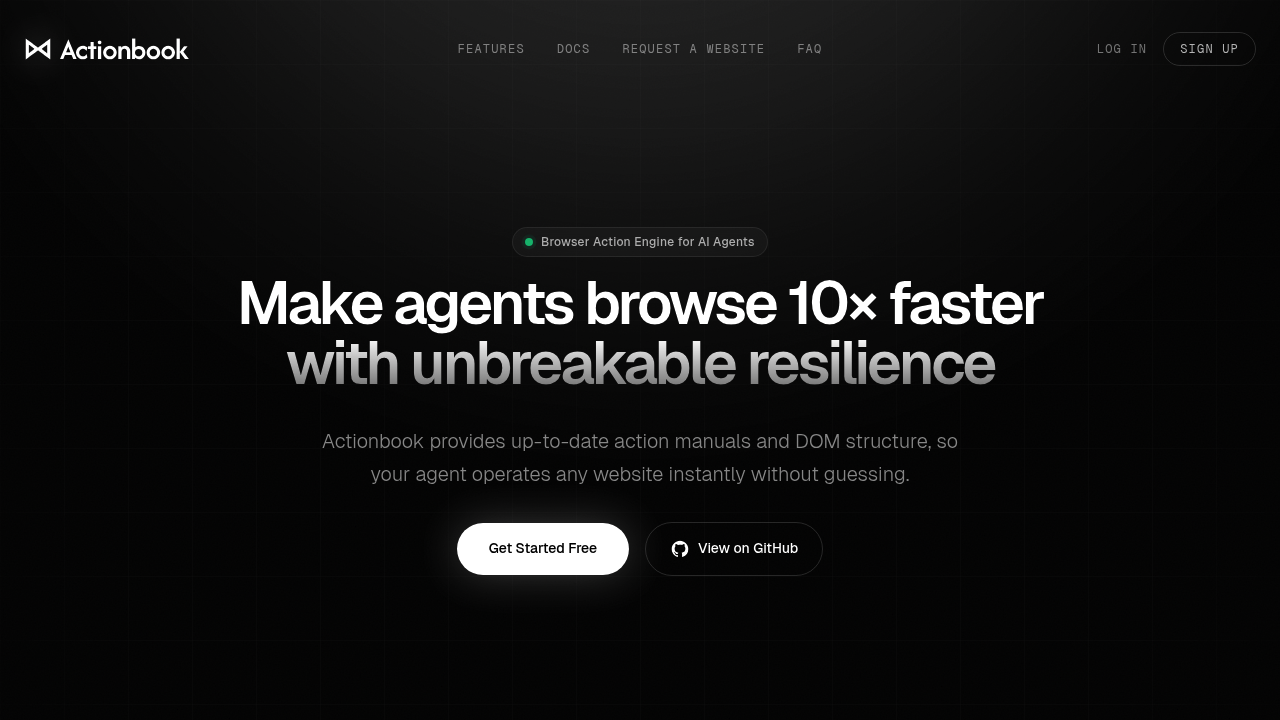
Actionbook claims agents browse websites 10x faster. You skip the usual trial-and-error approach to finding page elements. Your agent won't parse raw HTML and guess which button to click. You get pre-built action manuals instead—they spell out exactly what's clickable and where it lives in the DOM.
The system targets modern web complexity head-on. React apps with virtual DOMs? Handled. Streaming components that load asynchronously? Covered. Single-page applications that constantly shift their structure? No problem. You aren't getting static snapshots. Verified selectors point to the right elements even when pages update dynamically.
Setup flexibility matters here. Actionbook works as a CLI tool for quick local testing. It also integrates deeper through MCP tools and a JavaScript SDK. Pair it with whatever language model you prefer—same goes for agent frameworks and browser automation libraries. No forced dependencies.
Picture a backend engineer building an agent to monitor competitor pricing. Normally they'd burn tokens having the agent figure out each site's navigation flow. With Actionbook? The manual already maps those steps. The agent just executes.
Token savings are notable. Actionbook estimates you'll use 100x fewer tokens (agents aren't processing entire page structures to understand what's interactive). That adds up fast if you're automating tasks across multiple sites daily.
Coverage depends on whether Actionbook already supports the websites you need. There's a request feature for adding new sites—but that introduces wait time you might not have for urgent projects.