
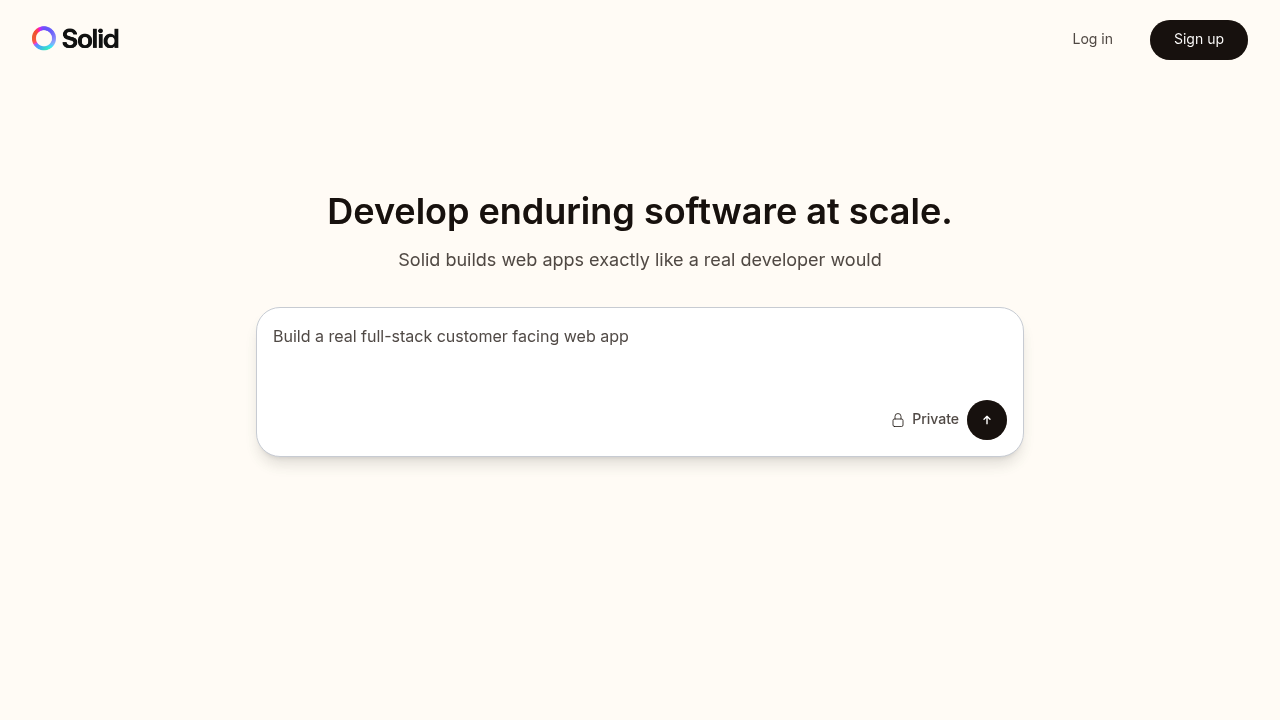
Solid translates natural language descriptions into production-ready web applications through an AI-powered code generation pipeline. You describe what you need in plain language, and the system outputs functional enterprise software with database schemas, business logic, and user interfaces already configured. The system targets internal tools, admin panels, and operational dashboards rather than customer-facing products.
The technical architecture emphasizes security at the infrastructure level. Data gets encrypted both in transit and at rest through end-to-end encryption protocols. Access control operates through role-based permissions, and audit logs track every system interaction for compliance purposes. Regional data hosting lets you choose between EU or US servers, which matters for data residency requirements. Solid aligns with GDPR and SOC 2 compliance frameworks, though it doesn't claim full certification status.
Real-time data connections form the core of how Solid works. The system connects to legacy ERPs, IoT systems, and operational databases that enterprises already run. These aren't API wrapper integrations. The system reads directly from existing data sources and writes back when needed. This approach lets you build tools that interact with decades-old enterprise systems without middleware layers.
The generated code includes reusable components and modules that teams can modify and deploy across multiple applications. You can push the finished software to your own infrastructure rather than hosting it on Solid's servers. This deployment flexibility matters for enterprises with strict infrastructure policies.
Team collaboration features let multiple developers work on the same project with governance controls. Solid guarantees enterprise app delivery in seven days, which is a specific timeline commitment rather than an estimate.
The technical limitation here is that Solid focuses exclusively on internal enterprise tools. It won't generate consumer applications or marketing websites. The service also assumes you are working with existing enterprise data sources. If you're starting from scratch without legacy systems, the integration features won't provide value.
The comparison point is Retool, which suggests Solid positions itself in the low-code enterprise tool space but with more emphasis on AI-generated code rather than visual builders. Solid claims to produce tools that engineers prefer using, which implies the output quality aims higher than typical drag-and-drop interfaces.
The seven-day guarantee is unusual. Most AI code generation platforms avoid timeline commitments because requirements often expand during development. Solid's willingness to guarantee delivery suggests either highly constrained scope or significant confidence in their generation pipeline.