
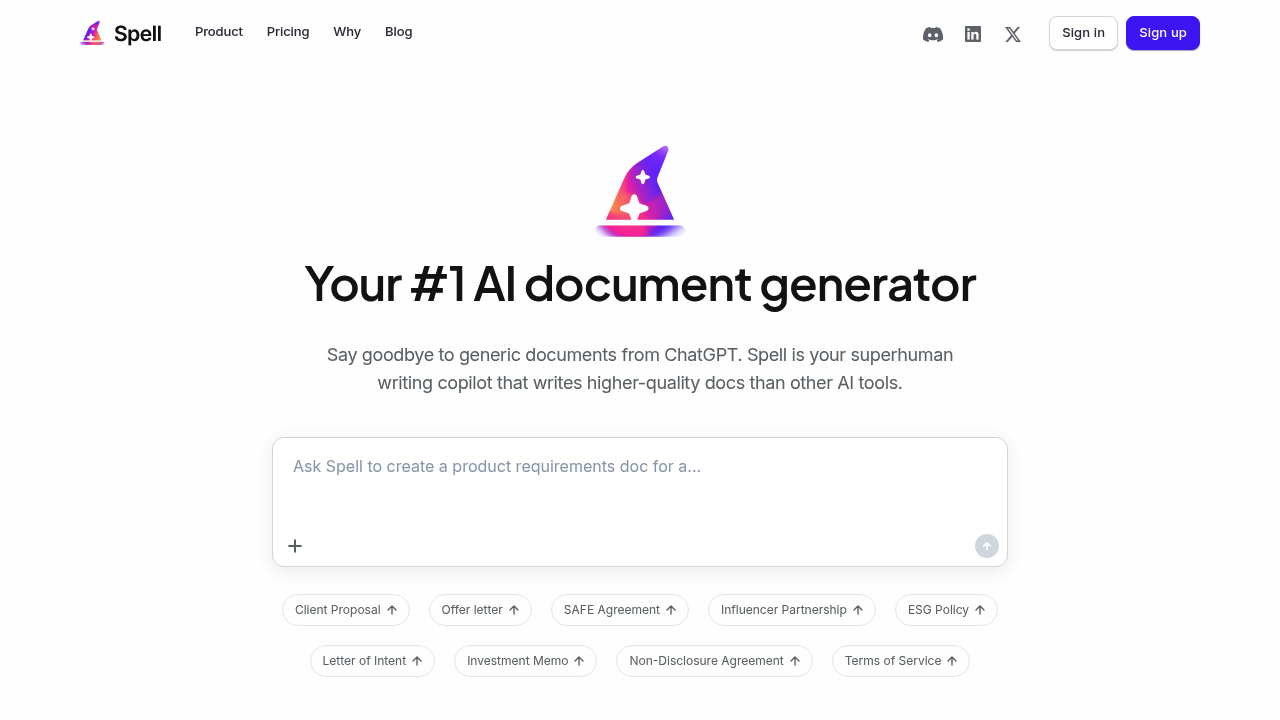
A marketing manager needs to draft a product launch announcement. She opens Spell and types "Write a press release announcing our new project management software." The AI generates a full draft with proper formatting. She then highlights a paragraph and says "make this sound more exciting" or "add statistics about productivity gains." The document updates in real-time while maintaining its structure. Her team sees the changes live and can jump in to edit alongside the AI.
A graduate student writing his thesis opens a traditional word processor, switches to a chatbot for help with a paragraph, copies the response, pastes it back, fixes the formatting that broke, then repeats this cycle dozens of times. Spell eliminates that dance. The AI lives inside the document editor. He highlights muddy sentences and asks the AI to clarify them. The formatting stays intact. The revision history tracks everything. His advisor can collaborate on the same document without switching platforms.
A startup founder needs investor decks, one-pagers, and email campaigns. She's working with a small team spread across time zones. Spell's real-time collaboration means everyone sees updates instantly while the AI helps draft sections, refine messaging, and polish tone. Spell prompts her through document creation with templates and guided flows, so she's not staring at a blank page.
The AI responds to natural language commands for both generation and editing. Type what you want written or select text and describe how to change it. No need to learn special syntax or formatting codes. The system maintains proper document structure throughout, so headers stay headers and lists stay formatted correctly even after AI edits.
Free users get the collaborative doc editor with 10 documents and 10,000 AI credits monthly. That's enough for light use but runs out fast if you're drafting multiple long-form pieces. Pro at twenty bucks monthly removes the document limit and bumps credits to 100,000. Business at forty dollars monthly offers unlimited AI usage plus single-sign on and organization features for teams.
The credit system creates a planning problem. You can't always predict how many credits a project will consume. A simple blog post might need 500 credits while a complex report could burn through 5,000. Run out mid-month and you're stuck waiting or upgrading. The free tier's 10-document cap is tight for anyone managing multiple projects simultaneously.
This doesn't connect to other tools. No integrations listed means your documents live in Spell or get exported elsewhere. Teams already embedded in specific workflows might find this isolating. There's no API access mentioned either, so automated document generation from other systems isn't happening.
Spell works for professionals and teams creating business documents, academic papers, personal writing, or marketing materials. It's built for people who spend significant time drafting and revising text-heavy documents collaboratively. A consultant writing client proposals daily would benefit. A content team producing articles, case studies, and white papers would benefit.
Skip this if you need AI integrated into existing document workflows. Skip it if you work primarily in specialized formats that require specific software. Skip it if your document needs are sporadic and you'd rather use a general chatbot for occasional help. The credit limits on lower tiers make this impractical for heavy daily writing without jumping to the Business plan.