
Qdrant logo

Qdrant

Vectors at scale

61 views
Visit qdrant.tech
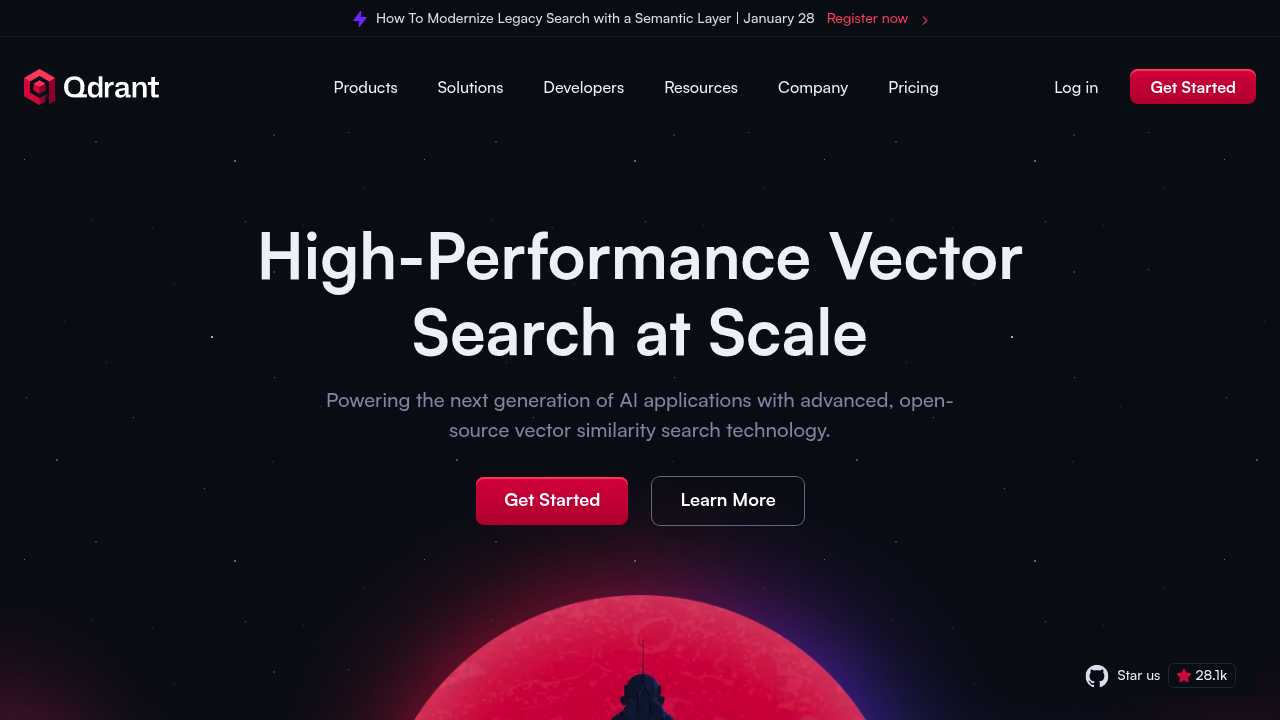
Qdrant screenshot

Rust powers Qdrant's vector database engine. Most developers don't pick Rust casually — it's demanding upfront but delivers serious performance when you're handling billions of vectors.

This open-source vector search engine does something ChatGPT can't: it stores and searches through massive collections of vector embeddings at production scale. ChatGPT generates text responses. Qdrant finds similar items in datasets containing billions of vectors. Machine learning engineers building recommendation systems need exactly this kind of specialized database.

Qdrant handles the heavy lifting after you've created embeddings. Say you're running an e-commerce site with millions of products — you'd use it to find visually similar items or recommend products based on user behavior patterns. Scaling happens vertically and horizontally. No downtime required.

Compression features keep costs reasonable when dealing with large datasets. You can offload older data to disk instead of keeping everything in expensive RAM. Docker deployment makes integration straightforward enough, though you'll still need to understand vector operations.

Community plan costs nothing. Managed cloud service starts at $25 monthly, which isn't unreasonable for a specialized database that can actually handle enterprise-scale vector search. GitHub shows 28.7k stars. Real momentum there.

Don't expect plug-and-play simplicity. Traditional SQL databases are easier to work with.

Frequently asked

7 questions
Why is Qdrant built in Rust instead of Python or JavaScript?
Rust gives Qdrant the memory safety and speed it needs for billions of vectors. No crashes, no slowdowns. Python can't handle this scale -- it'd struggle badly. JavaScript? Forget it for high-performance database stuff. Sure, Rust makes contributing harder, but the performance gains are totally worth it.
How does Qdrant's compression work to reduce storage costs?
It compresses vector data and moves old vectors from RAM to disk. Frequently accessed stuff stays in fast memory, less-used data goes to cheaper disk storage. You'll save serious money on cloud hosting when your datasets outgrow RAM capacity.
What's the difference between Qdrant's community plan and managed cloud service?
Community plan's completely free -- all core features for self-hosting. Managed cloud starts at $25/month and handles deployment, scaling, maintenance for you. Choose managed if you don't want to deal with infrastructure headaches.
Can I use Qdrant without understanding vector embeddings?
Not really. Qdrant assumes you're already generating vector embeddings from your data using ML models. It's the database that stores and searches these vectors -- not the tool that creates them. You need to understand embeddings first and have a pipeline generating them.
How does Qdrant handle scaling when my vector dataset grows?
It scales vertically (more CPU/RAM to existing servers) and horizontally (distributing data across multiple machines). Scaling happens without downtime -- your search service stays online while adding capacity. This matters when you're growing from millions to billions of vectors.
What makes Qdrant different from traditional databases for similarity search?
Traditional SQL databases aren't built for vector similarity calculations. They'd be painfully slow with large datasets. Qdrant uses specialized indexing algorithms designed specifically for finding similar vectors quickly. PostgreSQL might take minutes for searches that Qdrant completes in milliseconds.
Is Docker the only way to deploy Qdrant?
Docker's the easiest method, but you can compile from source or use pre-built binaries too. Docker handles dependencies and configuration automatically. Running on Kubernetes or need custom builds? You've got other options available.

Traffic

Estimated monthly website visits · last 4 months

330.7K visits/mo
Monthly visits
330.7K
↓ 9.0% MoM
Global rank
#144,424
IN #48,076
Category rank
#80
Development & Code
363.4K 351.5K 339.6K 327.7K 315.9K Nov 2025: 315.9K visits Nov 2025 Dec 2025: 319.2K visits Dec 2025 Jan 2026: 363.4K visits Jan 2026 Feb 2026: 330.7K visits Feb 2026

Data from SimilarWeb · Updated monthly.

Reviews (0)

Write review

No reviews yet. Be the first to share your experience.

Similar tools

See all →