
OpenAI API logo

OpenAI API

The API powering the AI ecosystem

78 views
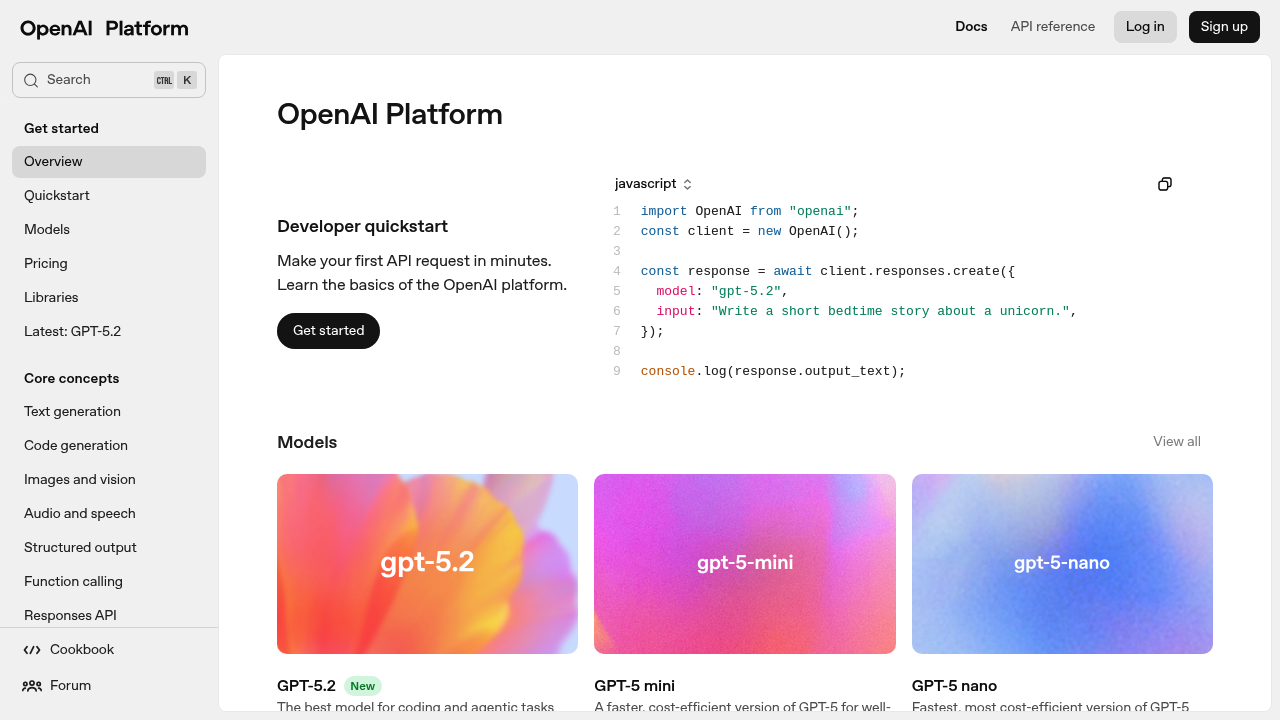
OpenAI API screenshot

You'll pay from the start with OpenAI API. No free tier exists. No testing the waters without opening your wallet. Pricing follows pay-per-use based on tokens consumed.

Getting started means diving straight into documentation that assumes you know APIs. The learning curve hits harder if you're coming from drag-and-drop tools. You'll wrestle with authentication. Rate limits. Token counting. Then you see results.

Backend developers building chatbots for enterprise clients will find this familiar territory.

OpenAI's REST API structure follows standard patterns once you grasp the token system. Say you're building a customer service bot that needs to handle 1,000 conversations daily. You'll calculate costs based on input and output tokens — factor in the model you choose and monitor usage to avoid surprise bills. Pricing can escalate quickly with GPT-4 if you're not careful about prompt engineering.

Documentation covers the basics well enough. Code examples exist for popular languages. But you'll spend time figuring out optimal prompt structures and managing conversation context on your own.

Models perform as advertised when you feed them properly structured requests. Response times stay reasonable for most use cases. You won't get hand-holding through implementation details though. OpenAI expects you to handle error management and retry logic yourself.


Frequently asked

7 questions
Which programming languages work best with OpenAI API?
Python and Node.js are your best bets -- OpenAI's got official SDKs for both. You'll find community libraries for PHP, Ruby, Go, and others too. Honestly, any language that can handle HTTP requests will work since it's just a REST API, but you'll have way more examples and help with Python or JavaScript.
How do I avoid unexpected bills when using OpenAI API?
Set spending caps in your OpenAI dashboard right away. Keep an eye on token usage -- GPT-4 costs about 20x more than GPT-3.5-turbo (ouch!). Shorter prompts help, and streaming responses can cut down token usage for longer chats.
What's the difference between the various GPT models available through the API?
GPT-4's smarter and more accurate, but it'll cost you. GPT-3.5-turbo handles most chatbot stuff for way less money. The newer GPT-4-turbo gives you bigger context windows for longer conversations -- but yeah, you're paying more per request.
Can I test OpenAI API functionality before committing to paid usage?
Nope, no free tier exists. You'll need to add billing info right off the bat. New accounts usually get some free credits that expire after a few months, so you can test with minimal funding -- but there's no way around paying something.
How do I handle conversation memory with OpenAI API?
The API doesn't remember anything -- you've got to include previous messages in each request. That means managing context yourself and watching those token limits. Most developers store conversation history in their own database and trim old messages when they're hitting limits.
What rate limits should I expect with OpenAI API?
Depends on your usage tier and which model you're using. New accounts start with lower limits that go up as you use it more. You'll want retry logic with exponential backoff -- hitting rate limits gives you HTTP 429 errors that your code needs to handle.
How reliable is OpenAI API for production applications?
Pretty solid uptime most of the time, but you'll hit occasional outages or slowdowns when everyone's using it. No SLA guarantees though -- so build fallbacks if you need high availability. Response times are usually under a few seconds but can spike during heavy usage.

Traffic

Estimated monthly website visits · last 0 months

15.6M visits/mo
Monthly visits
15.6M

Not enough historical data for a chart yet.

Data from SimilarWeb · Updated monthly.

Reviews (0)

Write review

No reviews yet. Be the first to share your experience.

Similar tools

See all →