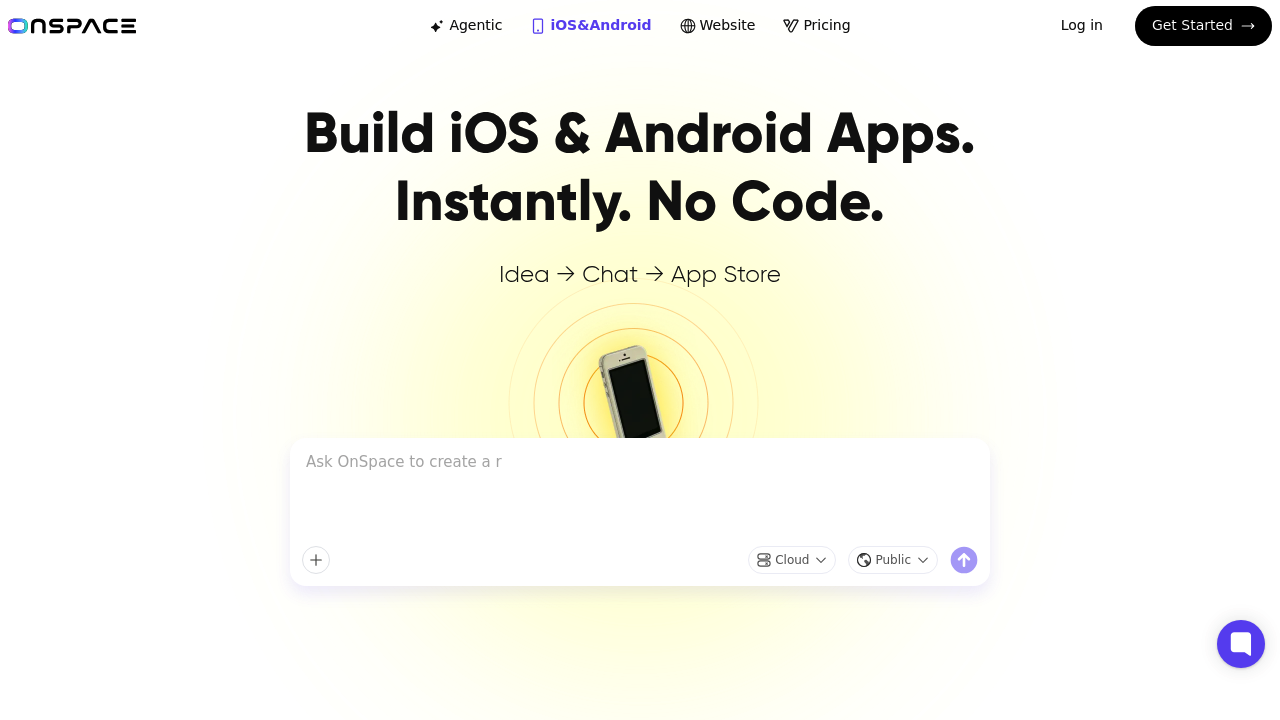
The technical architecture centers on an AI agent that interprets conversational inputs and converts them into app components. This agent mode operates on a usage-based credit system, processing your requests to generate UI elements, navigation flows, and business logic. OnSpace outputs native code for both iOS and Android rather than creating hybrid or web-wrapped apps. This matters for performance and access to platform-specific features.
Behind the scenes, OnSpace connects to Supabase for backend infrastructure. This handles PostgreSQL database operations, user authentication, file storage, and real-time data synchronization. You don't configure these manually. The system provisions them automatically as part of app generation. The data pipeline flows from your conversational input through the AI agent, which then structures the backend schema and generates the frontend code simultaneously.
For developers who want more control, there's a code editor built into the system. This lets you modify the generated code directly, bridging the gap between no-code convenience and custom functionality. The editor works alongside the AI agent, so you can switch between chat-based changes and manual code edits.
Payment processing comes pre-integrated. OnSpace includes Apple Pay, Google Pay, and Stripe connections that you can activate without writing payment handling code or dealing with compliance requirements yourself. This extends to app store publishing. OnSpace handles the submission preparation and compliance checks for both the iOS App Store and Google Play Store, automating what's typically a manual and error-prone process.
The Spaces database feature is currently in Alpha. It provides a built-in backend without relying on external services, but the Alpha status means regular backups are recommended. OnSpace ships improvements constantly, which can introduce instability during development.
Real-time editing works across devices. Changes you make on desktop sync to mobile and vice versa. This lets multiple team members work on the same project simultaneously, though the specifics of collaboration features aren't detailed.
Projects can be public or private. The free tier restricts you to public projects only. This means your app code and structure are visible to other OnSpace users. Private projects require a paid plan starting at twenty-five dollars monthly. The free tier includes the iOS, Android, and web app builder, along with usage-based Agent mode credits and code editor access. Paid plans scale with usage and add more credits and features.
Over one hundred thousand creators use OnSpace. One user reported building an app that generates twelve hundred dollars monthly revenue. Another saved fifteen thousand dollars on MVP development costs. Prototyping time can run as short as forty-five minutes for basic applications.
OnSpace's token budget for AI operations sits at two hundred thousand tokens. This constrains how much the AI agent can process in a single session. Complex apps requiring extensive generation might hit this limit.
The target audience includes non-technical founders, freelancers, teachers, and small business owners. The chat interface lowers the barrier to entry, but the Alpha status of certain features and usage-based credit system mean you're trading traditional development complexity for platform-specific limitations.