
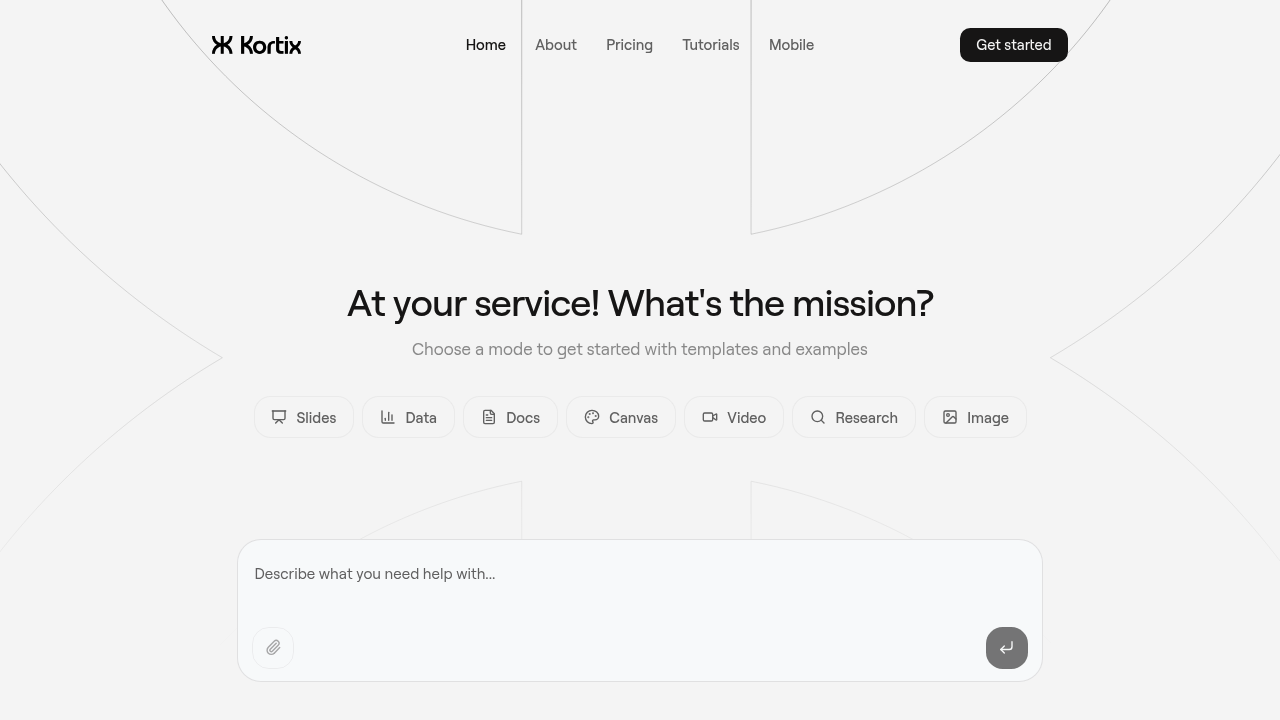
A marketing manager needs to turn quarterly performance data into a board presentation by tomorrow morning. She switches between spreadsheet analysis, slide design, and writing executive summaries (three different tools, three different workflows). Kortix Suna handles all of it through specialized modes that work autonomously rather than waiting for prompts.
This platform positions itself as an AI employee, not just another assistant. Each mode tackles specific work: Slides creates presentations, Data analyzes spreadsheets, Docs writes reports, Canvas handles visual work, Video produces video content, Research gathers information, and Image generates visuals. A product designer uses Canvas mode to mock up interface concepts while Research mode pulls competitor analysis simultaneously.
Templates for each mode give starting points. A financial analyst pulls up a Data mode template, feeds in revenue figures, and gets trend analysis without explaining what metrics matter. The autonomous approach means less hand-holding than typical AI tools.
But the multi-mode setup creates questions. A content strategist working on a campaign needs slides, research, and images — does she jump between modes or can they work together? The documentation doesn't clarify workflow between modes. And "autonomous" sounds powerful until you hit tasks requiring domain expertise. An HR director creating compensation benchmarks still needs to verify what Kortix Suna produces.
The open-source positioning suggests transparency in how it works, which matters for teams concerned about how AI reaches conclusions.
Kortix Suna works for generalists juggling different content types daily. People who specialize deeply in one area — data scientists who live in Python, designers who need pixel-perfect control — probably stick with their specialized tools. The autonomous worker concept appeals most to people drowning in varied tasks who'd rather delegate than micromanage every AI interaction.