
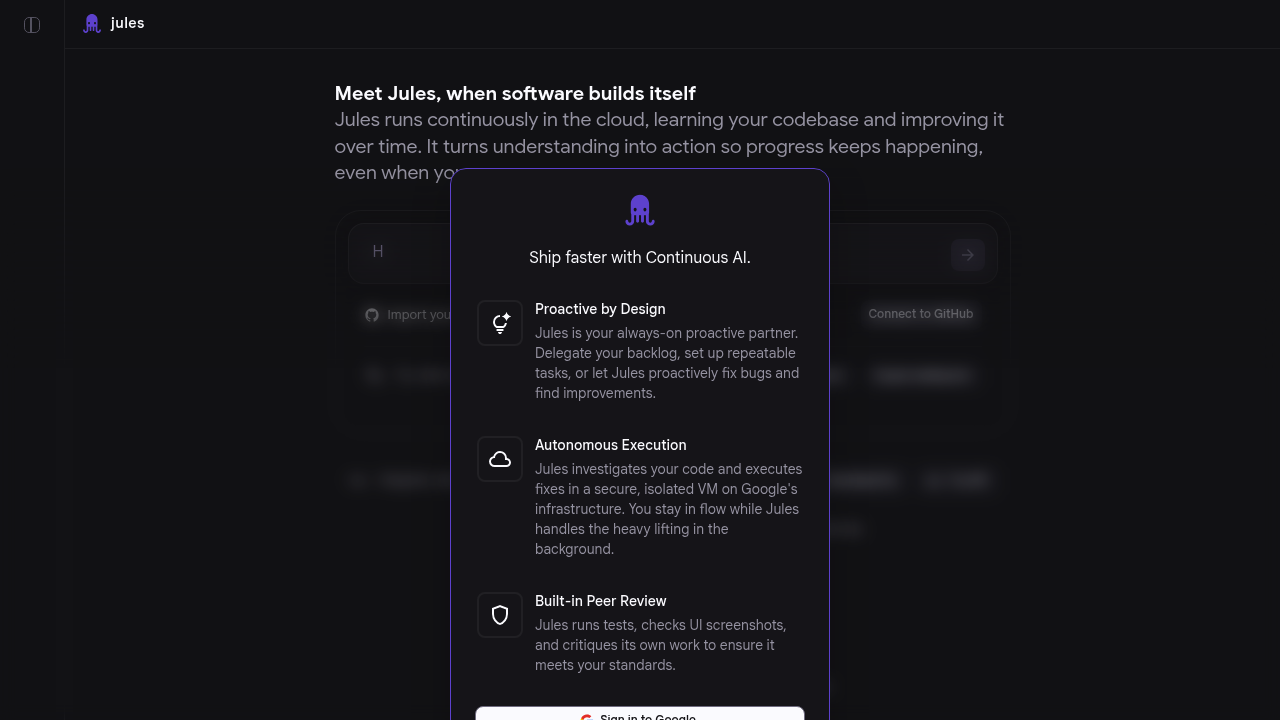
An AI coding assistant that works while you sleep sounds like science fiction, but Jules runs continuously in the cloud doing exactly that. It learns your codebase over time and executes coding tasks autonomously without requiring you to sit at your keyboard monitoring progress.
The system operates in a secure, isolated virtual machine on Google's infrastructure. This setup matters because Jules doesn't just suggest code changes like typical assistants. It writes code, runs tests, checks UI screenshots, and submits work independently. That level of autonomy needs serious isolation, which the VM architecture provides.
Jules handles the kind of work developers often save for later. Bug fixes pile up in backlogs. Repeatable tasks get postponed because they're tedious rather than difficult. Code improvements get skipped when deadlines loom. Jules tackles these tasks proactively, working through your backlog while you focus on architecture decisions or new features that require human creativity.
The built-in peer review system sets Jules apart from solutions that just generate code and walk away. Before submitting anything, it runs your test suite and captures UI screenshots to verify nothing broke visually. It also self-critiques its own work, checking for issues before you ever see the changes. This multi-step verification process reduces the chance you'll merge broken code.
Integration happens primarily through GitHub, where Jules can access repositories, create branches, and submit pull requests. Render integration extends its reach into deployment workflows. Sign-in uses Google accounts, keeping authentication straightforward for teams already using Google services.
Developers can interact with Jules through a downloadable CLI or API access. The CLI suits developers who prefer terminal workflows. The API opens possibilities for custom automation or embedding Jules into existing development pipelines.
Jules requires reading its usage guide for optimal results. That's not surprising given its capabilities. Autonomous code execution demands understanding what tasks Jules handles well and how to frame requests effectively. The documentation also warns users to exercise caution with inputs and repositories since Jules has powerful execution capabilities that could cause problems if misused.
Jules targets software developers and development teams drowning in maintenance work. Solo developers gain a tireless assistant handling grunt work. Teams can delegate their entire backlog of minor improvements and let Jules chip away at technical debt overnight.
The system learns your codebase continuously, which means it should get better at suggesting relevant changes the longer it runs. Cost details are not publicly available, so availability information remains unclear. The CLI and API access exist, confirming the product is operational rather than vaporware.