
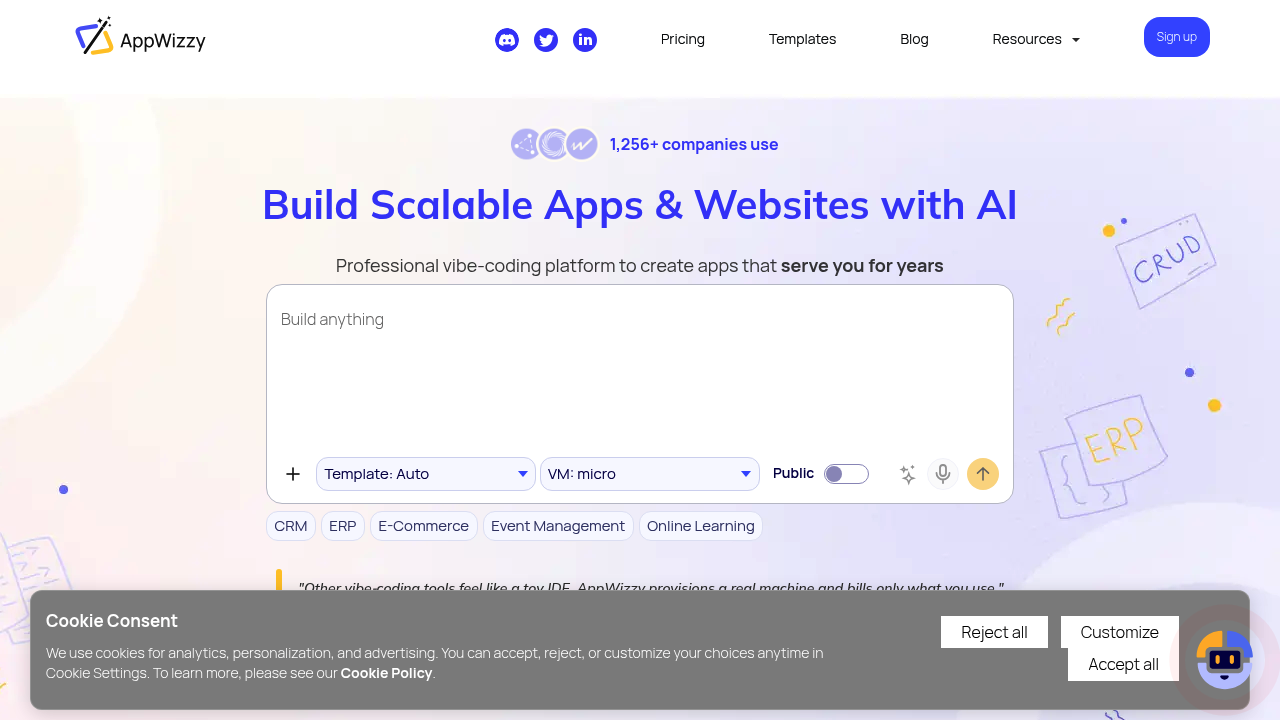
AppWizzy provisions actual development VMs for building production applications with AI assistance. Unlike browser-based coding environments, it spins up real machines with full stack support including Node, PHP, Rails, Java, and .NET. This service handles the entire lifecycle from initial architecture through deployment and hosting.
The technical architecture separates concerns into distinct layers. When you start a project, the AI generates a software architecture plan and database schema automatically. You can import existing code through ZIP uploads or Git repositories. AppWizzy then runs a real development environment where you can work with your chosen stack, whether that's Python, PHP, Node with Next.js, or databases like Postgres and MySQL.
Code editing works through AI integration that streams stdout and stderr in real time. You see file changes as they happen. Every AI suggestion can be accepted, reverted, or iterated on. This isn't autocomplete. The AI modifies actual files in your VM while you watch the process unfold. If the AI makes poor changes, you can revert them, and those edits are refundable up to a cap based on your plan.
The deployment pipeline includes full CI/CD capabilities. One-click deploy pushes changes to an always-on production hosting environment. You can pause, resume, deploy, or rollback apps as needed. AppWizzy maintains an audit trail of all changes and deployments. Apps can be set to private with specific collaborators added.
Templates cover common patterns. Landing pages, SaaS startups, CRM systems, e-commerce sites, admin panels, and portals are available in a marketplace. These aren't just UI kits. They're full applications with backend logic and database schemas.
The pricing model uses credits. One credit equals one dollar. Costs break down into three buckets: AI token usage, hosting infrastructure, and template licenses. Basic hosting runs 0.25 credits per day. you are billed only for what you use. No flat monthly fees for idle projects.
Over 1,256 companies use AppWizzy. The target users are teams building actual production apps, not prototypes or demos. Search fund managers and school administrators are mentioned specifically, suggesting it works for non-technical founders who need real applications.
AppWizzy positions itself against toy IDEs. It's not trying to be a learning environment. The technical difference is infrastructure. You get a real machine, not a sandboxed browser environment. That means you can run any stack, install dependencies, and deploy actual production workloads. The tradeoff is complexity. This isn't a simple point-and-click builder.