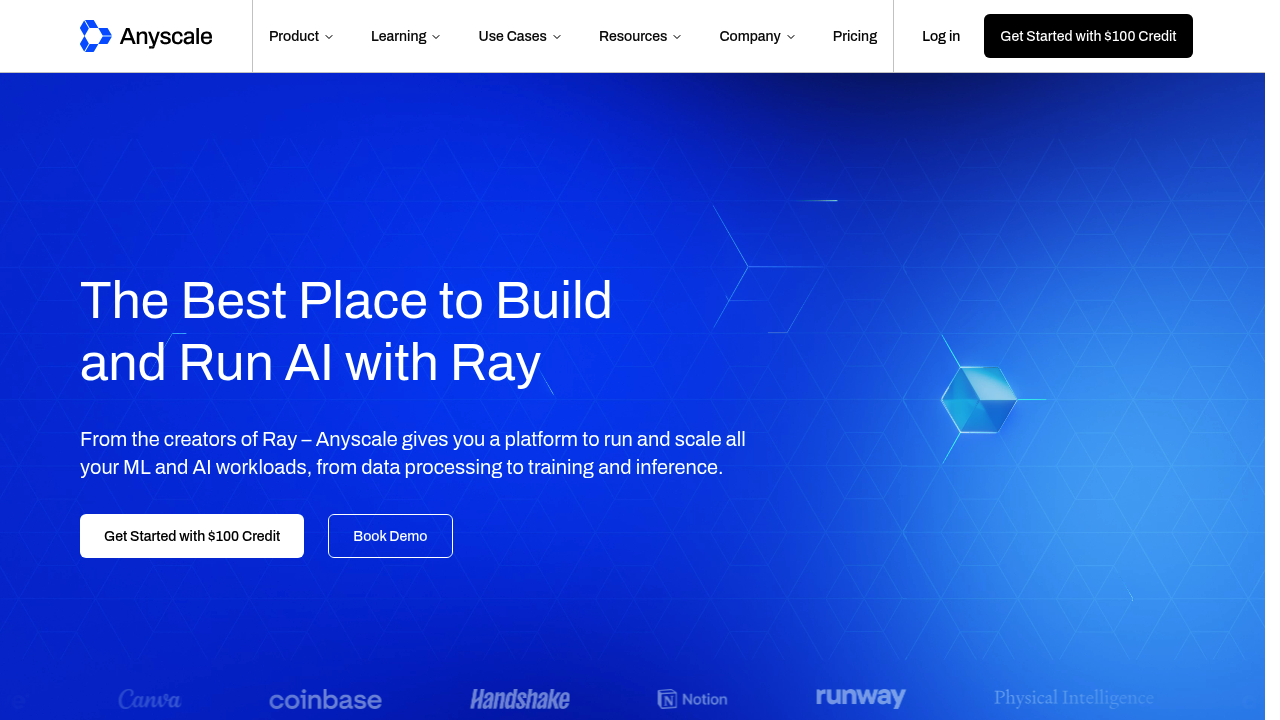
$100 gets you started with Anyscale for running ML workloads at scale. That's enough credit to test whether their Ray-based infrastructure can actually deliver the performance gains they promise. The numbers look impressive on paper — 12x faster iteration and 99% cost reduction — but you'll want to verify those claims with your specific workloads.
Ray's original creators built Anyscale. You get fault-tolerant clusters that handle spot instances intelligently. When spots get yanked, Anyscale falls back to on-demand without breaking your training runs. Zero-downtime upgrades mean you won't lose progress on long-running jobs.
The dev experience centers around a cloud-based IDE that works with VSCode. Jupyter works too. So does Cursor. You can debug workloads through their observability console instead of guessing what went wrong. Managed Prometheus and Grafana dashboards come included.
Say you're an ML engineer at a startup training recommendation models. Your current setup crashes when AWS reclaims spot instances halfway through expensive training runs. Anyscale's proactive node draining would catch unhealthy instances before they fail, potentially saving hours of compute time.
You're locked into Python and Ray.
That's fine if your team already uses Ray, but it's a significant constraint otherwise. Azure integration is still in private preview, so enterprise teams wanting first-party Microsoft support will need to wait.
Cost governance features let you set budgets and quotas upfront. Smart move for teams that have burned through cloud credits before.