
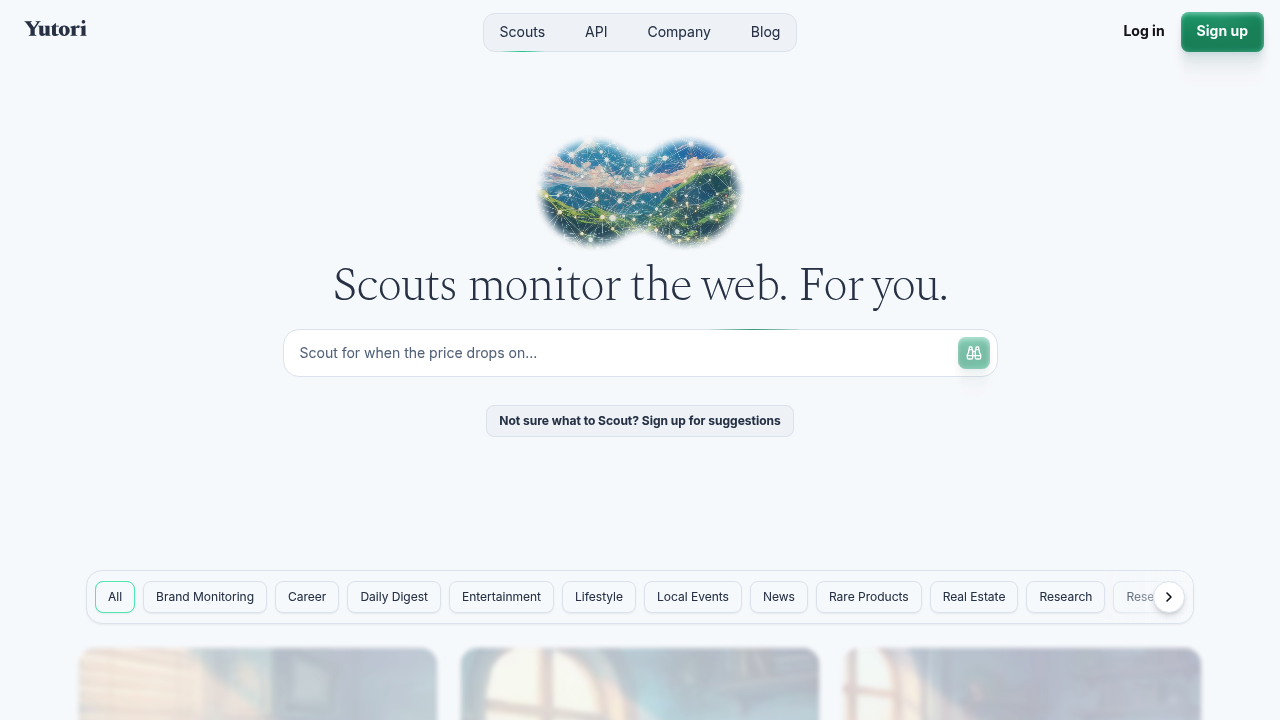
TAAFT deploys AI agents called Scouts that crawl the web looking for whatever you tell them to find. You set parameters around topics, products, trends, or specific types of information, and the Scouts handle the monitoring while you do other things. Everything gets packaged into daily digests.
The coverage is surprisingly broad. Seventeen different Scout templates span shopping deals, travel bargains, real estate listings, research papers, career opportunities, news stories, social media trends, local events, even restaurant reservations and vintage collectibles. There's also brand monitoring and sales prospecting for business use. An API lets you integrate Scout findings into your own workflows.
Does the breadth create depth problems? Hard to say without testing. Monitoring seventeen categories sounds ambitious for any platform. The quality of results probably varies wildly depending on what you're tracking. A Scout looking for YC startup funding announcements might perform differently than one hunting rare sneaker drops. The facts don't reveal accuracy rates or how often Scouts actually catch what they're supposed to catch.
The daily digest format keeps things contained but might frustrate people who need real-time alerts. If a restaurant reservation opens up at 2pm and you get the digest at 8am the next day, that's useless. No mention of alert frequency customization in the available details.
This works best for people monitoring multiple areas who'd rather delegate the tedious scanning work. Researchers tracking papers across disciplines. Marketers watching competitor moves and industry trends simultaneously. Bargain hunters covering travel, shopping, and local deals from one dashboard. The value grows with the number of things you need to track. Monitoring one thing? You could probably do that yourself.