AI Visibility Rank logo

AI Visibility Rank

You know how your website ranks on Google

41 views
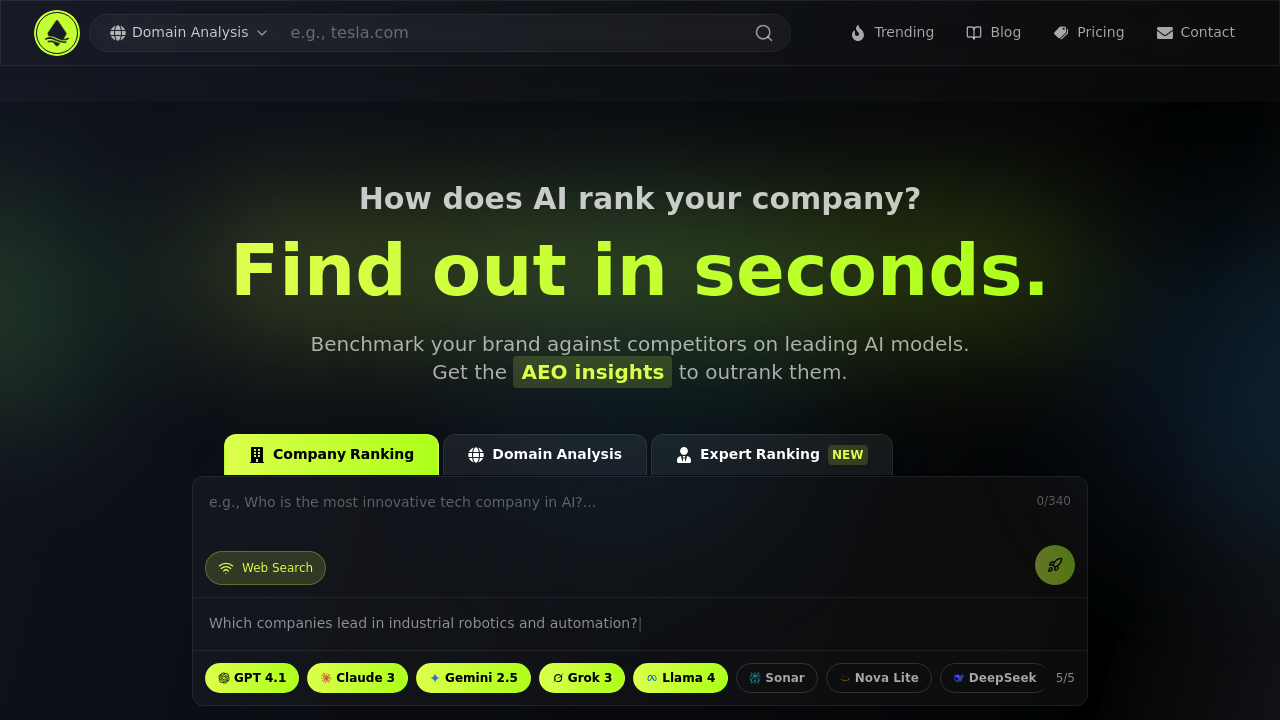
AI Visibility Rank screenshot

You know how your website ranks on Google? Now there is the same question for AI chatbots. This software shows where your brand lands when people ask AI models for recommendations in your category.

It tests your visibility across eight different AI platforms. You get to see how often your company appears in AI-generated answers compared to competitors. The system analyzes your domain and tracks what prompts trigger mentions of your brand. Then it benchmarks you against others fighting for the same mindshare.

This system has processed over 1,000 prompts and generated 5,000+ insights from scanning 500+ companies. Microsoft shows up most with 148 analyzed prompts. IBM Security sits at 120. Alphabet comes in third with 113. Those numbers tell you which brands are investing heavily in what they call AEO — AI Engine Optimization.

Does it actually help you rank better? The insights point you toward opportunities. You can see which competitor appears more often and analyze why. The prompt analysis shows which questions surface your brand and which ones don't. that is useful intel if you're trying to game AI recommendations.

But there's a visibility gap here. This software doesn't explain its methodology for collecting these rankings. How often does it refresh data? What exact prompts does it test? Those details matter when you're making strategic decisions based on the results. You're basically trusting their scanning process without seeing under the hood.

Another limitation — no integration options listed. You can't pipe this data into your existing analytics stack or automate reports. It's a standalone dashboard. That means manual work if you want to track changes over time or present findings to your team.

This system doesn't list any team collaboration features either. Can multiple people access the same account? Can you share reports? Those capabilities aren't mentioned in the feature set.

Most analyzed companies tracking is quite helpful though. You can spot who's dominating AI visibility in your space and reverse-engineer their approach. The multi-model support matters too since different audiences use different AI tools.

Marketing teams at mid-to-large companies get the most value here. Especially B2B brands where purchase decisions increasingly start with AI research. If prospects are asking chatbots "what's the best cybersecurity solution" or "top project management tools," you need to know if your name comes up.

Startups might find it premature unless they're in hyper-competitive categories where AI recommendations already influence buyer behavior.

Frequently asked

6 questions
Does AI Visibility Rank have a free version?
The pricing structure isn't publicly listed on their site, which is frustrating when you're trying to budget for new tools. They don't advertise a free trial either. You'll probably need to contact them directly for pricing, which usually means it's enterprise-level or custom quotes. That lack of transparency makes it harder to evaluate if it fits your budget before investing time in a demo.
Which AI models does AI Visibility Rank track?
It monitors eight different AI platforms — GPT 4.1, Claude 3, Gemini 2.5, Grok 3, Llama 4, Sonar, Nova Lite, and DeepSeek. That coverage matters because different audiences use different chatbots. Your B2B prospects might lean on Claude while consumers ask ChatGPT, so you need visibility across the board. The multi-model approach gives you a fuller picture of where your brand actually appears in AI-generated recommendations.
Can AI Visibility Rank integrate with other analytics tools?
No integrations are listed, which is a real gap if you're running a data-driven marketing operation. You can't pipe this into your existing analytics stack or automate reports. Everything lives in their standalone dashboard. That means manual exports and copying data if you want to track trends over time or combine it with your other performance metrics.
Who should actually use AI Visibility Rank?
Marketing teams at mid-to-large B2B companies get the most value, especially in categories where buyers research with AI chatbots before purchasing. If prospects are asking AI for cybersecurity recommendations or project management tools, you need to know if your brand surfaces. Startups might find it premature unless they're in hyper-competitive spaces where AI recommendations already shift purchase decisions. Consumer brands could benefit too if their category sees heavy AI-assisted research.
How does AI Visibility Rank compare you to competitors?
It shows how often your company appears in AI-generated answers versus your competitors across all eight AI models. You can see which brands dominate AI visibility in your space — like how Microsoft appears in 148 analyzed prompts while IBM Security hits 120. The system tracks which specific prompts trigger mentions of your brand and which ones don't. That competitor intelligence helps you reverse-engineer what's working for brands that rank consistently in AI recommendations.
What insights does AI Visibility Rank actually provide?
You get prompt analysis showing which questions surface your brand and domain analysis tracking your overall AI presence. The platform has generated over 5,000 insights from analyzing 1,000+ prompts across 500+ companies. It identifies gaps where competitors appear but you don't, plus shows trending prompts in your category. The most analyzed companies tracking reveals who's investing heavily in AI Engine Optimization so you can benchmark your efforts against theirs.

Reviews (0)

No reviews yet. Be the first to share your experience.

Similar tools

See all →