
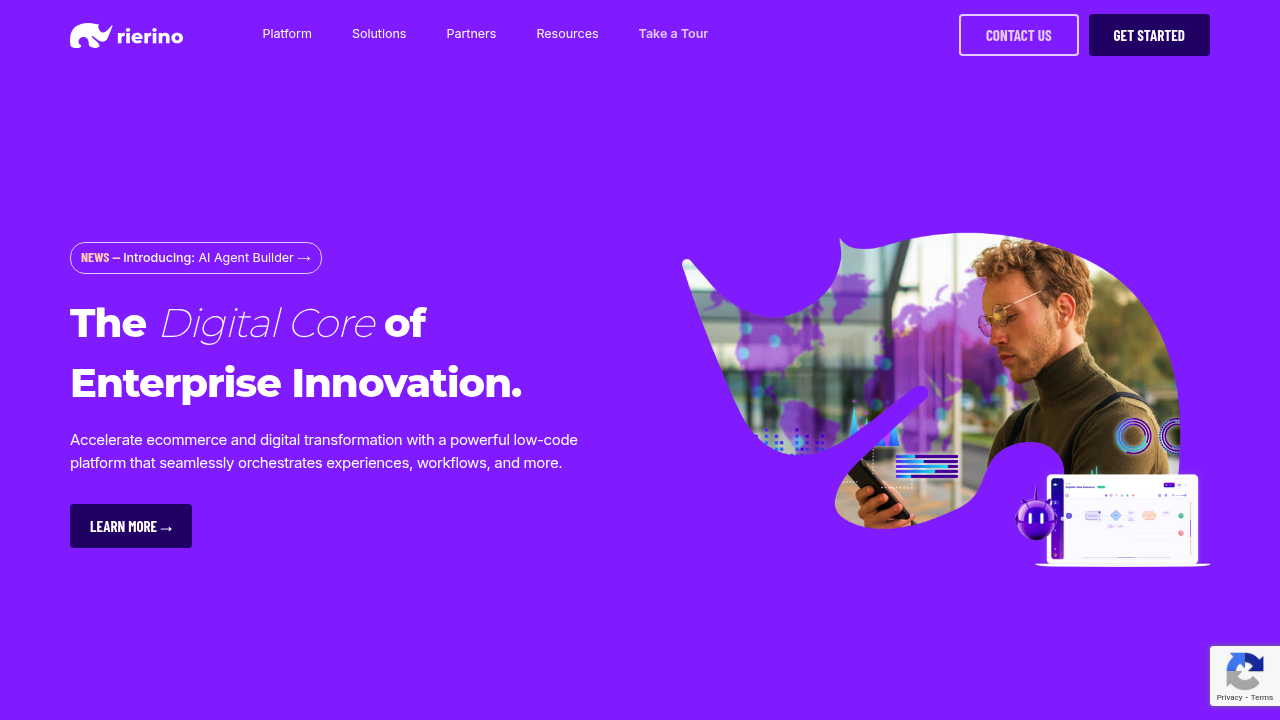
Enterprise low-code platform that bundles commerce, workflow automation, and AI agent building into one system. The pitch? Build digital solutions without writing everything from scratch.
RAI, the embedded AI assistant, sits inside the development environment. It generates APIs and microservices while you work. Not a chatbot bolted onto the side — it's woven into the actual low-code interface. You can also build AI agents that execute natively within the system, connecting to OpenAI and LangChain without wrestling with separate infrastructure.
The commerce side handles B2C, B2B, and multi-vendor marketplaces. Product Information Management and Content Management come standard. Personalization engine included. Omnichannel support checks the box. Standard enterprise commerce stuff, but all in the same environment as your workflow tools and microservices.
Event-driven architecture means you can trigger actions across systems. Build dynamic UIs with widgets and custom components. Connect to any database or existing application through configuration rather than custom code. Version control and collaboration tools keep teams aligned. Business Process Management sits alongside API development.
Real question: does bundling this much into one system actually save time, or does it just move complexity around? Low-code promises speed, but enterprise-grade requirements don't disappear. You still need governance, security reviews, performance testing. The system handles the basics, but someone's got to architect the solution properly.
The "vibe low-coding" branding feels like marketing speak for "AI helps you code faster." Fair enough — that's what these tools do. But calling it vibe-anything doesn't change the fact that you're still building microservices and APIs. They might generate faster, but debugging and maintaining them? That's the same work as always.
Target audience spans developers, architects, data scientists, marketing, product, operations, and business leaders. That's everyone. When a tool claims to serve everyone, it usually means some groups get a better experience than others. Developers might appreciate the microservice scaffolding. Marketing probably just wants the CMS and personalization engine. Different needs, same system.
Integration flexibility looks solid. Connect to databases, file systems, and existing apps through configuration. OpenAI and LangChain support means you're not locked into one LLM provider. But configuration still takes work. Someone's mapping data structures and testing connections.
No clear picture on what this costs or if there's a trial period. That matters for enterprise tools where implementation can take months. You're committing resources before seeing real results.
Works for teams that want commerce, automation, and AI development in one place. Doesn't work if you prefer best-of-breed tools or already have established systems that do these jobs well.