
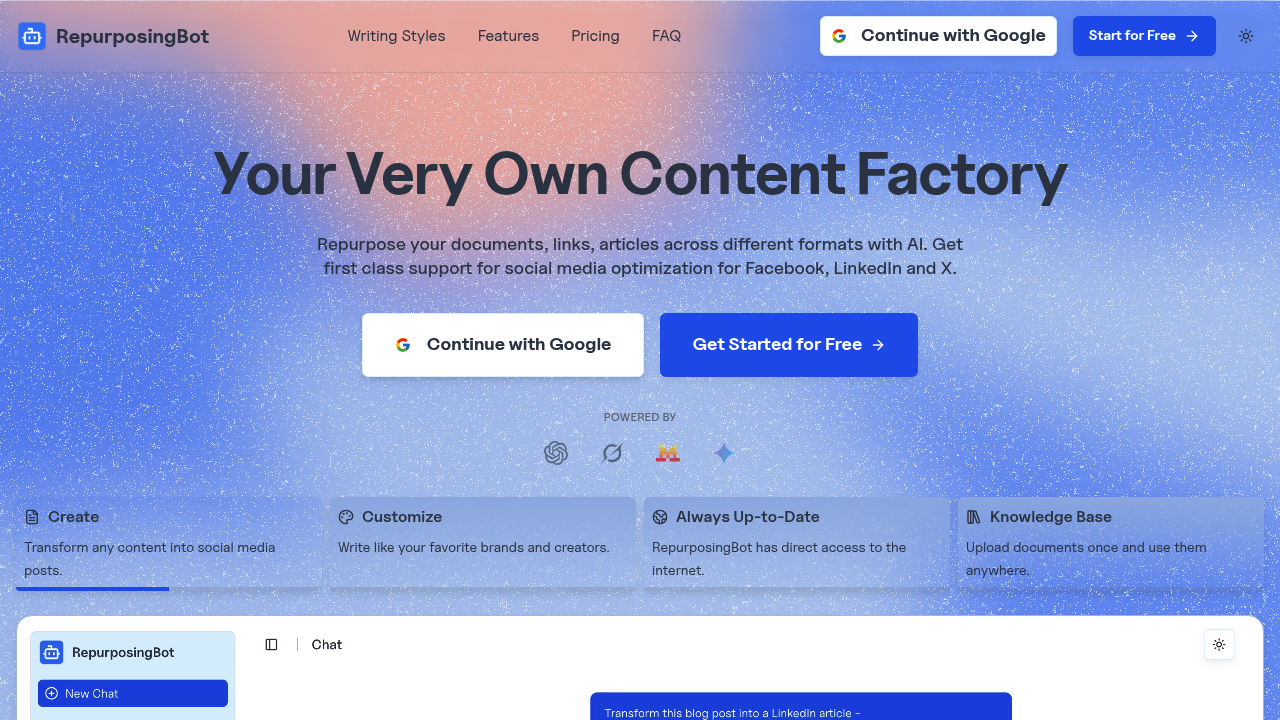
RepurposingBot is an AI content factory that turns documents, links, articles, PDFs and spreadsheets into posts for different platforms. It optimizes output automatically for Facebook, LinkedIn and X, generating Twitter threads, LinkedIn posts and Facebook posts, and you can request several variations to compare. It can extract YouTube video transcripts and repurpose them, search the web for recent information, and store everything you upload in a knowledge base for reuse. Writing styles range from casual to professional and technical to creative, plus custom styles that imitate favorite brands and creators. A single All in One plan costs $49 per month and starts with a free 7-day trial, with no credit card required.
The service fits solo creators, marketers, founders and small content teams who publish the same ideas across several networks and want each version to sound different. Agencies managing a client's voice can save styles and reuse them, and the plan includes three team members. It is also useful for people with a large backlog of long-form material, such as webinars, reports and blog posts, who need shorter posts without retyping prompts for every platform. Little technical skill is needed, since you sign in with Google and start from content you already have.
A common workflow starts with a blog article or PDF report uploaded once to the knowledge base. From it you generate a LinkedIn post in a professional style, a punchier thread for X and a Facebook post, then adjust each through the version history. A YouTube video can be converted into written posts from its transcript. When a topic depends on recent news, web search brings fresh facts into the draft. Autopilot mode generates different content types from the stored knowledge base automatically, which helps keep a posting calendar filled.