
Raghim AI logo

Raghim AI

Raghim AI delivers enterprise chatbot infrastructure that stays entirely within company firewalls

34 views
Raghim AI screenshot

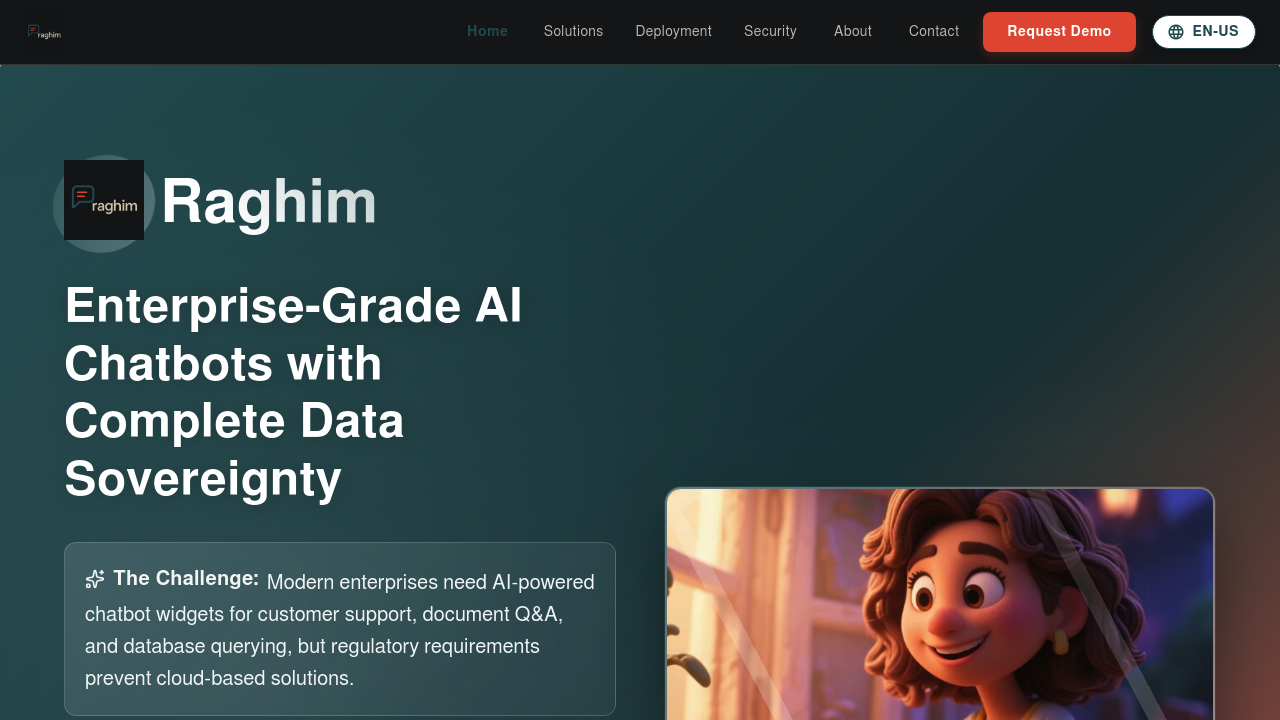
Raghim AI delivers enterprise chatbot infrastructure that stays entirely within company firewalls. This system offers 2 deployment models: self-hosted on customer infrastructure or managed hosting that still maintains data boundaries.

The system handles 3 core use cases. Customer support chatbots field inquiries without routing conversations through external servers. Document Q&A lets employees query internal knowledge bases while keeping proprietary information isolated. Database querying enables natural language access to company data without cloud transmission.

Every interaction remains on-premises. Data never touches external infrastructure, addressing compliance frameworks that block cloud AI tools. This architecture targets regulated industries where data sovereignty isn't optional but mandatory.

The solution ships with embeddable widgets that integrate into existing web properties. Teams can deploy chatbots across customer portals, internal dashboards, or documentation sites without rebuilding interfaces. The widgets maintain the same data isolation guarantees as the core system.

Enterprise-grade security runs through the entire stack. Organizations retain complete control over model access, conversation logs, and training data. No third-party vendors process queries or store transcripts.

Raghim AI doesn't publish integration counts or supported data sources. The feature list doesn't specify which database types connect natively or how many concurrent users the system supports. Documentation depth remains unclear. Self-hosting requirements aren't quantified, so infrastructure teams can't estimate deployment complexity without direct consultation.

This solution serves enterprises with strict regulatory constraints. Companies that can't use cloud-based AI due to HIPAA, GDPR, or industry-specific mandates find the on-premises architecture necessary rather than optional. Organizations without data sovereignty requirements might find simpler cloud alternatives more practical.

Frequently asked

5 questions
Can Raghim AI be deployed without using cloud infrastructure?
Raghim AI offers 2 deployment options that keep data within company boundaries: fully self-hosted on customer infrastructure or managed hosting that maintains data isolation. Both models ensure conversations and documents never leave the designated infrastructure, addressing compliance requirements that prohibit cloud-based AI processing. The self-hosted option gives organizations complete control over hardware, network access, and data storage locations.
What specific use cases does Raghim AI support?
The platform handles 3 primary enterprise scenarios: customer support chatbots that field inquiries without external routing, document Q&A for querying internal knowledge bases, and database querying through natural language interfaces. All 3 use cases maintain on-premises data processing, preventing information from touching external servers. Teams can embed these chatbots into customer portals, internal dashboards, or documentation sites using provided widgets.
Does Raghim AI offer a free plan or trial period?
Raghim AI operates on a freemium pricing model, though specific tier details aren't publicly documented. The platform doesn't advertise a trial period for testing the self-hosted or managed deployment options. Organizations evaluating the system need direct consultation to understand access terms and pricing thresholds for their infrastructure requirements.
Who should use Raghim AI instead of cloud-based chatbot services?
Enterprises with regulatory mandates like HIPAA, GDPR, or industry-specific compliance frameworks that prohibit cloud AI processing represent the core audience. Organizations requiring complete data sovereignty where external transmission isn't permissible need the on-premises architecture. Companies without strict regulatory constraints might find cloud alternatives more practical since Raghim AI's primary value centers on data isolation rather than feature breadth.
What technical details does Raghim AI not disclose about its platform?
The documentation doesn't specify which database types connect natively, how many concurrent users the system supports, or what hardware requirements self-hosting demands. Integration counts with existing enterprise tools remain unpublished, making it unclear how many pre-built connectors exist. Infrastructure teams can't estimate deployment complexity or scaling thresholds without direct vendor consultation, since quantified system requirements aren't publicly available.

Traffic

Estimated monthly website visits · last 0 months

Not enough historical data for a chart yet.

Data from SimilarWeb · Updated monthly.

Reviews (0)

Write review

No reviews yet. Be the first to share your experience.

Similar tools

See all →