
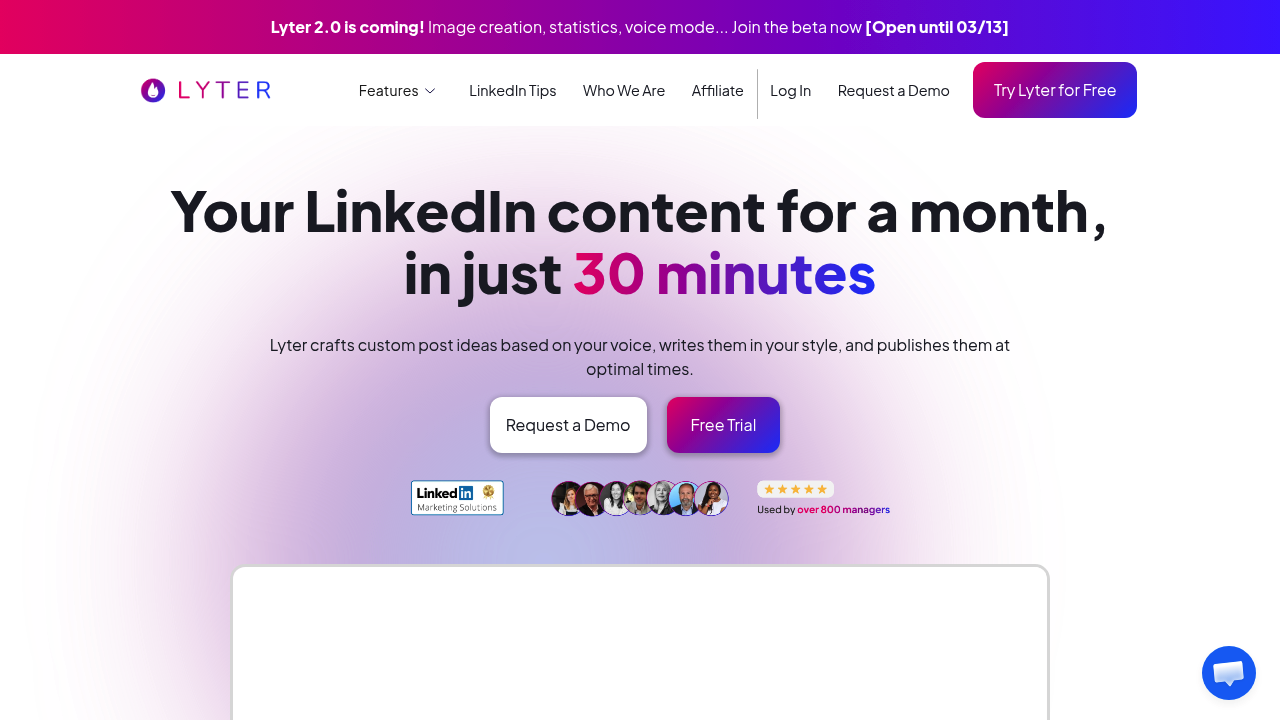
LinkedIn content creation eats hours most professionals don't have. Lyter attacks this problem by analyzing over 1,000 data points from a user's LinkedIn profile, website, past posts, and press mentions to generate content that sounds like the actual person wrote it. The system doesn't just mimic writing style. It pulls from industry context and professional positioning to suggest post ideas that match what someone actually talks about in their field.
Lyter starts with a 30-second onboarding process that connects to LinkedIn and pulls relevant information. From there, it builds an understanding of voice, expertise areas, and communication patterns. When generating post ideas, Lyter draws on this profile to suggest topics that align with the user's professional focus rather than generic business advice. Content gets written in the user's established style, incorporating the formatting conventions, hashtag usage, and emoji patterns that perform well on LinkedIn.
Scheduling happens automatically based on audience activity analysis. The system examines when a user's network engages most actively and publishes posts during those windows. This removes the manual tracking of optimal posting times. An editorial calendar view shows upcoming content, letting users review and adjust before publication. The whole process requires about 30 minutes monthly for content review, which Lyter claims saves seven hours compared to manual content creation and posting.
Beyond content generation, this service includes communication strategy recommendations. It audits existing LinkedIn presence and suggests improvements based on platform best practices. This covers structural elements like post formatting and tactical choices about content types and engagement approaches.
The current version handles text-based posts. Lyter 2.0, available in beta until March 13th, adds image creation capabilities, performance statistics, and voice mode for content input. These additions address gaps in the original release where visual content required external tools and performance tracking happened outside Lyter.
The first month includes four free publications. Users can test the personalization quality and scheduling accuracy without payment. After trial, pricing starts at $39 monthly. This positions below typical marketing agency costs while providing similar content output for LinkedIn specifically. The paid plan removes the publication limit and maintains full access to personalization features.
Lyter targets solopreneurs who need consistent LinkedIn presence but lack time for daily content creation. Coaches, consultants, and advisors building personal brands fit the core use case. Executives managing thought leadership alongside operational responsibilities represent another segment. Small business owners, startup founders, and agency teams handling multiple client accounts also match this automation focus. Community managers and social media managers juggling several platforms can offload LinkedIn content to the system.
Lyter works exclusively with LinkedIn. No Twitter, Facebook, or Instagram integration exists. This narrow focus means Lyter can optimize specifically for LinkedIn's algorithm and formatting requirements, but users managing multi-platform presence need additional tools. The comparison to general conversation engines highlights this specialization. Where broad AI tools require detailed prompting and lack platform context, Lyter builds LinkedIn expertise into its core function.
The 20-minute demo walks through personalization setup and content generation. This gives potential users visibility into how the system interprets their professional identity before committing to the trial period.