
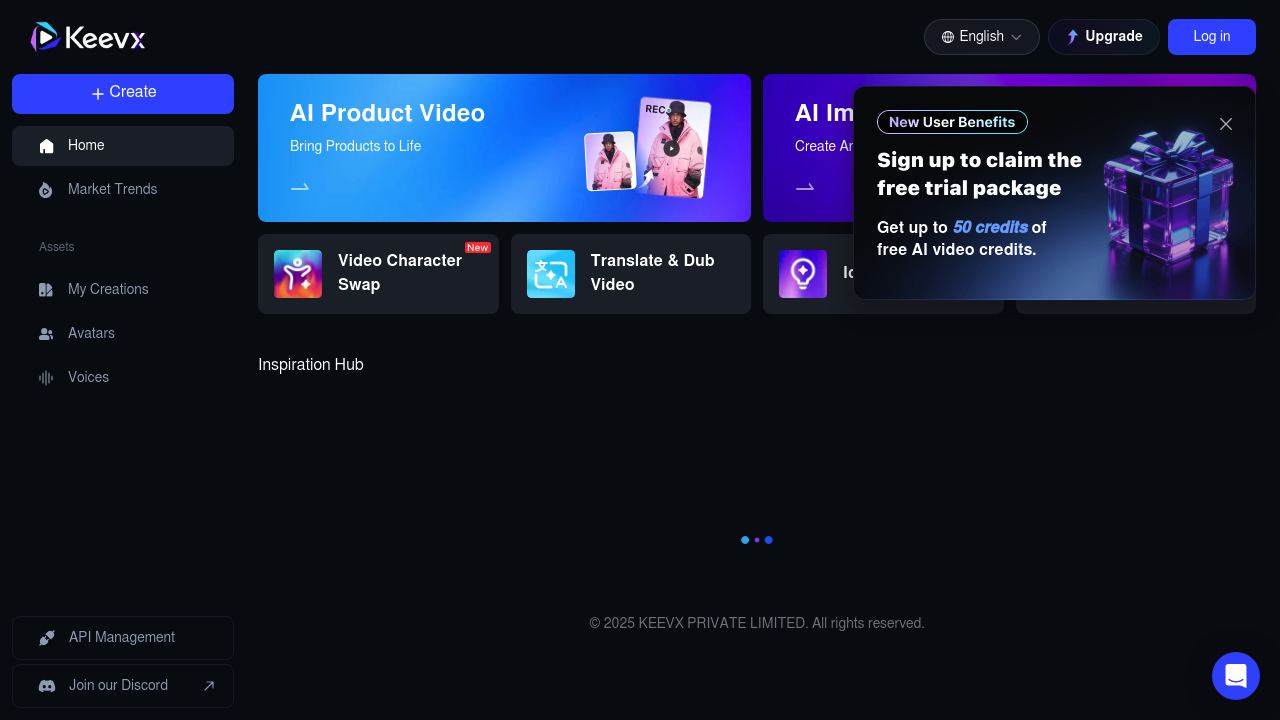
TAAFT operates as a video generation platform that takes text prompts, product images, or existing video footage and processes them through neural networks to produce finished video content. The system handles multiple workflows including avatar video creation, character replacement in existing footage, and automated product showcasing. Users input their source material through a web interface, select from template categories like unboxing sequences or street interview formats, and the rendering pipeline outputs finished videos without requiring traditional filming equipment.
The character swap feature analyzes facial landmarks and body positioning in source videos, then replaces the original subject with a different person while maintaining natural movement and lighting consistency. This runs on computer vision models that track facial expressions frame by frame. The translation and dubbing tool processes audio tracks, generates translated speech, and synchronizes lip movements to match the new language. The lip sync accuracy depends on the phonetic similarity between source and target languages.
Template usage shows real adoption patterns. The Multi-Image Fusion template has 834 uses, while specific product templates for perfume, apparel, and commercial photography each exceed 1,000 uses. The Gorilla Ad format has 247 uses, suggesting it's found a niche application. These numbers indicate which workflows users actually find practical versus experimental.
TAAFT includes AI effects like kissing, hugging, and high-five animations that composite people together in generated scenarios. These work by detecting body positions and generating transitional frames. The 360° product showcase rotates items digitally, likely using photogrammetry or 3D model generation from multiple angles. Macro zoom features focus on product details through automated cropping and upscaling.
API access exists for developers who want to integrate video generation into their own applications. The API management interface suggests programmatic control over template selection, asset uploading, and rendering requests. Discord integration provides community support or workflow automation, though the specific implementation isn't detailed.
Template specificity is notable. There's a "Bedroom POV Unboxing" template, "Cross-Dimensional Social Scene" layouts, and category-specific templates for jewelry, beverages, furniture, and beauty products. This granular approach means less customization work but also means you're constrained by predefined formats. If your use case doesn't match an existing template, you'll need to adapt.
TAAFT doesn't disclose training data sources for its generative models or provide information about watermarking on generated content. There's no clarity on commercial usage rights for AI-generated videos or whether output can be used in paid advertising without restrictions. The Pro Studio feature exists but its technical capabilities aren't specified.