
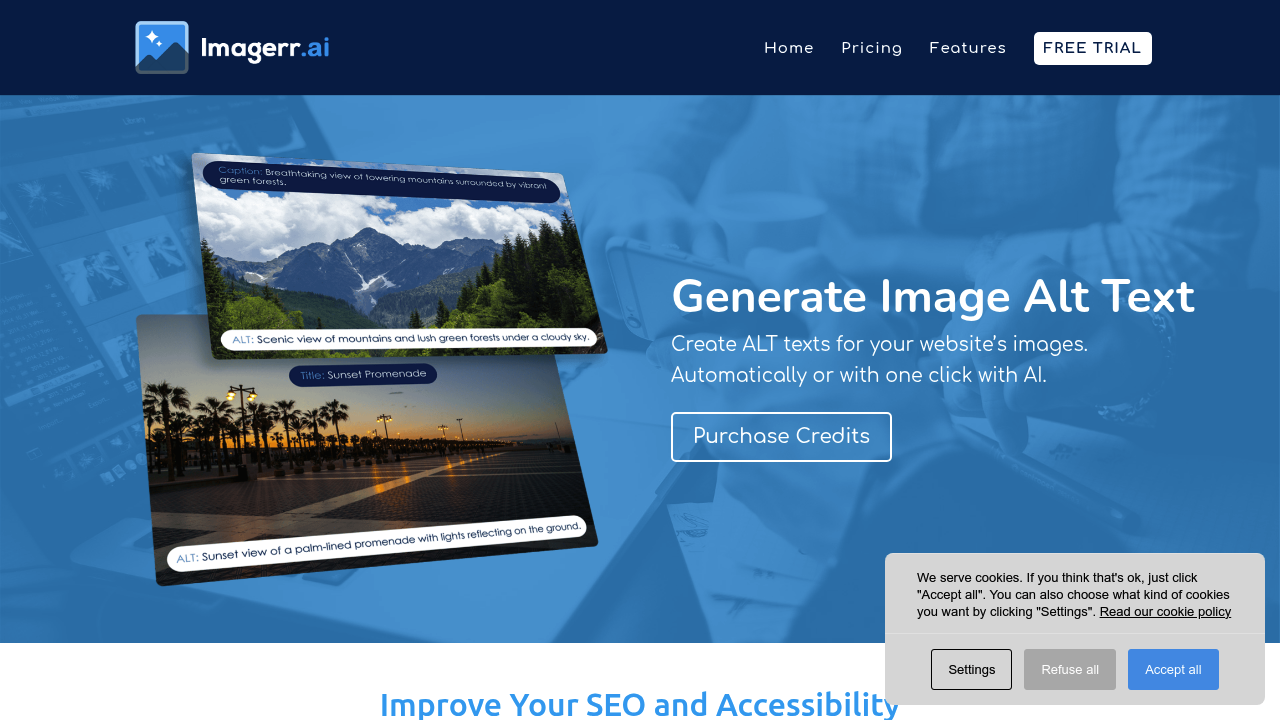
A travel blogger uploads 50 photos from a recent trip to Barcelona and needs alt text for each one. Writing descriptive, SEO-friendly alt text manually takes about 90 seconds per image. That's over an hour of tedious work. Imagerr AI generates that alt text automatically in bulk, pulling descriptive details from the images themselves and creating text in over 130 languages if the site serves international audiences.
This system runs on AI that doesn't require an API key. You install the WordPress plugin, click to generate, and it creates alt text, titles, descriptions, and captions for images. A photographer running a portfolio site can add custom prefixes or suffixes to maintain consistent formatting across hundreds of images. An e-commerce manager dealing with product photos can process entire galleries at once instead of clicking through individual items.
Imagerr AI handles multilingual sites better than most alternatives. A European tourism company with sites in German, French, Spanish, and Italian doesn't need separate tools or manual translation. The system generates appropriate alt text in each locale automatically. This matters for accessibility compliance across regions and for SEO in non-English markets where many tools fall short.
The WordPress integration is the only platform option. If you're running Shopify, Webflow, or a custom-built site, you can't use this software directly. That's a real limitation for agencies managing clients across different platforms. The credit-based system means you're buying packages rather than subscribing. The Starter package includes 500 credits for $19 as a one-time payment. Pro offers 2,000 credits for $49. Advanced provides 5,000 credits for $99. Each credit generates one piece of alt text. New users get 10 free credits to test the system.
This pricing model works differently than subscription tools. A freelance web developer who builds five sites per month might buy credits quarterly instead of paying monthly fees. But a content publisher uploading 200 images daily will burn through credits fast and need frequent repurchases. The one-time payment structure saves money for intermittent users but gets expensive at scale.
This software doesn't offer unlimited generation. Every image costs a credit. A marketing team migrating an old site with 3,000 images needs the Advanced package plus additional purchases. Compare that to monthly subscription tools where heavy usage months don't cost extra. The environmental angle sets it apart though. They donate 2.5% of profit to environmental causes, which matters to some buyers.
Where it breaks down is volume and platform compatibility. High-volume publishers processing hundreds of images weekly might find the credit system costlier than flat-rate subscriptions. Non-WordPress users are completely locked out. There's no Shopify app, no standalone web interface, no API for custom integrations. A Squarespace user or someone running a headless CMS can't access this at all.
Solo WordPress bloggers get the most value here. Someone publishing 50-100 images monthly who wants to avoid alt text busywork without ongoing subscription costs. Small business owners managing their own WordPress sites benefit from the bulk generation and multilingual support. Web developers building client sites can purchase credits as needed rather than maintaining active subscriptions.
Skip this if you're not on WordPress. Skip it if you're uploading thousands of images monthly and need unlimited processing. The credit model and single-platform focus create clear boundaries around who this serves well.