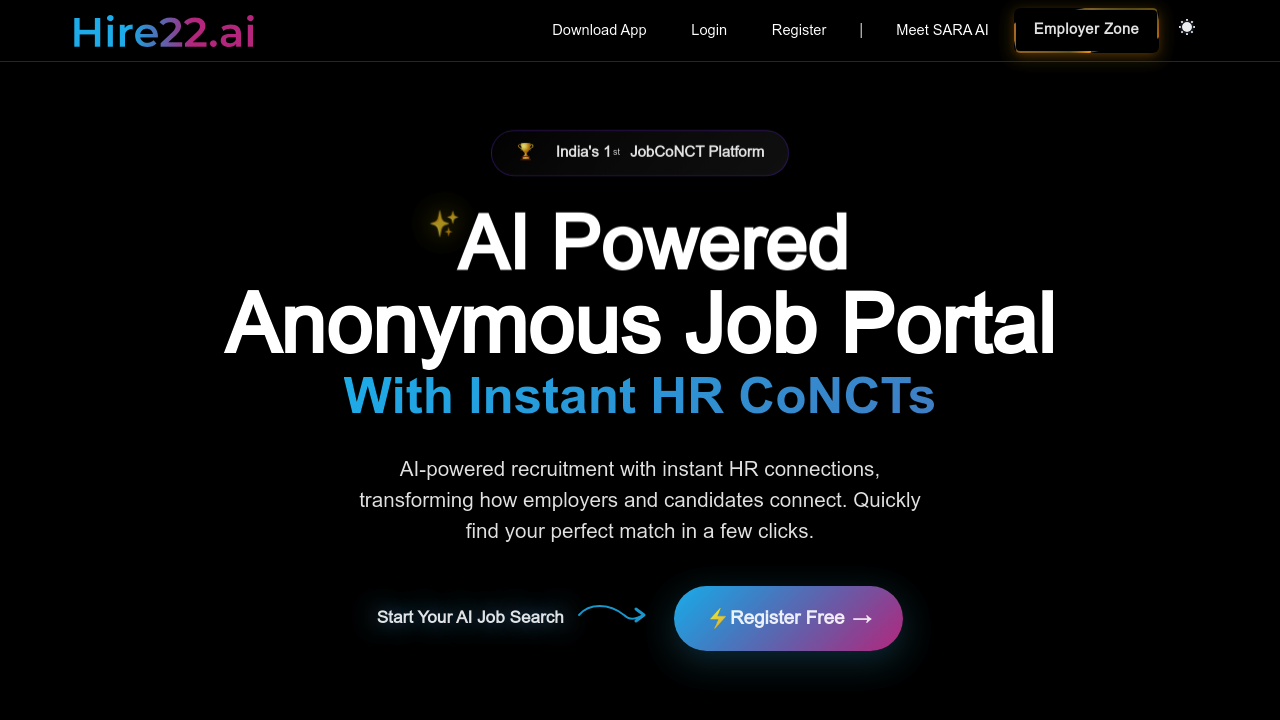
India's job market gets flooded with applications that go nowhere. Hire22.ai flips that model by letting candidates stay anonymous until they actually want to engage with a company. No more blasting your resume to hundreds of portals and hoping someone reads it.
The core pitch sounds simple. You create a profile based on skills, not personal details. HR professionals browse anonymously listed candidates and send direct CoNCT — connection — requests. You see who wants to talk before revealing your name, phone number, or email. Decide which recruiters get access. Companies can't spam you if you don't accept their request.
Numbers tell part of the story. 82% of shortlisted candidates get interview calls within 22-72 hours. That's faster than traditional job boards where applications sit in queues for weeks. Hire22.ai claims 500+ companies use it, concentrated in major Indian cities like Bangalore, Delhi NCR, and Mumbai. Free registration for job seekers removes the barrier to trying it.
The JoinX algorithm is the unusual piece. It generates a "joining probability score" that predicts how likely you'll accept an offer if hired. A company sees your profile might show 95% or 75% likelihood you'd join. That's meant to help recruiters focus on candidates who'd actually take the job. Whether these predictions hold up in practice isn't clear from available data.
What doesn't get addressed: how anonymous profiles work when skills alone rarely tell the full story. Years of experience matter. Company names matter. Education matters. If those details stay hidden until connection acceptance, recruiters work with limited information. That could mean more connection requests to sort through, not fewer. SARA AI assistant exists but its actual capabilities aren't specified beyond the name.
The 95% reduction in job hunt effort claim needs context. Compared to what baseline? How's effort measured? Those percentages sound impressive but lack the backing detail to verify them. Real-time status updates in 48 hours beat radio silence, but that's table stakes, not innovation.
Geographic focus stays tight on India's metro areas. If you're job hunting elsewhere, this won't help. The model works best when enough companies in your city use the service. 500+ companies sounds decent until you consider how many operate in India's tech hubs. Network effects matter here.
Candidates control their privacy, which beats having your details scraped across dozens of sites. That's the genuine advantage. Everything else depends on whether HR professionals in your field actually use Hire22.ai to source candidates.