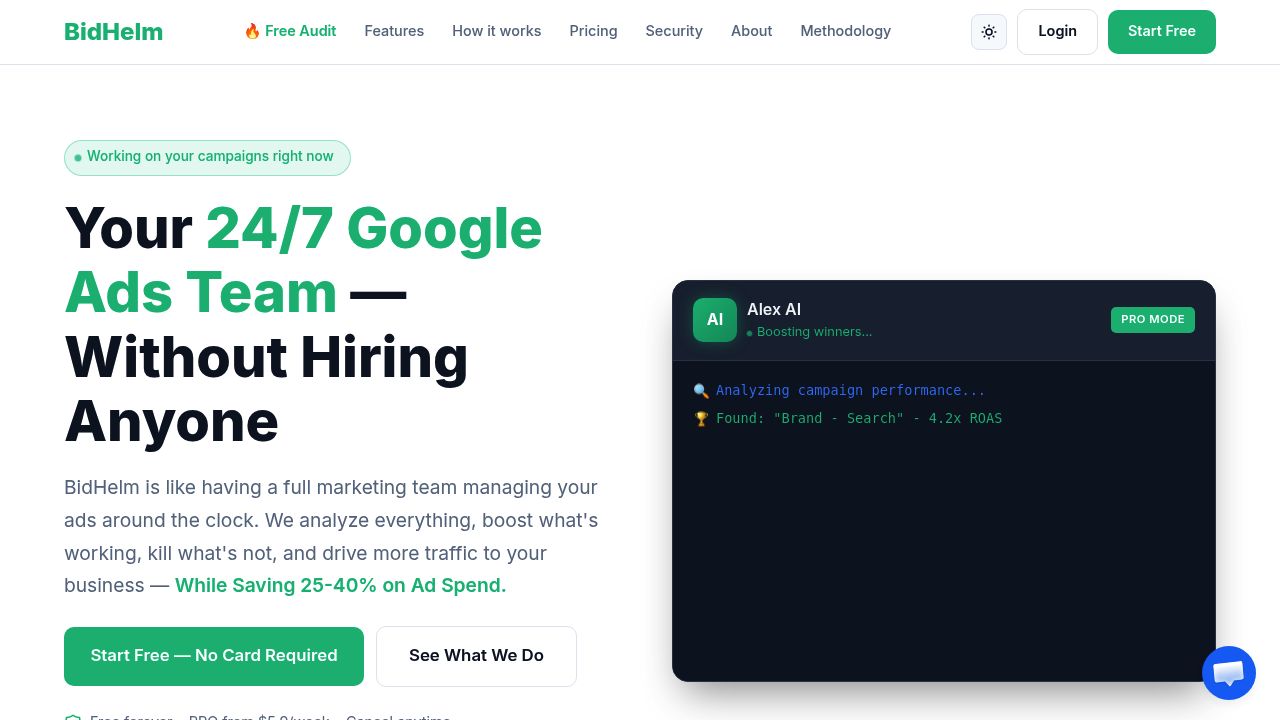
BidHelm connects to Google Ads accounts through OAuth and runs continuous optimization cycles on campaign performance. The system's AI, called Alex, analyzes ad performance data every 30 minutes in the PRO plan, making decisions about budget allocation, keyword management, and bid adjustments without requiring manual intervention.
The system works by pulling performance metrics from connected Google Ads accounts and applying pattern recognition to identify underperforming elements. When Alex detects ads or keywords that aren't converting efficiently, it automatically pauses them or reduces their bids. Simultaneously, it reallocates budget toward campaigns showing better returns. The system also adds negative keywords automatically to prevent ads from showing on irrelevant searches that drain budget without generating conversions.
Setup takes about 30 seconds through one-click OAuth connection. Users initially grant read-only access, then can enable auto-execution permissions if they want Alex to make changes autonomously. Without auto-execution enabled, the system shows what it would optimize but waits for user approval.
The optimization cycle runs continuously, including nights, weekends, and holidays. This addresses a practical gap in manual campaign management where performance issues can compound during off-hours. The system tracks total optimizations performed, keywords paused, negative keywords added, and estimated savings from reduced wasted spend.
Dashboard metrics update in real time. Users see live performance data alongside optimization history. The system claims to identify 25-40% in wasted ad spend across typical accounts, with some users reporting specific findings like $2,400 monthly in inefficient spending or 34% ROI improvement in the first month.
The free plan offers full account audits, weekly optimization insights, and dashboard access to see what Alex would change. It doesn't execute optimizations automatically. The PRO plan costs $5.90 weekly minimum plus 3% of total ad spend, which provides the 30-minute optimization cycles and automatic execution of all optimization actions. This pricing structure means costs scale with advertising budget rather than charging flat enterprise fees.
Technical limitations center on the pricing model. Auto-execution only works in PRO, so free users must manually implement suggested changes. The 3% usage fee on ad spend means larger advertisers pay proportionally more, though the system positions this against hiring marketing teams that typically cost around $5,000 monthly.
Integration is limited to Google Ads. There's no support for other advertising platforms like Facebook Ads, Microsoft Advertising, or programmatic networks. The system doesn't offer API access for custom integrations or team collaboration features for agencies managing multiple client accounts through shared workflows.
The anomaly detection system alerts users to unusual performance patterns, but the specifics of what triggers alerts aren't detailed. Budget pacing and scaling features help manage spend rate across billing periods, though the exact methodology for determining optimal pacing isn't specified.
The system has processed 2,847 optimizations this month according to their reporting, with cumulative savings exceeding $47,000 in ad spend. Individual dashboard examples show 247 monthly optimizations, 89 paused keywords, and 312 negative keywords added for specific accounts.
BidHelm works best for businesses already running Google Ads who want automated optimization without expanding their team. The continuous monitoring addresses the reality that campaign performance shifts constantly, and manual optimization can't match the frequency of 30-minute cycles running around the clock.