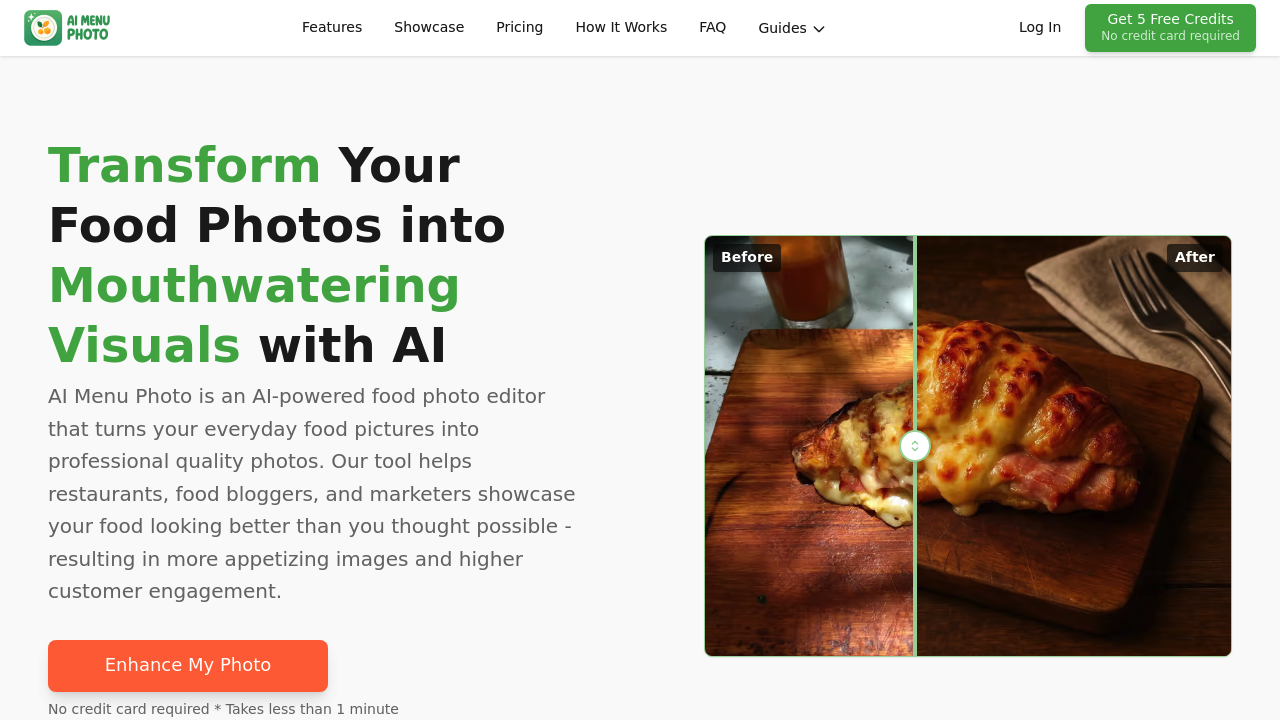
Food photos can make or break a restaurant's online presence, yet professional photography costs hundreds per session and requires constant reshoots when menu items change. This AI-powered editor transforms casual smartphone shots into polished marketing materials without the expense or scheduling headaches of traditional shoots.
This system tackles lighting, color balance, and image clarity through automated enhancement algorithms. Upload a dimly lit phone photo of pasta and the system corrects exposure, sharpens details, and adjusts white balance to match professional standards. The technology handles the technical adjustments that typically require expensive equipment and trained photographers.
Beyond basic enhancement, this software manipulates ingredients through text prompts. A restaurant can add garnish to an existing dish photo, remove an ingredient for allergy-friendly variations, or adjust plating elements without reshooting. This prompt-powered editing means menu photos adapt to recipe changes or seasonal modifications using the original image as a foundation.
Camera angle generation proves particularly practical. The system creates multiple viewing perspectives from one upload, producing top-down shots for Instagram grids, 45-degree angles for menu displays, and side-profile views for highlighting dish height and layers. Restaurants shoot once and receive three distinct compositions suited to different marketing contexts.
Background removal strips away cluttered restaurant settings or home kitchen environments, replacing them with clean backdrops. Seven pre-designed professional styles include options like Clean White Plate for minimalist presentations. Users can also create custom looks through text descriptions, defining specific aesthetic directions for their brand identity.
Platform-specific export templates format photos for Uber Eats, DoorDash, Grubhub, and Instagram with correct dimensions and aspect ratios. The system outputs high-resolution files suitable for print menus, website hero images, or social media posts. Square, horizontal, and portrait formats ensure photos fit wherever restaurants need them. Photo upscaling maintains quality when enlarging smaller source images.
The interface requires no editing experience. The entire process takes less than one minute from upload to export. Over 1,000 restaurants and food bloggers currently use the service.
New users receive five free credits without payment information. The paid tier costs $5.99 monthly, positioning it well below the cost of even a single professional photoshoot session. Traditional food photography typically starts at several hundred dollars per session, making this approach substantially cheaper for businesses updating menus regularly or testing new dishes.
The service targets restaurants of all sizes, from established locations to cloud kitchens operating delivery-only models. Food bloggers documenting recipes at home can improve content quality without studio setups. Influencers creating sponsored content and e-commerce platforms selling food products also fit the use case. Delivery platforms benefit from standardized, appealing imagery across vendor listings.
This software doesn't replace professional photography for every scenario. High-end establishments building premium brand identities might still prefer custom shoots with art direction and styling. But for everyday menu updates, seasonal specials, social media content, and delivery platform listings, the speed and cost advantages prove compelling. Restaurants gain control over their visual marketing without depending on photographer availability or weather conditions for natural lighting.