
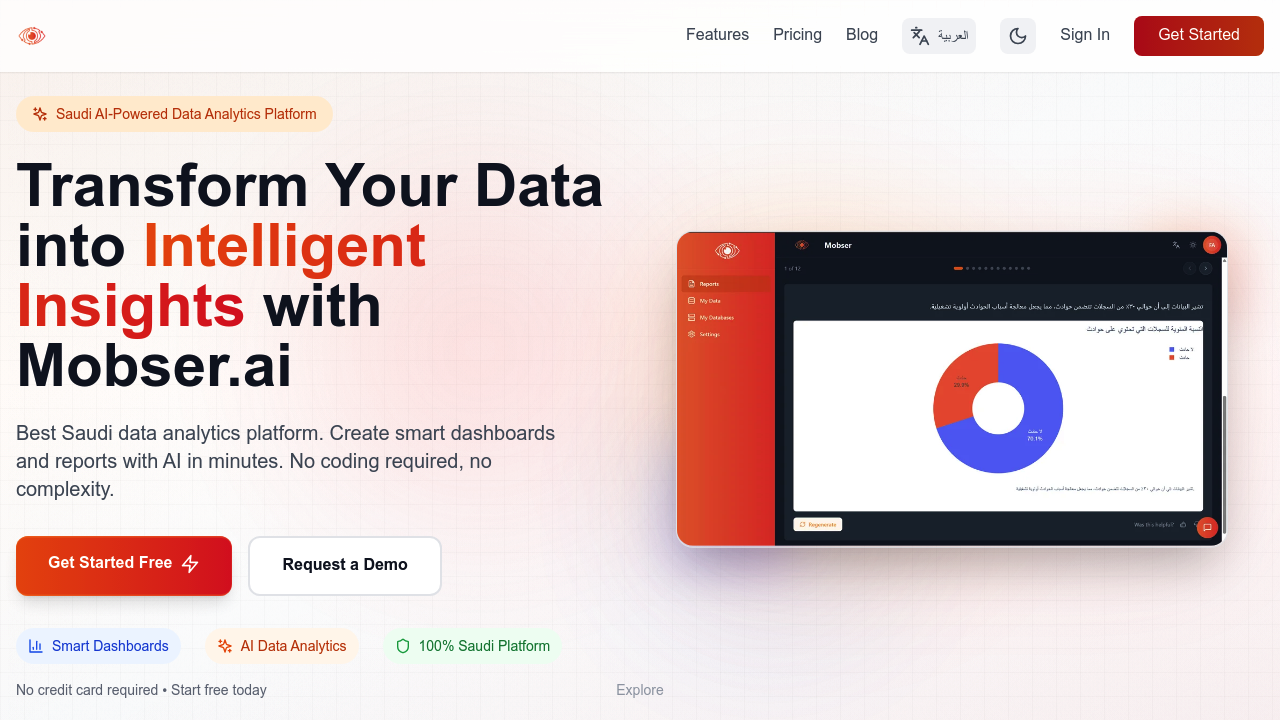
Data analytics platforms typically demand either coding skills or tolerance for clunky interfaces. Mobser removes both barriers by letting users upload Excel or CSV files, connect databases directly, and watch as algorithms automatically discover patterns, extract key metrics, and identify trends without any manual configuration.
This system generates interactive dashboards populated with dynamic charts, histograms, graphs, and geospatial maps. These visualizations don't just display numbers. Narrative summaries and explanations appear alongside each chart, translating visual patterns into plain language insights. Someone analyzing sales data across regions sees both the geographic map and a written explanation of which territories underperform and why the data suggests that conclusion.
Data management tools handle the messy preliminary work. Users preview uploaded tables, clean duplicate entries, and organize information before analysis begins. Once insights emerge, reports export directly as PowerPoint slides, preserving formatting and visualizations for presentations. Sharing happens through links or direct team member invitations, with collaboration features that gather feedback from stakeholders who need to weigh in on findings.
Language support extends across Arabic, English, Spanish, Russian, and Chinese. The Arabic implementation goes deeper than basic translation. Mobser markets itself as a 100% Saudi platform with a professional Arabic interface built from the ground up, not retrofitted. This matters for organizations operating primarily in Arabic where analytics tools often feel like English products with surface-level localization.
Security architecture includes enterprise-grade encryption as standard. Organizations with strict data residency requirements can opt for local hosting, keeping sensitive information on premises rather than cloud servers. Mobser claims 100% uptime and compliance with both Saudi and international security standards.
The free plan provides 100 credits monthly, allows creation of three reports, and includes 200 MB storage. Technical support comes with this tier, along with access to advanced analysis features and custom configuration options. That credit limit becomes the practical constraint since each analysis operation consumes credits based on complexity.
The Plus plan scales to 1,000 credits monthly, permits 25 reports, and expands storage to 10 GB for $79 per month. The credit multiplier — 10x increase — and report allowance (8x increase) suggest this tier targets teams running regular analysis cycles rather than occasional users checking quarterly numbers.
Storage caps affect users differently based on data volume. Someone analyzing monthly sales summaries from a small retail operation stays comfortably within 200 MB. A marketing director pulling years of customer interaction logs across multiple channels hits that ceiling quickly. The 10 GB jump in the paid tier accommodates medium-sized datasets but still excludes truly large-scale data operations.
The automatic pattern discovery works best when data contains clear relationships. Messy datasets with inconsistent formatting or sparse information yield less useful insights since algorithms need sufficient structure to identify meaningful trends. Users still need to understand their data well enough to recognize whether discovered patterns represent genuine insights or statistical noise.
Target users span individuals through enterprise teams across Saudi Arabia, UAE, and Egypt specifically. Analytics managers avoiding coding bottlenecks, marketing directors needing quick campaign performance breakdowns, and startups without dedicated data teams all fit the intended profile. The emphasis on Arabic language support and regional security compliance suggests particular focus on organizations where those factors influence platform selection as heavily as features themselves.