
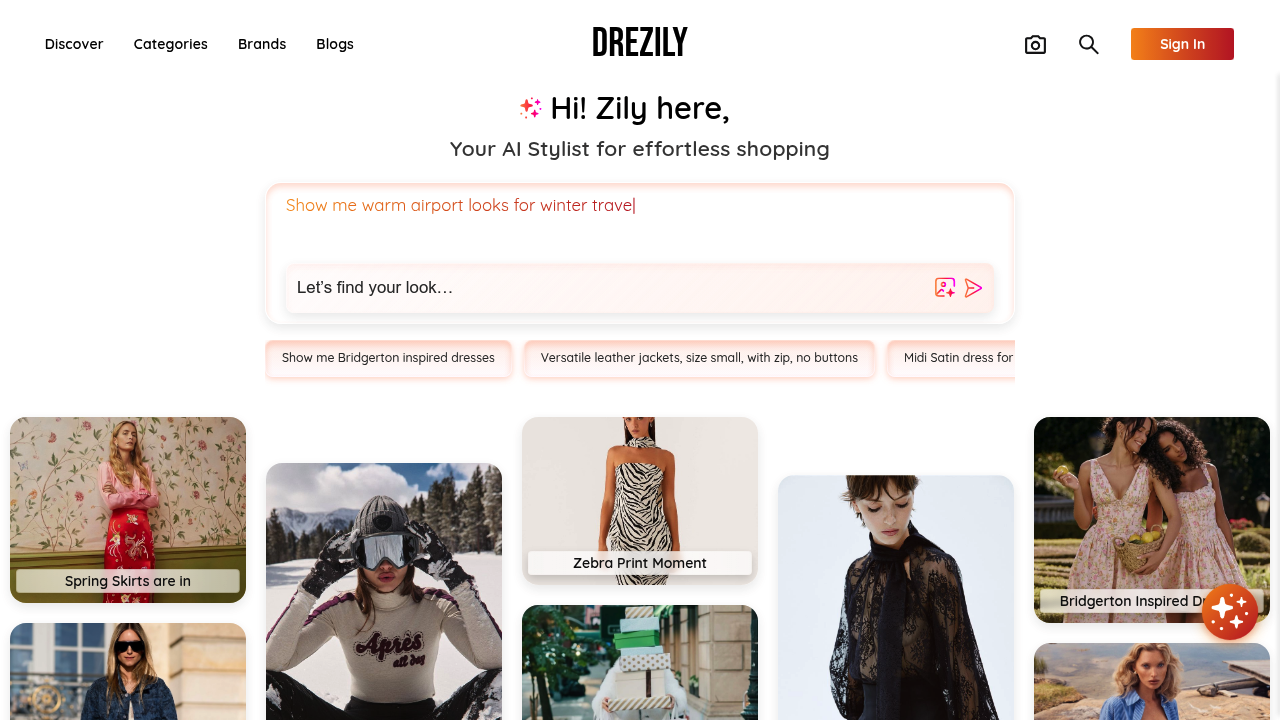
Drezily is an AI stylist for fashion shopping. Shoppers talk to Zily, the stylist, with requests like a beach vacation outfit, wedding guest looks under $120 or plus-size summer wedding guest dresses, and receive product picks from many retailers. The catalog shows current prices next to original prices and discount percentages, with items from stores including David's Bridal, Revolve, GAP, J.Crew, Macy's, Mytheresa and H&M. Visitors can also browse by category, brand, store or blog, and explore editorial edits such as wedding guest season, date night and summer travel outfits.
Drezily is for shoppers who know the occasion but not the exact item: guests dressing for a wedding, travelers packing for a beach trip, people planning date night or graduation outfits, and shoppers who need plus-size options. It also suits bargain hunters, because curated deals highlight steep markdowns across brands, and fashion fans who like to follow trends such as linen sets or designer bags. People who dislike scrolling through many store sites benefit from one search that compares options across retailers.
A wedding guest types a budget and season and sees dresses across several stores at once. A traveler asks for linen vacation outfits and gets coordinated sets and pants from different brands. A shopper hunting for denim browses discounted jeans and compares markdowns. Someone planning a graduation party searches white dress outfits for summer, then refines results by brand. A trend watcher looks at the popular searches list for ideas, and a gift buyer browses designer bags and accessories from retailers like Mytheresa and Italist before clicking through to purchase.