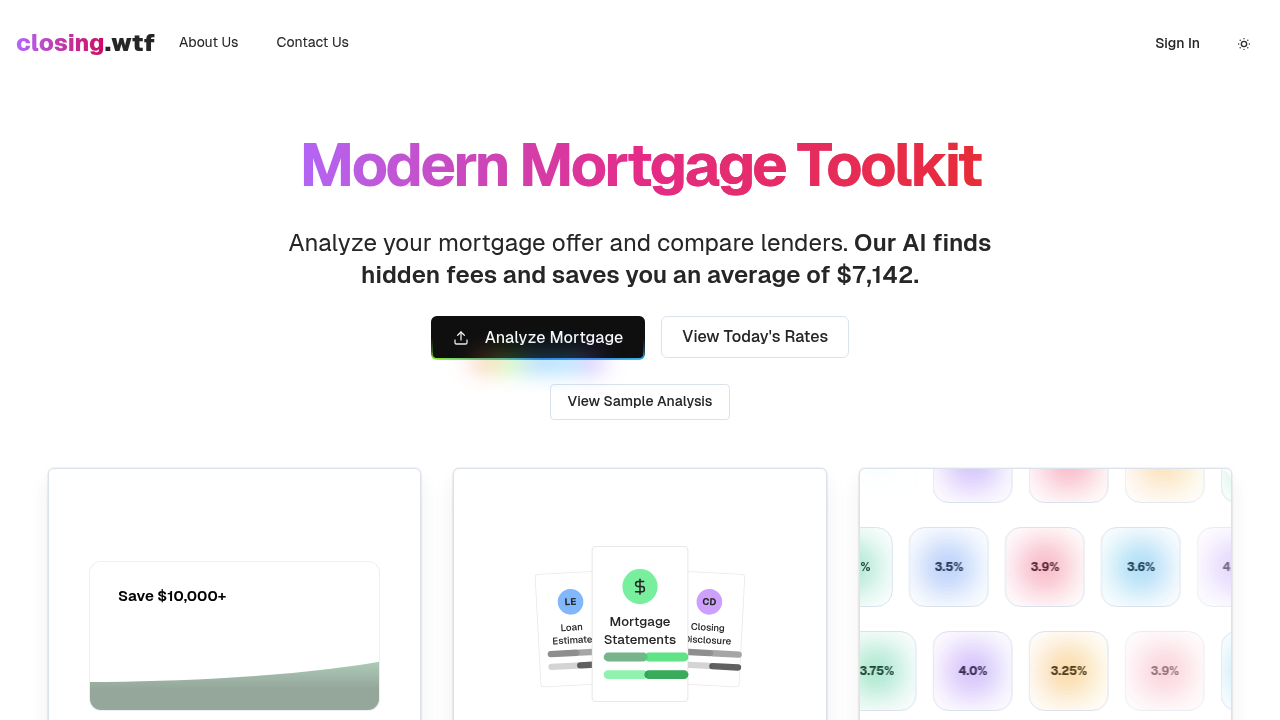
A homebuyer receives their loan estimate from a bank and sees $15,000 in closing costs, but the document runs eight pages with dozens of line items in dense mortgage terminology. She uploads it to ClosingWTF, which breaks down every fee and flags that her origination charges are $2,400 higher than typical market rates and her lender's credit insurance requirement adds unnecessary monthly costs. The AI pulls live rates from over 20 lenders and shows three better options with lower APRs and fewer junk fees. She uses this analysis to negotiate with her original lender, who drops $1,800 in fees to keep her business.
ClosingWTF analyzes both loan estimates and closing disclosures. Rates update hourly. It compares your terms against current market data to spot overpriced points, inflated origination fees, and unnecessary add-ons that lenders bury in paperwork. The service shows side-by-side comparisons of rates, monthly payments, and total costs across your options. Users save an average of $7,142 per transaction, with most finding $7,000 or more in better terms. The system has identified over $10 million in potential savings across all users. Typical monthly payment reductions run $100 to $500.
A refinancing homeowner uploads his closing disclosure three days before signing. ClosingWTF flags that his rate is 0.4% higher than what borrowers with his credit profile are getting from other lenders in his state. The monthly difference seems small at $87, but over 30 years that's $31,320. He contacts two lenders from the comparison results and locks a better rate within 48 hours.
The analysis works only with documents you provide. It won't pull your existing mortgage details automatically or track rate changes for you after the initial search. Someone who wants ongoing monitoring as rates shift over weeks would need to manually upload new loan estimates each time. The service doesn't connect to lender systems or pre-fill applications. It identifies savings opportunities but you handle all communication and negotiation with lenders yourself.
A first-time buyer with excellent credit benefits most since she has strong negotiating power once she knows market rates. Someone already locked into a contract with limited ability to switch lenders gets less value. Real estate investors closing multiple properties could use it repeatedly, though they'd upload documents for each transaction separately. Anyone who trusts their lender's first offer without comparison leaves money on the table that this service specifically targets.