AI isn’t “coming for our jobs”. It’s already here.
I keep seeing the same takes everywhere: “AI will create new jobs”, “don’t worry, we’ve been here before”, “it’s just another tech shift”.
Maybe. But honestly? That feels like cope.
Look at what’s actually happening, not what people hope will happen.
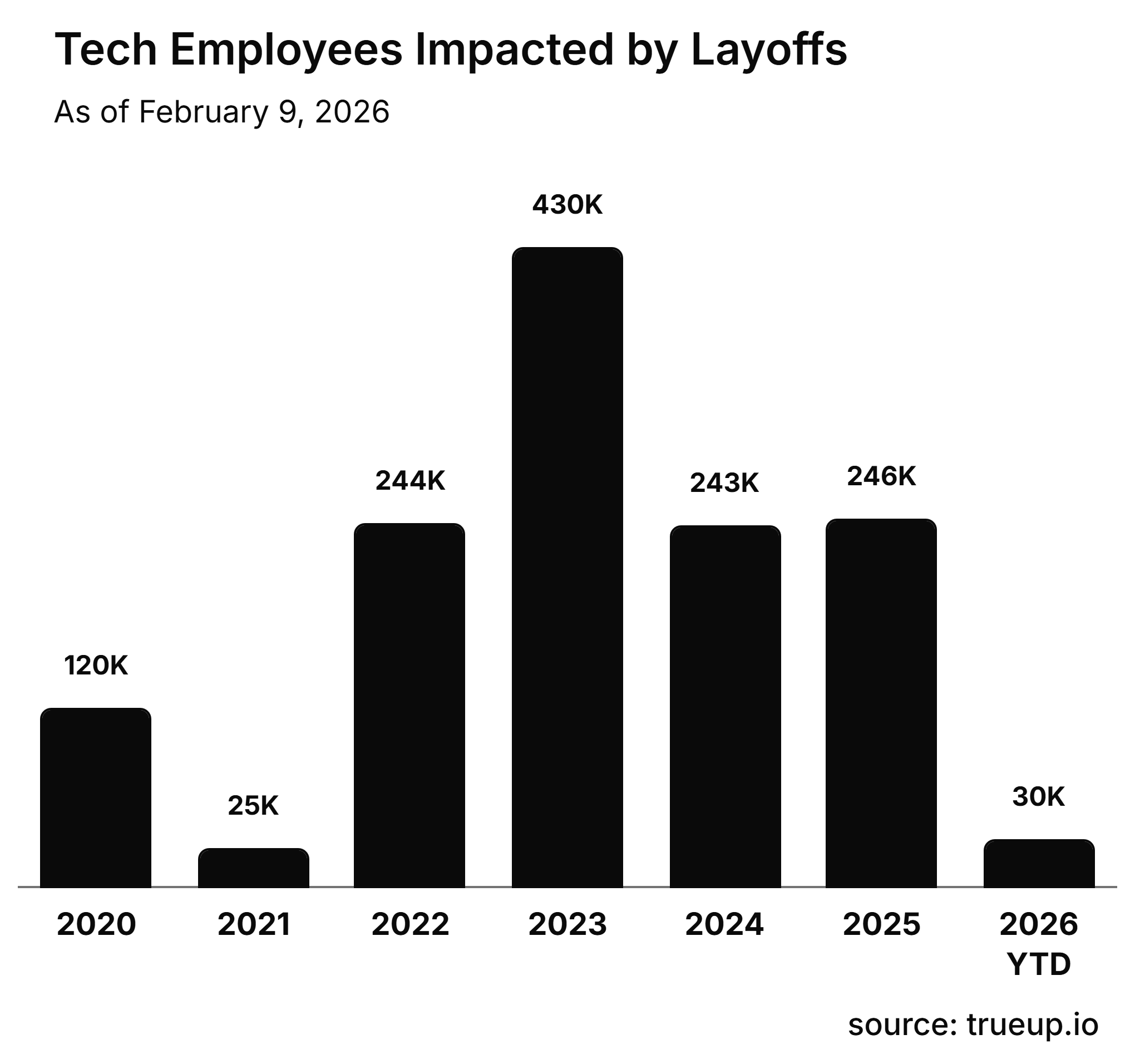
In the last couple of years, Meta, Microsoft, Amazon, Google, and a bunch of other big tech companies laid off tens of thousands of people. Not because they were about to go bankrupt. Not because demand disappeared. Most of them are still making insane amounts of money. They just don’t need as many humans anymore.
And this isn’t just about “useless” jobs getting cut. It’s engineers, designers, marketers, analysts, support teams. White-collar, “safe” jobs. The kind of jobs we were told to study for, grind for, and build our whole identity around.
AI didn’t start by replacing factory workers this time. It started by eating the office.
People still say: “Yeah but new jobs will appear.” Sure. They always do. The problem is how many, and for who.
If one AI tool lets 5 people do the work of 50, you don’t need to be a math genius to see where this goes. Even if new roles show up, they won’t absorb everyone. Productivity goes up fast. Job creation goes up slow. Guess who loses in between?
The scary part isn’t “no one will work anymore.”
The scary part is: a lot of people will become economically irrelevant.
Not because they’re lazy. Not because they’re stupid. But because the system just doesn’t need their labor.
When that happens, what are you?
You’re not a worker. You’re not a producer. You’re just… a consumer. If you’re lucky. If you have some money. If the system still finds it useful to keep you comfortable enough to not flip the table.
Our whole society is built on this idea: you work, you earn, you consume.
If the “work” part breaks for a big chunk of people, the rest of the model starts to look really shaky.
Some people will be fine. The ones who own the tools. The ones who control distribution. The ones who sit close to capital and infrastructure.
And that’s where things get ugly.
The gap between capital owners and everyone else is going to get uglier and uglier.
Not overnight. Not in some movie-style collapse. More slowly. More quietly. But in a way that’s probably harder to fix once it’s there.
The big tech layoffs weren’t a one-off. They’re a preview.
AI is not evil. It’s not some movie villain. It’s just extremely efficient. And efficiency doesn’t care about your rent, your career plans, or how hard you worked to get here.
The uncomfortable question isn’t “Will AI take jobs?”
It already is.
The real question is:
What do you do in a world where human work just… matters less and less?
And honestly? I don’t think we’re ready for the answer yet.