
Voice cloning by AIVoiceGen logo

Voice cloning by AIVoiceGen

The service takes audio samples and builds synthetic voice replicas through neural networks trained on millions of voice recordings

41 views
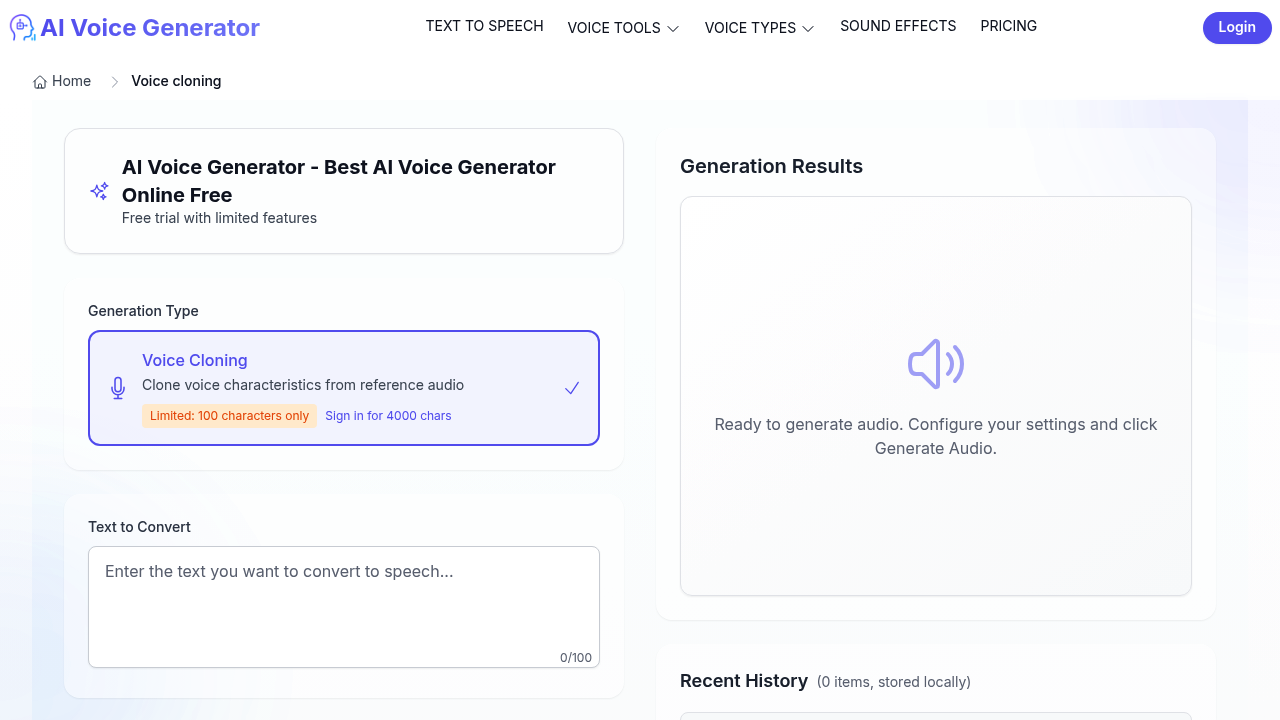
Voice cloning by AIVoiceGen screenshot

The service takes audio samples and builds synthetic voice replicas through neural networks trained on millions of voice recordings. Users upload reference audio files or paste URLs, then the system analyzes vocal characteristics like pitch, tone, and cadence to create a cloning model. Text input gets converted to speech using the cloned voice profile. Processing happens in under 100ms according to the service.

The underlying technology comes from Higgs Audio, built on an open source voice cloning framework. The neural networks learn patterns from extensive voice datasets to reproduce specific vocal traits. When you input text, the system applies the cloned voice characteristics to generate audio output that matches the reference speaker's sound.

Voice reference submission works two ways. You can upload audio files directly or provide URLs to existing recordings. The service then extracts vocal features from these samples to train the cloning model. Free tier users work with a 100 character limit for text conversion, while signed-in accounts handle up to 4000 characters per generation.

Multi-speaker functionality lets you generate conversations between different voices. The free tier caps this at two speakers with one line each. Signed-in users get unlimited speaker support for more complex dialogue generation. This works by assigning different cloned voices to separate text segments.

History storage operates differently based on account status. Free users store three items locally in their browser, which means data doesn't persist across devices or browsers. Signed-in accounts get unlimited cloud storage for generated audio files, accessible from any device.

The service provides a free tier with 100 character conversions using only preset voices. Full voice cloning capabilities require signing in, which grants 4000 character limits, access to all voice options, and complete feature sets. The signed-in tier remains free while removing most restrictions.

Technical constraints affect free tier usage substantially. The 100 character cap limits practical applications to very short clips. Local browser storage means losing history if you clear cache or switch devices. The two-speaker, one-line restriction makes dialogue generation impractical at the free level. Free voices only means you can't clone custom voices without signing in. Processing speed claims of under 100ms depend on server load and audio complexity, which can vary in real-world conditions.

The service doesn't list integrations with external services or APIs. Voice generation happens entirely through the web interface. No mobile apps or browser extensions exist based on available information.

Frequently asked

7 questions
How fast does AIVoiceGen clone voices?
AIVoiceGen processes voice cloning in under 100ms according to their specifications. The system uses neural networks trained on millions of voice samples to analyze and replicate vocal characteristics from reference audio. Processing speed can vary based on server load and the complexity of the audio input. The Higgs Audio framework handles the actual cloning pipeline, extracting features like pitch, tone, and cadence from your uploaded samples or URL references.
Is AIVoiceGen free to use?
AIVoiceGen offers a free tier with a 100 character limit per conversion, restricted to preset voices only. Signing in unlocks a free account with 4000 character capacity, access to all voice cloning features, and unlimited cloud storage for generated audio. Free tier users get local browser storage for three items only, while signed-in accounts store unlimited history in the cloud. The two-speaker dialogue feature limits free users to one line per speaker, but signed-in accounts get unlimited multi-speaker support.
What can you do with AIVoiceGen?
Content creators use AIVoiceGen to generate voiceovers in specific voices by uploading reference audio samples. The service converts text input into speech that matches the cloned voice's characteristics. You can create multi-speaker conversations by assigning different cloned voices to separate text segments, though free users face a two-speaker, one-line limit. The 4000 character limit for signed-in users supports medium-length scripts, but longer projects require breaking content into multiple generations.
How do you clone a voice on AIVoiceGen?
The voice cloning process starts by uploading an audio file or pasting a URL to a reference recording. AIVoiceGen's neural networks extract vocal features from this sample to build a cloning model specific to that speaker. You then input text that gets converted to speech using the cloned voice profile. The open source framework from Higgs Audio handles the feature extraction and synthesis pipeline, applying learned vocal patterns to generate output audio.
What are the character limits on AIVoiceGen?
Free tier accounts work with a strict 100 character limit per text-to-speech conversion, which restricts usage to very short phrases. Signing in raises this to 4000 characters, enough for several paragraphs of content. These limits apply per generation, so longer scripts require multiple processing runs. The character count includes spaces and punctuation, affecting how much actual speech content fits within each limit.
Does AIVoiceGen save your voice cloning history?
Free users store only three generated audio items locally in their browser, which means history disappears if you clear cache or switch devices. Signed-in accounts get unlimited cloud storage that persists across devices and browsers. Local storage doesn't sync between different computers or mobile devices. The cloud history for signed-in users remains accessible as long as the account stays active, though deletion policies aren't specified in available documentation.
What are the limitations of AIVoiceGen's free tier?
The 100 character restriction makes the free tier impractical for anything beyond testing short phrases. Free users can't access custom voice cloning features and work only with preset voices provided by the service. Multi-speaker dialogue generation caps at two speakers with one line each, preventing realistic conversation creation. Local browser storage for three items means you'll lose older generations as you create new ones, and data doesn't sync across devices.

Traffic

Estimated monthly website visits · last 3 months

483 visits/mo
Monthly visits
483
↓ 66.5% MoM
Global rank
#10,167,201
Category rank
#127
Voice & Speech
1.4K 1.2K 961 722 483 Dec 2025: 917 visits Dec 2025 Jan 2026: 1.4K visits Jan 2026 Feb 2026: 483 visits Feb 2026

Data from SimilarWeb · Updated monthly.

Reviews (0)

Write review

No reviews yet. Be the first to share your experience.

Similar tools

See all →