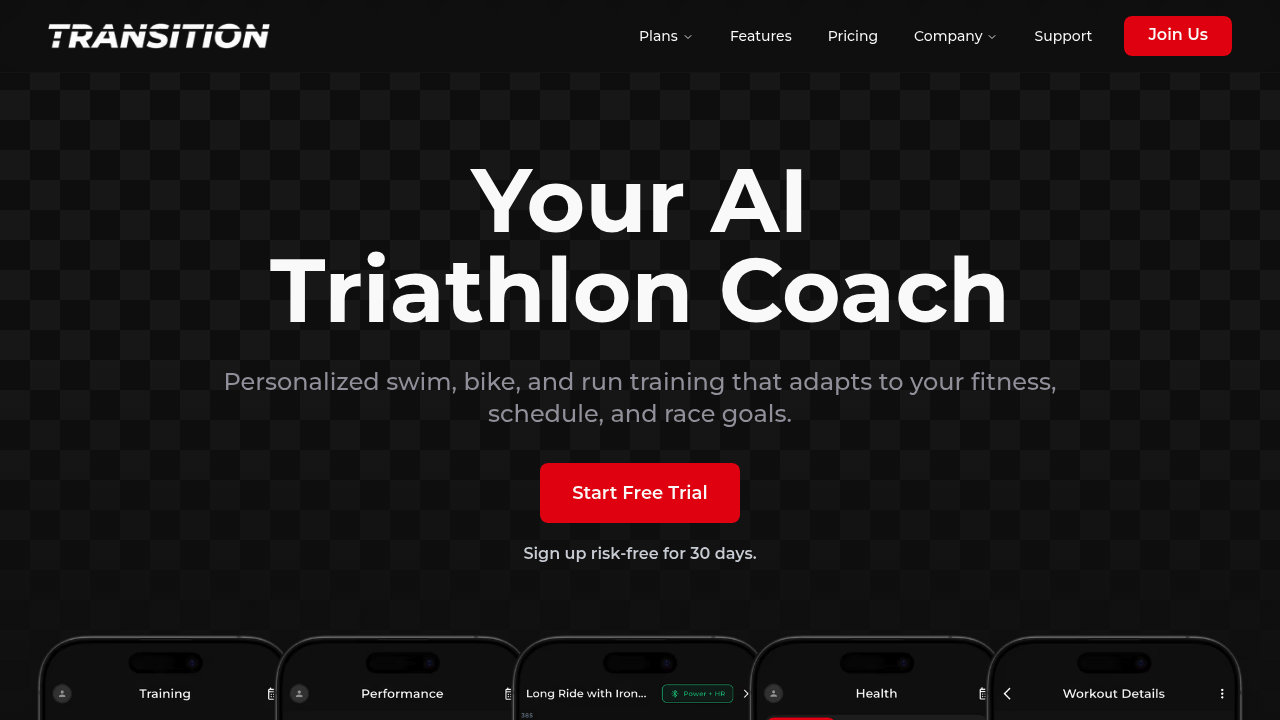
Triathlon training used to mean either winging it with free plans or dropping serious money on a personal coach. Transition sits between those extremes with an AI system that builds and adjusts swim-bike-run schedules based on your fitness level, race calendar, and how your body's actually responding.
This service generates personalized training plans that shift week to week. Miss a workout because life happened? The AI recalculates. Crushing your intervals? It notices and adjusts intensity. You get FTP and pace zone settings, plus the system handles peaking and tapering before races. It'll also flag when you're pushing too hard and risking overtraining.
Does the AI coaching actually hold up? The unlimited coach chat gives you a place to ask questions anytime, which matters when you're three weeks out from race day and panicking about a nutrition tweak. The AI video analysis feature reviews your swim, bike, and run form, which is harder to find in competing platforms. You can track nutrition with specific protein monitoring built in. Race predictions use your training data to estimate finish times.
Hardware integration runs deep. Garmin and Apple Watch sync your workout data automatically. If you train indoors, Transition controls compatible smart trainers directly (no juggling multiple apps mid-session). It also connects to TrainingPeaks and Strava if those are already part of your workflow.
Strength training comes included rather than as an afterthought. You get recovery and nutrition guidance alongside the cardio work, which makes sense since triathletes need more than just swim-bike-run volume. The mobile app means you're not stuck planning workouts at a desktop.
What's missing? The facts don't mention team features, so if you're coaching others or training with a group that wants shared plans, that's unclear. No API access listed either. Can't tell if there's offline workout access for when you're training in areas with spotty service.
The comparison to TriDot and TrainingPeaks is interesting. Both are established platforms, but Transition apparently offers fuller AI adaptation and video analysis features they don't match. The claim about saving over fifteen hundred dollars yearly compared to hiring a human coach makes sense mathematically — personal triathlon coaches easily run two hundred plus per month.
Pricing lands at one hundred thirty-nine dollars per year after a thirty-day free trial. That's twelve bucks monthly if you commit to the annual plan, and they mention a forty percent savings versus paying month-to-month. Hard to argue with that price point for adaptive training across three sports plus strength work and video analysis. Most single-sport training apps cost more.
Who actually needs this? Obviously triathletes training for anything from sprint distance to IRONMAN events. But the target list also includes duathletes, marathoners, and general fitness people. Makes sense. If the AI handles periodization and adaptation, runners training for a marathon get value without paying for swim features they won't use.
Beginners might appreciate the hand-holding from the AI chat and form analysis. Experienced athletes get the performance analytics and precise zone training. The immediate workout feedback creates a loop that manual plans can't match — you're not waiting until next week to know if Tuesday's session was productive.
This system basically asks whether you trust an AI to program your training as well as a human coach would for ninety percent less money. Thirty days free lets you test that question yourself.