
TalkPilot logo

TalkPilot

A therapist in private practice sees a client who mentions something that sounds familiar from three sessions ago, but can't quite recall the details while maintaining presence in the conversation

33 views
TalkPilot screenshot

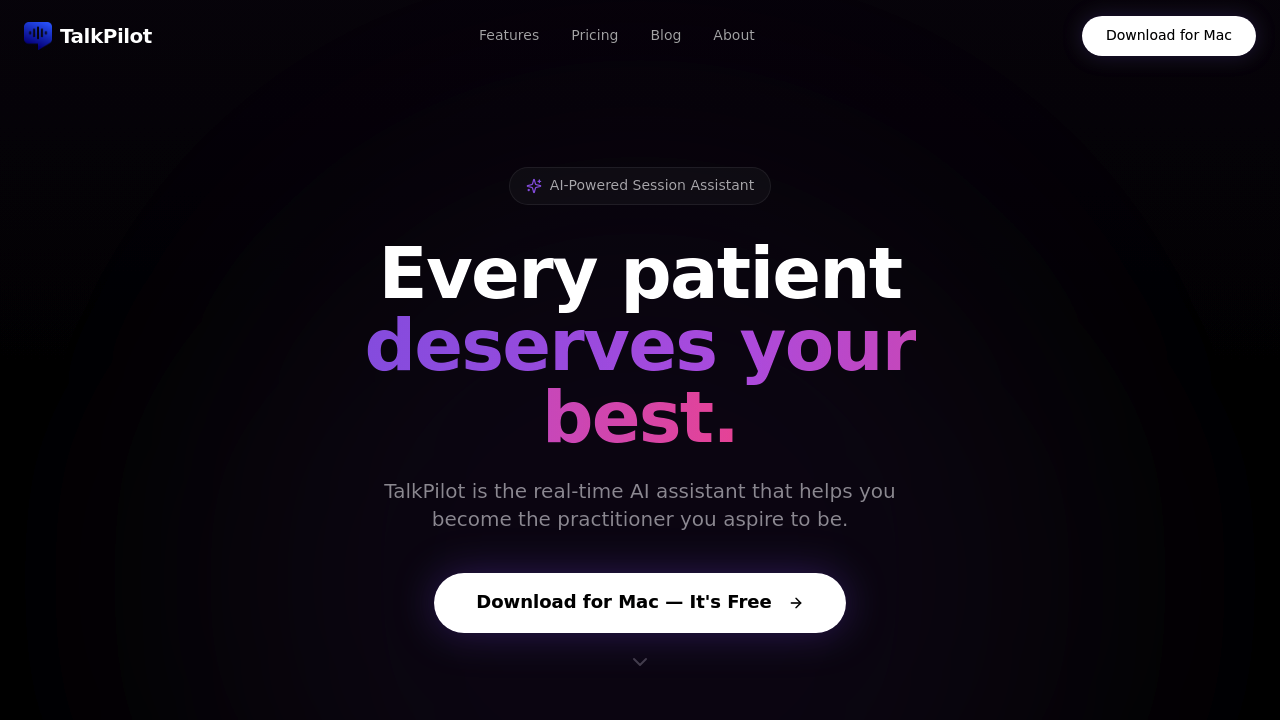
A therapist in private practice sees a client who mentions something that sounds familiar from three sessions ago, but can't quite recall the details while maintaining presence in the conversation. TalkPilot sits quietly in the background during sessions, surfacing that past pattern at exactly the right moment on a screen only the therapist sees. The client has no idea the therapist just got a contextual nudge reminding them of previous discussions about similar anxiety triggers.

TalkPilot provides real-time assistance during therapy sessions alongside longitudinal analysis across all client interactions. During a session, it flags potential risk indicators instantly, suggests therapeutic techniques based on what's happening in the moment, and reminds the practitioner of client goals and progress markers they set weeks earlier. A counselor working with a suicidal ideation case gets immediate alerts about concerning language patterns without needing to wait for post-session review.

Between sessions, TalkPilot tracks patterns across all conversations with a specific client. It measures emotional trends, analyzes airtime ratios to see if the therapist's talking too much, and provides weekly personalized practice insights. A marriage and family therapist discovers through pattern detection that three different clients all show increased engagement when sessions include more reflective questioning and less direct advice-giving. The communication pattern analysis quantifies what experienced practitioners sense intuitively but can't always articulate.

The transcript chat feature lets practitioners ask questions about past sessions. Client engagement metrics show which interventions work. Session structure recommendations help newer therapists build more effective session flow. Students get targeted skill-building tips based on their actual recorded performance patterns across multiple clients.

Everything runs with end-to-end encryption. it is HIPAA compliant and SOC 2 Type II certified. Business Associate Agreements are available for clinics that need them.

TalkPilot makes most sense for therapists carrying ongoing client caseloads where session-to-session continuity matters. A crisis counselor doing single-session interventions won't benefit from the longitudinal tracking. Group therapy facilitators can't use it since it's built for individual sessions. The real-time nudges require looking at a screen during sessions, which some practitioners find distracting or inconsistent with their therapeutic presence. Therapists who work primarily with paper notes or prefer complete technology separation during client time won't adopt this workflow.

The free plan covers up to three active clients with six sessions monthly. It includes basic AI analysis, basic sentiment analytics, and limited session history. Professional costs $39 monthly and removes client limits, adds unlimited sessions and session history, includes emotional trends and airtime ratio tracking, provides smart weekly insights, and adds transcript chat. Students get 50% off. Enterprise plans offer team features, admin dashboards, SSO, custom integrations, and dedicated account management.

Practitioners just starting out can test the approach with the free tier before committing. Established therapists with full caseloads need the Professional plan immediately since three clients runs out fast. Solo practitioners who see clients sporadically might stay on free indefinitely. Large group practices need Enterprise for team management.

Therapists who rely heavily on psychodynamic approaches emphasizing spontaneous emergence might find the structured nudges interfere with their method. Practitioners in jurisdictions with strict recording consent laws need to verify local compliance. Anyone uncomfortable with AI analyzing therapeutic conversations should look elsewhere entirely.


Frequently asked

7 questions
Does TalkPilot work during therapy sessions or just after?
A therapist conducting a session with a client struggling with recurring anxiety gets real-time nudges on a separate screen the client can't see, surfacing patterns from three sessions ago at the exact moment they become relevant. The system runs live during conversations, flagging risk indicators instantly, suggesting therapeutic techniques based on current context, and reminding practitioners of client goals set weeks earlier. Between sessions, it shifts to longitudinal analysis, tracking emotional trends across all conversations with that client and providing weekly practice insights about communication patterns. A counselor working with someone expressing suicidal ideation receives immediate alerts about concerning language without waiting for post-session review, while also building a comprehensive understanding of that client's risk patterns over months.
Can I use TalkPilot for free or do I have to pay?
A newly licensed therapist with two ongoing clients can use the free plan indefinitely, getting six sessions monthly with basic AI analysis and sentiment analytics across those clients. The moment that therapist builds a practice to four active clients, the free tier stops working since it caps at three clients total. Professional costs $39 monthly and removes all client and session limits while adding emotional trends tracking, airtime ratio analysis, unlimited session history, and transcript chat. Students get 50% off Professional, making it $19.50 monthly for those still in training programs who need full caseload support.
What does TalkPilot actually do during a therapy session?
A marriage and family therapist notices their client mention something that echoes a conversation from four weeks back but can't recall specifics while staying present. TalkPilot surfaces that past pattern on a screen only the therapist sees, showing previous discussions about similar triggers without the client knowing assistance occurred. During the same session, it might flag a subtle shift toward risk language, suggest a specific reflective technique based on what's happening in real time, or remind the practitioner of a goal the client set in session two that's now relevant again. The system runs quietly in the background, providing context-aware nudges at exactly the right moments rather than requiring the therapist to search through notes or rely on memory alone.
Does TalkPilot track patterns across multiple sessions with the same client?
A counselor working with a client over three months gets longitudinal analysis showing that the client's engagement increases significantly when sessions include more open-ended questions and drops when the therapist offers direct solutions. The pattern detection runs across every recorded conversation with that specific client, building a comprehensive understanding that evolves with each session. Emotional trends tracking shows mood shifts over weeks, airtime ratio analysis reveals whether the practitioner's dominating conversation time, and client engagement metrics quantify which interventions actually work with that individual. This works for therapists carrying ongoing caseloads where session-to-session continuity matters, but a crisis counselor doing single-session interventions won't benefit since there's no history to analyze.
Will TalkPilot work for group therapy or family sessions?
TalkPilot is built specifically for individual therapy sessions between one practitioner and one client, so a family therapist running sessions with couples or entire families can't use it effectively. The real-time nudges and pattern tracking are designed around tracking a single client's language, emotional patterns, and progress markers across multiple sessions. Group therapy facilitators working with multiple clients simultaneously won't get useful analysis since the system can't differentiate between speakers or track individual patterns in group contexts. A therapist who splits time between individual clients and group sessions could use it for the individual work but would need different tools for group facilitation.
Is TalkPilot HIPAA compliant and secure for client data?
A therapist in private practice handling sensitive client information gets end-to-end encryption on all session recordings and analysis, with TalkPilot maintaining HIPAA compliance and SOC 2 Type II certification. Clinics and group practices that need Business Associate Agreements can obtain them, covering the legal requirements for third-party services handling protected health information. The security measures run across all plans including the free tier, so a newly licensed therapist with three clients gets the same encryption and compliance as an established practice on Enterprise. Practitioners in jurisdictions with strict recording consent laws still need to verify local compliance separately, since HIPAA covers federal requirements but states may add additional restrictions.
How many clients can I have on the free plan?
The free plan caps at three active clients total with six sessions monthly, so a therapist just building a practice can track two or three ongoing clients without paying. The moment that caseload grows to four clients, the free tier stops functioning since it won't accommodate additional active cases. A practitioner who sees clients sporadically might stay on free indefinitely if they maintain fewer than four active cases and stay under six sessions monthly. Professional at $39 monthly removes all limits, which matters immediately for established therapists with full caseloads since three clients runs out within the first week of building a practice.

Traffic

Estimated monthly website visits · last 0 months

Not enough historical data for a chart yet.

Data from SimilarWeb · Updated monthly.

Reviews (0)

Write review

No reviews yet. Be the first to share your experience.

Similar tools

See all →