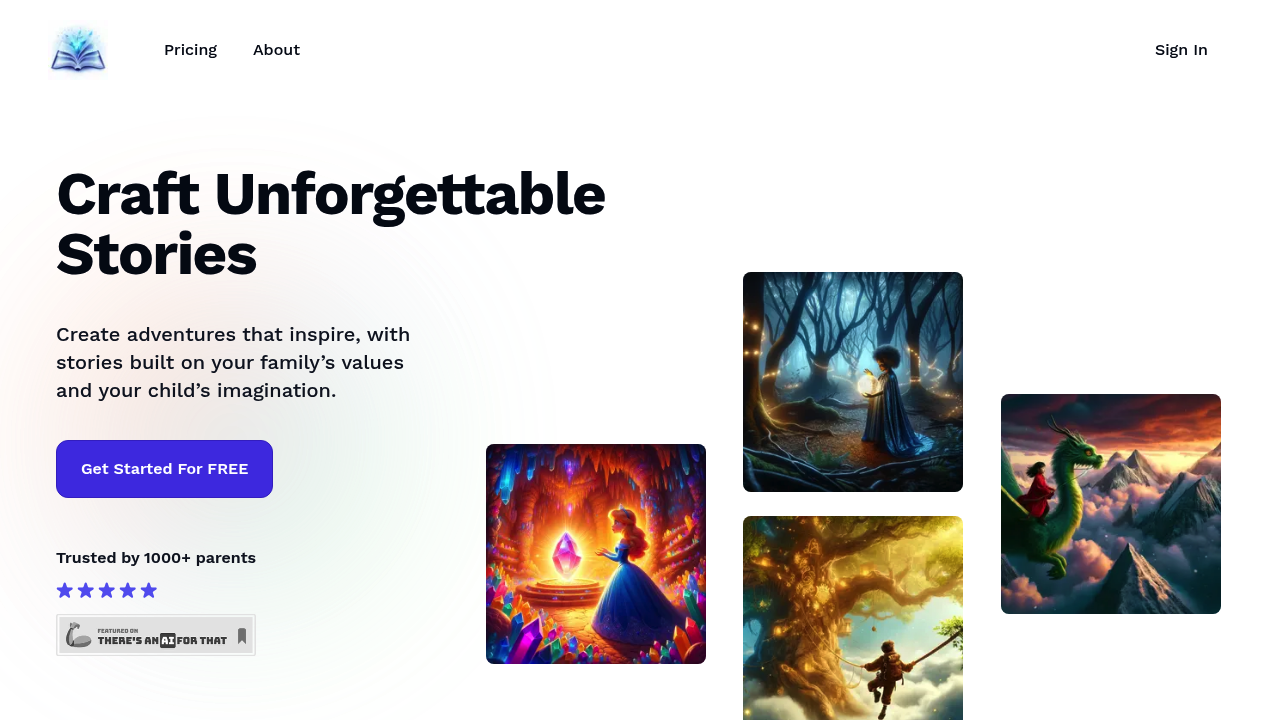
A parent sits at bedtime scrolling through the same worn picture books their four-year-old has memorized. The child wants something fresh, something about their own family, maybe something that teaches sharing after today's playground struggle. Traditional books can't adapt to tonight's specific need. StoryCraftr generates personalized bedtime stories from short descriptions that weave in family members and values parents want to emphasize.
The service works from brief prompts. A parent types "story about Emma learning to share her toys with her little brother at the park" and adds family values like kindness and patience. They can specify which family members appear in the story. The AI builds characters and settings around these elements, creating narratives that feel tailored rather than generic. Parents get copyright ownership of every story they create, which matters if they want to compile favorites into a personal book or share them beyond bedtime.
Each story comes with generated images that parents can regenerate if the first version doesn't match what they envisioned. The service has produced over 10,000 images across more than 2,000 unique stories for 1,000+ parents. Stories aren't just entertainment—they're teaching tools. A parent dealing with a child's fear of the dark can request a story about bravery. Another managing sibling rivalry can generate tales about cooperation featuring their actual kids' names.
The token system creates friction. Subscriptions include 50 story tokens monthly, but parents who want nightly fresh stories will burn through that allocation in under two months. Each story costs one token. Families who read together every night need roughly 30 stories per month, leaving tokens for occasional do-overs or special requests. Heavy users face additional token purchases beyond the monthly allocation. Parents who only want a few custom stories monthly won't hit this ceiling.
A kindergarten teacher trying to create classroom stories about behavior lessons runs into limitations. The service targets parent-child relationships and family dynamics specifically. The family member definition feature assumes household contexts. Teachers wanting broader character types or classroom scenarios don't fit the model.
Parents who prefer physical books they can revisit without screens find a gap. StoryCraftr doesn't mention printing capabilities or formats beyond digital creation. A family wanting to build a library of printed custom stories can't easily export finished products into book form based on the available facts.
The Starter Package runs $8 monthly when billed annually, with a seven-day free trial for testing the concept. That's cheaper than buying several new picture books monthly. For parents who've exhausted their local library's selection or have children with specific learning needs, the cost makes sense. For families satisfied with traditional books or free library access, it doesn't.
Parents who want one-off stories without committing to subscriptions face the token economy. The service doesn't offer single-purchase options. You're subscribing or using the trial period.
StoryCraftr works for parents seeking regular, customized bedtime content that reinforces specific values or addresses current challenges their children face. It doesn't work for occasional users, families preferring physical books, or educators needing classroom-scale story generation. The copyright ownership is notable—these stories belong to the families who create them, not the service.