
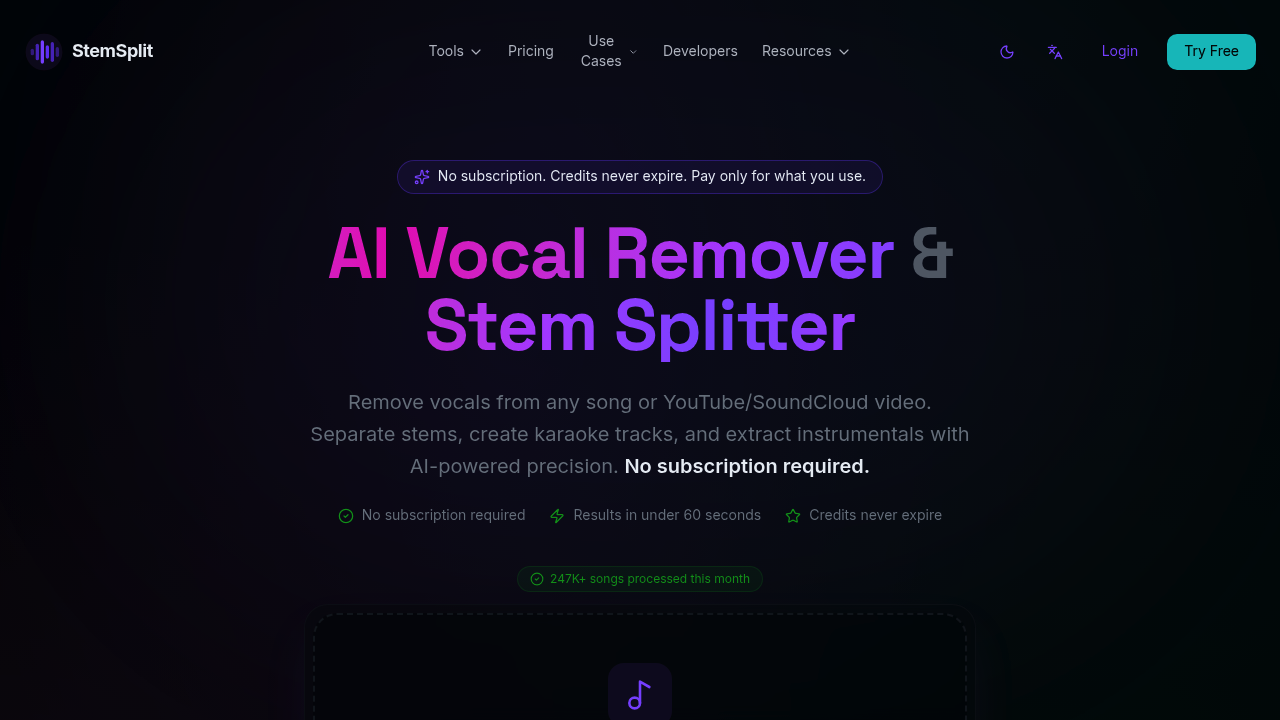
StemSplit processes audio files through a neural network trained to identify and isolate different instrument frequencies and vocal patterns in mixed recordings. Upload an audio file or paste a YouTube or SoundCloud URL, and the system routes it through GPU-accelerated servers that analyze the waveform and separate it into distinct stems. The separation happens in 30 to 60 seconds on average.
The technical architecture offers three separation modes with two-stem splits audio into vocals and instrumentals. Four-stem adds drums and bass as separate outputs. Six-stem goes further by isolating guitar and piano alongside vocals, drums, bass, and other instruments. Each stem exports as an independent audio file in WAV, MP3, or FLAC format. The vocal removal claims 95% accuracy, though this varies based on source quality and mixing complexity.
For DJs, the system detects BPM and musical key automatically, then displays them in Camelot notation within DJ Mode. Beat grids overlay on the waveform for visual reference during mixing prep. Export to Rekordbox XML for direct integration with that software's library management. This workflow targets DJs preparing remix stems or building transition points between tracks.
The data pipeline accepts MP3, WAV, FLAC, M4A, OGG, and WEBM formats with a 100 megabyte ceiling per file. Larger files won't process. YouTube and SoundCloud integration pulls audio directly from URLs without requiring separate downloads, though you're still bound by the same format and size restrictions once the system converts the stream.
Processing happens server-side. No local installation required. The GPU acceleration speeds up separation, but you're dependent on server availability and internet bandwidth. If the source audio has heavy compression artifacts or unusual mixing, separation quality drops. Stems aren't perfect isolations. Bleed between channels happens, especially with older recordings or complex arrangements where frequencies overlap heavily.
This service has processed over 247,000 songs this month and maintains a 4.9 out of 5 rating from more than 2,500 users. Those numbers suggest consistent uptime and relatively stable output quality across different music genres.
Pricing runs on a pay-as-you-go model at ten cents per minute of audio. Credits never expire. No subscription locks you in. New signups get ten free minutes to test the separation quality on their own tracks. Bulk discounts apply when purchasing larger credit packages, though specific discount tiers aren't publicly detailed. This model works better than subscriptions if you process audio sporadically rather than daily.
The technical limitations matter for workflow planning. That 100 megabyte cap translates to roughly 30 minutes of high-quality WAV audio or several hours of compressed MP3. If you're working with uncompressed studio masters, you'll hit the limit quickly. The supported format list covers most common use cases but excludes formats like AIFF or DSD that some audio professionals prefer.
No API access exists for automation. No mobile app for on-device processing. Browser-based only. Team features don't exist, so sharing credits across multiple users requires manual coordination. The Rekordbox integration helps DJs, but producers using Ableton, Logic, or other DAWs need to manually import stems into their projects.
The system targets singers building practice tracks, DJs preparing remixes, content creators removing copyrighted music, and producers sampling specific instruments from existing recordings. Quality depends heavily on source material separation during original mixing.